
Most companies don't overspend on software because they buy too many tools, they overspend because they don't know what they already have.
Finance sees invoices, IT manages systems, procurement negotiates contracts, and department managers buy tools to solve immediate problems.
Without a shared view of software spending, everyone only sees part of the picture.
That's where SaaS spend visibility comes in. It provides the foundation for effective SaaS management by giving organisations a complete understanding of their software estate.
What is SaaS spend visibility?
SaaS spend visibility is the ability to see all of your organisation's software subscriptions, costs, and usage in one place.
Instead of piecing together information from spreadsheets, invoices, contracts, and department budgets, you have a clear, up-to-date view of your entire SaaS portfolio.
A complete picture goes well beyond a list of applications.
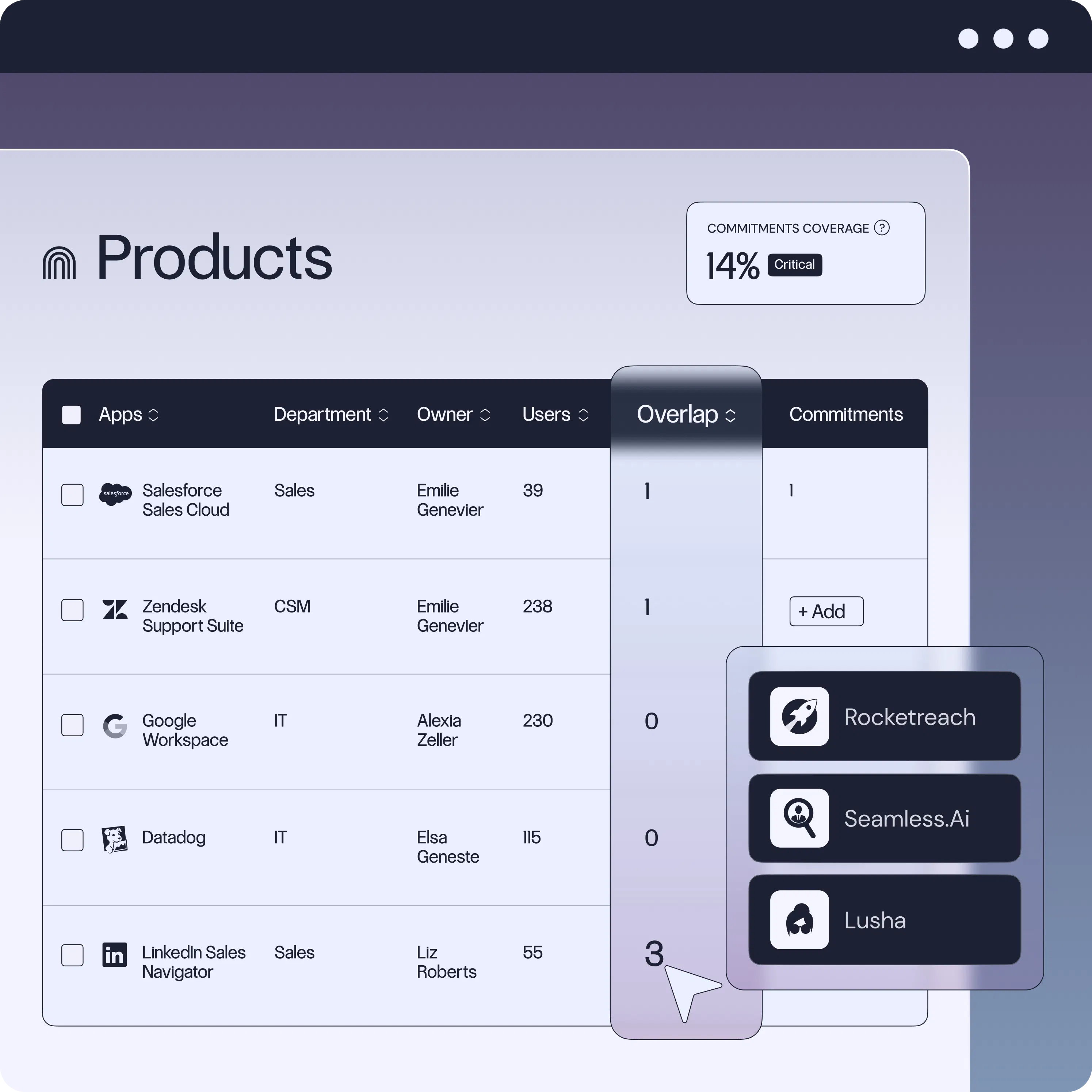
It includes every SaaS product being used across the business, the cost of each subscription, who owns it, which department pays for it, how many licences have been purchased, how actively those licences are used, when contracts are due for renewal, and which vendors supply the software.
Imagine your marketing team subscribes to a design platform, sales purchases its own proposal software, and HR adopts a separate employee engagement tool.
Individually, each purchase makes sense. But unless someone can see them all together, it's difficult to understand total software spend, identify duplicate tools, or spot opportunities to consolidate vendors.
It's also important to distinguish visibility from management.
Visibility tells you what's happening. It answers questions such as What software do we have?, How much are we spending? and Which subscriptions renew next quarter?
Management is what comes afterwards. Once you have that information, you can cancel unused licences, negotiate better contracts, standardise software across departments, and optimise your overall SaaS investment.
In other words, you can't manage what you can't see.
Why is SaaS spend visibility important?
An enterprise uses over 400 different SaaS products, so you can imagine just how easy it is to lose track of what they're paying for.
Different departments buy their own tools, subscriptions renew automatically, and software often goes unused without anyone noticing. Without a clear view of your SaaS stack, costs quickly become difficult to control.
The biggest benefit of SaaS spend visibility is reducing wasted spend.
When you can see every application, subscription and licence in one place, it's much easier to spot duplicate tools, reclaim unused licences, and cancel software that's no longer delivering value.
It also makes financial planning much easier.
Finance teams can forecast software costs more accurately, while procurement teams can review upcoming renewals early enough to negotiate better contracts instead of rushing into automatic renewals.
For IT and security teams, better visibility helps uncover shadow IT. Identifying these tools helps reduce security and compliance risks while ensuring company data stays protected.
Department managers benefit too. With a clear view of the software their teams use and what it costs, they can make better purchasing decisions and avoid paying for overlapping applications.
Ultimately, SaaS spend visibility gives finance, procurement, IT, security and department leaders a shared view of software spending. When everyone is working from the same information, organisations can make smarter decisions, control costs, and get more value from their SaaS investments.
Signs your organisation lacks SaaS spend visibility
Many organisations don't realise they have a visibility problem until software costs start creeping up or an unexpected renewal lands on someone's desk.
If any of the following situations sound familiar, it's a strong sign that your SaaS estate isn't as visible as it should be.
- Software costs keep increasing without a clear reason
If your software budget grows every year but nobody can explain why, you're probably paying for more than you realise.
New subscriptions are added, existing contracts renew automatically, and departments continue purchasing tools independently. Over time, these small increases compound into a much larger SaaS bill, making it harder to forecast budgets and identify where savings can be made.
- Multiple teams are buying similar tools
Without visibility across departments, it's common for different teams to solve the same problem with different software.
For example, marketing might subscribe to Asana while product uses Monday.com and operations manages projects in ClickUp. Each purchase may seem justified on its own, however they also result in missed opportunities to negotiate better pricing with a single vendor.
- Nobody knows how many licences you're paying for
Paying for licences that nobody uses is one of the most common sources of SaaS waste.
If you can't quickly answer how many licences have been purchased, assigned and actively used, there's a good chance you're overspending. Unused licences continue renewing year after year, quietly increasing costs without adding any business value.
- Renewals come by surprise
Software contracts shouldn't come as a last-minute surprise.
If finance or procurement only learns about a renewal after an invoice arrives, there's little opportunity to review usage or negotiate better terms. Automatic renewals can lock organisations into another year of paying for software they no longer need, creating avoidable expenses that could have been reduced or eliminated.
Bear in mind that having good visibility into your renewal calendar also gives you the upper hand in negotiations to bring your bill down.
- Reporting depends on spreadsheets
If producing a software spend report means collecting invoices, exporting credit card transactions, and manually updating spreadsheets, your reporting process is costing more than just time.
Manual reporting makes it easy to miss subscriptions, overlook renewals, or work with outdated information. This means your budgeting becomes less and less accurate and financial decisions more reactive.
The longer these issues go unchecked, the more expensive they become.
Small inefficiencies (unused licences or overlapping subscriptions) can quickly grow into thousands of euros in unnecessary annual spend.
SaaS spend visibility gives you the information you need to identify these problems early, control costs, and make smarter software investment decisions.
Components of SaaS spend visibility
Effective SaaS spend visibility isn't achieved by simply creating a list of software applications.
It relies on bringing together data from across the business so every stakeholder is working from the same, up-to-date information. Here are the key components that make comprehensive SaaS spend visibility possible.
Centralised data collection
The first step is collecting software data from every source where SaaS purchases and usage leave a footprint.
This typically includes finance systems, ERP platforms, SSO providers, HR systems, contracts, banking transactions, browser discovery tools and expense management platforms.
Without a central source of truth, you only see part of the picture.
Finance knows what has been paid for, IT knows which applications are connected to SSO, HR knows who has joined or left the business, and procurement manages supplier contracts. When this information remains siloed, it's easy to miss duplicate subscriptions, inactive licences or software that has been purchased outside normal approval processes.
By bringing all of this data together, you gain a complete view of your SaaS estate.
SaaS spend analytics
SaaS spend analytics turns raw subscription data into meaningful insights that help you make better financial decisions.
For example, you can analyse software spend by department, vendor or business unit to identify which teams are driving costs and where budgets are increasing. You can also monitor spending trends over time, forecast future software expenses, and calculate metrics such as software spend per employee.
These insights help answer practical questions such as whether a department's software costs are growing faster than headcount, whether one vendor accounts for a disproportionate share of the budget, or whether software spending is increasing faster than expected.
SaaS subscription tracking
Software portfolios change constantly. New tools are purchased, licences are added or removed, and contracts renew throughout the year.
Effective SaaS subscription tracking provides visibility into every active subscription, the number of licences purchased, the application owner, contract value and upcoming renewal dates. Instead of scrambling to understand a subscription when an invoice arrives, you always know what you're paying for and who is responsible for it.
Vendor management
Most organisations work with hundreds of software vendors. Without visibility into these relationships, contract management quickly becomes difficult.
A strong SaaS spend visibility strategy includes a central view of every vendor, the applications they provide, contract terms, renewal timelines and overall spending.
This allows procurement teams to prepare for negotiations well in advance rather than reacting to automatic renewals.
It also helps identify opportunities to consolidate vendors. For example, if different departments are using separate tools with similar functionality, standardising on a single platform can reduce costs while simplifying procurement and support.
Audits and reporting
SaaS visibility isn't something you check once a year, it's something you monitor continuously.
That's why modern SaaS management relies on real-time dashboards and automated reporting instead of manually maintained spreadsheets.
Executives need high-level summaries of software spending, finance teams need accurate budget reports, department managers need visibility into their own applications, and procurement teams need alerts for upcoming renewals.
Having this information available in real time means issues can be identified and addressed before they become expensive problems.
How to Manage SaaS Spend Visibility
The goal of your SaaS spend visibility process is to create a repeatable process that gives you continuous visibility and helps you make informed decisions before costs start creeping up.
Step 1: Discover every SaaS application
You can't manage software you don't know exists, so the first step is identifying every SaaS application used across your organisation.
The most scalable and efficient approach is to automate discovery using SSO integrations, browser discovery, finance systems and ERP platforms. These integrations continuously identify new applications, software purchases and user activity as they happen, reducing the risk of shadow IT and ensuring your software inventory stays current without relying on manual checks.
Step 2: Build a central software inventory
Once you've identified your applications, bring everything together into a single source of truth.
Your software inventory should include the application name, vendor, business owner, department, subscription cost, number of users, renewal date and contract information.
Keeping all of this information in one place means everyone is working from the same data.
Instead of searching through contracts or asking different teams for information, you can instantly see who owns an application, how much it's costs, and when it needs to be reviewed.
Step 3: Track SaaS subscriptions continuously
New subscriptions are purchased every month, employees join and leave the business, and licences are upgraded or cancelled throughout the year.
It is important to constantly monitor new software purchases, upcoming renewals, licence changes and department growth. This allows you to identify unnecessary spending before contracts renew and ensures your software inventory always reflects what's actually being used.
Step 4: Analyse software spending
Once you have accurate data, the next step is turning it into actionable insights.
Look for your highest-cost vendors, applications with overlapping functionality, departments where software spending is increasing rapidly, and unusual spending patterns that deserve closer attention.
Comparing costs across business units can also highlight where licences could be shared more effectively or where standardising on a single platform could reduce overall spend.
The objective is to make sure every software investment delivers value. Good analytics help you decide where to optimise, where to consolidate and where additional investment genuinely makes sense.
Step 5: Create a manageable procurement process
The final step is putting a procurement process in place that prevents software spending from becoming fragmented again.
Establish a clear (and realistic) approval workflow for new applications, licence upgrades and contract renewals.
This doesn't need to create unnecessary bureaucracy, it simply ensures the right people review purchases before new costs are introduced.
If you have an overly complicated procurement process that takes too long to be approved, more often than not, employees are going to skip over it for one-off tools.
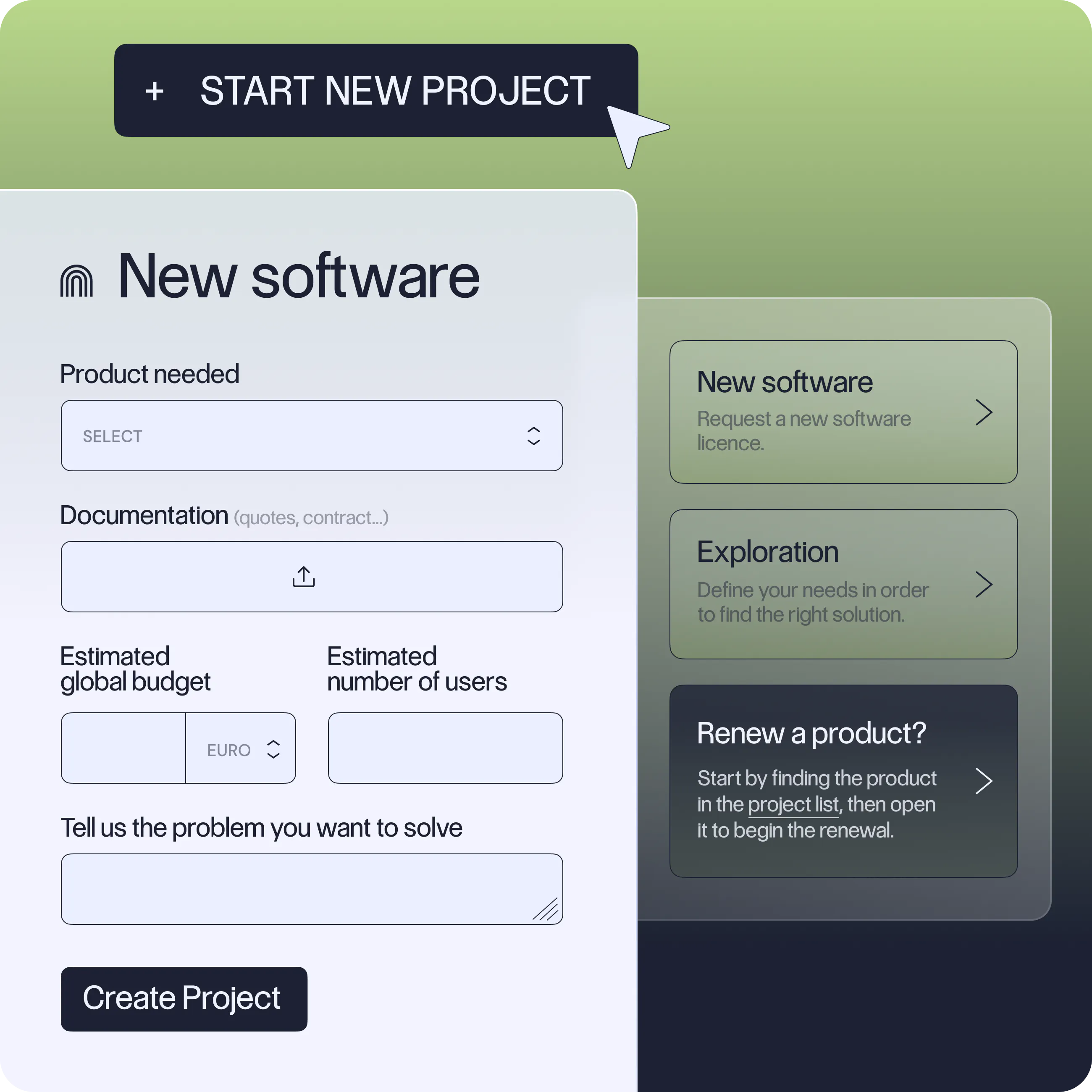
Modern SaaS management platforms such as Najar make this process much easier by automating procurement workflows.
Manual vs Automated SaaS Spend Visibility
Many organisations begin managing SaaS spend with spreadsheets because they're familiar and inexpensive. For businesses with only a handful of applications, this approach may be enough.
However, as the number of subscriptions, vendors and users grows, manual processes become increasingly difficult to maintain.
Manual | Automated |
|---|---|
Spreadsheets | Real-time dashboards |
Periodic audits | Continuous monitoring |
Manual reporting | Automated analytics |
High risk of missing applications | Automatic discovery |
Difficult to scale | Suitable for growing organisations |
With a manual approach, software inventories quickly become outdated.
A new subscription purchased on a company card, an employee leaving the business, or an auto-renewal can all happen between audits, leaving your records incomplete. Finance, procurement and IT often spend more time collecting data than analysing it.
An automated approach removes much of this manual effort.
Instead of periodically checking multiple systems, organisations receive continuous visibility into software purchases, licence usage and upcoming renewals. Dashboards stay up to date automatically, making it easier to identify cost-saving opportunities before they become expensive problems.
This is why many organisations eventually adopt a dedicated SaaS management platform and save up to 30% on their SaaS spend.
Best platform for SaaS spend visibility
A good SaaS spend visibility platform should do more than list software subscriptions.
It should automatically discover new applications, centralise software data, track renewals, monitor spending trends and provide insights that help teams reduce waste and improve procurement decisions.
Most importantly, it should give finance, procurement, IT and department managers access to the same accurate information, so everyone is working from a single source of truth.
Najar is designed to bring these capabilities together in one platform.
Its centralised SaaS inventory provides a complete view of every application used across the organisation, including ownership, vendors, costs, contracts and renewal dates.
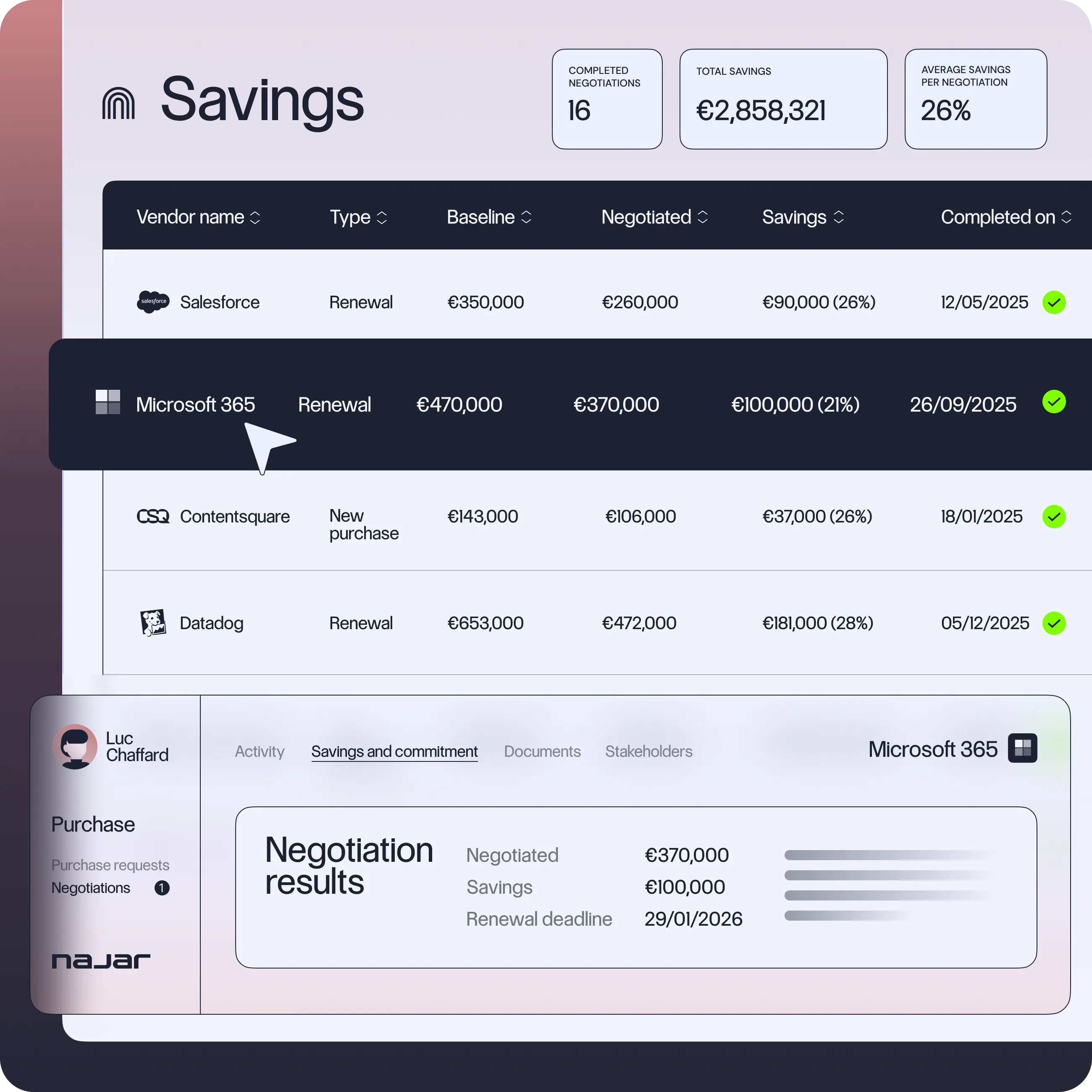
With SaaS spend analytics, finance teams can monitor software costs by department, vendor or category, making it easier to identify spending trends, uncover optimisation opportunities and improve budget forecasting.
Najar also simplifies SaaS audits by continuously collecting and organising software data. Instead of manually gathering information before every review, organisations can quickly identify duplicate applications, unused licences and unnecessary spending whenever they need to.
Its SaaS subscription tracking keeps teams informed about contract renewals, licence changes and new software purchases, helping prevent unexpected renewals and giving procurement more time to review contracts before they expire.
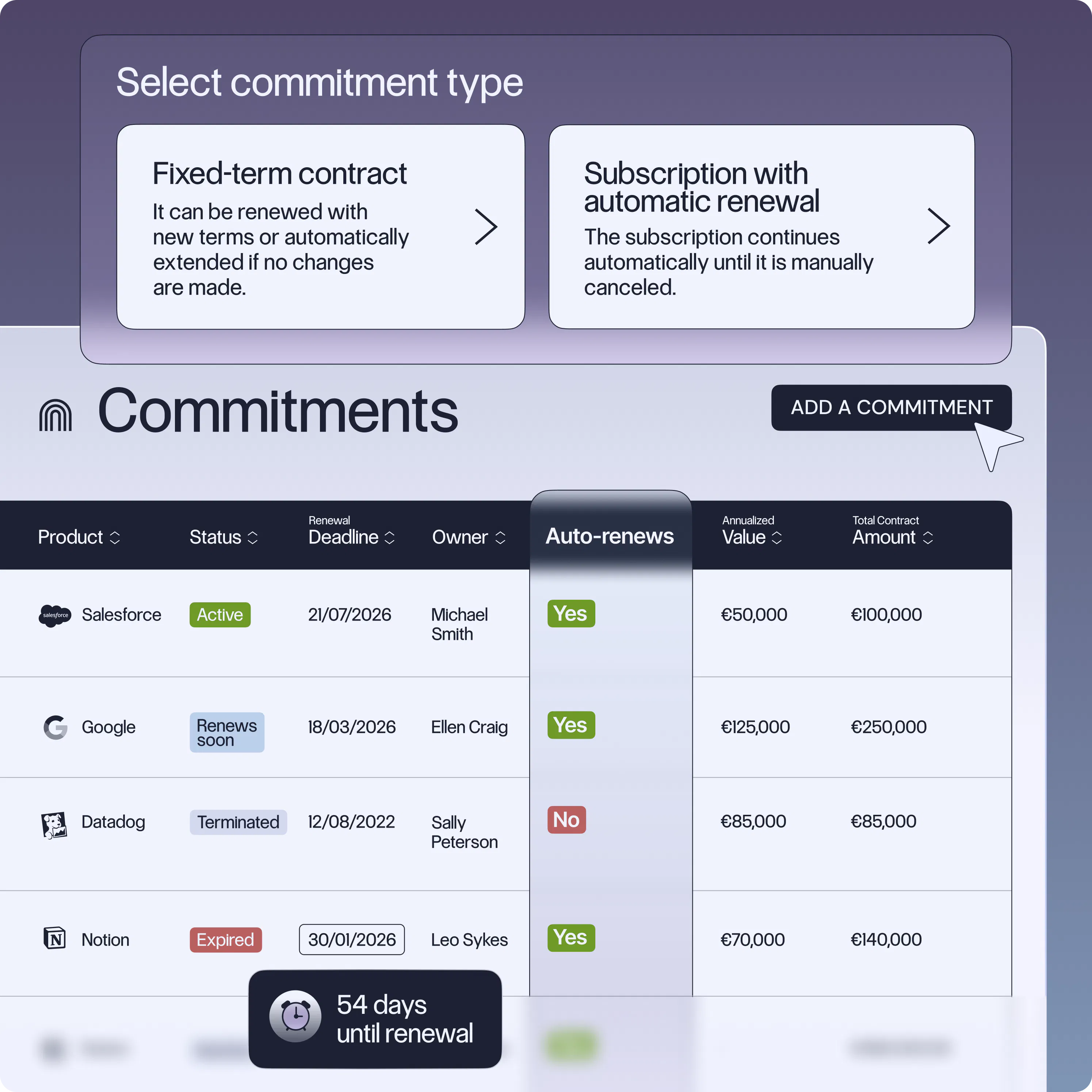
The platform also strengthens vendor management by centralising supplier information, contracts and renewal timelines. Having a complete picture of vendor relationships makes negotiations more strategic and helps identify opportunities to consolidate similar software.
Finally, actionable dashboards bring all of this information together in a format that's easy to understand. Instead of manually building reports, executives, finance teams and procurement leaders can monitor software spend, track key metrics and identify savings opportunities in real time.
By combining discovery, analytics, subscription tracking and procurement workflows in one place, Najar helps organisations move beyond simply tracking software spend to actively managing it.
Take control of your SaaS spend with Najar
SaaS spend visibility is the foundation of effective SaaS management.
Before you can reduce software costs and negotiate better contracts you need a clear understanding of what software your organisation owns, who uses it and how much it's costing.
While spreadsheets and manual audits may work for smaller businesses, they quickly become difficult to maintain as software portfolios grow.
Automated discovery, centralised dashboards and continuous monitoring provide a far more reliable way to stay in control of software spending.
Najar brings these capabilities together by giving finance, procurement, IT and department leaders a shared view of every application, subscription and vendor. With accurate, real-time visibility, organisations can make smarter purchasing decisions, reduce unnecessary spend and build a more efficient, scalable approach to SaaS management.
What is SaaS spend visibility?
SaaS spend visibility is the ability to see all of your organisation's software subscriptions, costs and usage in one place.
It provides a complete view of your SaaS applications, including who owns them, how much they cost, when they renew and how they're being used. With this information, businesses can identify unnecessary spending, improve budgeting and make more informed software purchasing decisions.
What is the difference between SaaS spend visibility and SaaS spend management?
SaaS spend visibility is about understanding your software estate, while SaaS spend management is about taking action.
Visibility helps you answer questions such as What software do we have?, Who owns it? and How much are we spending?
Spend management uses those insights to optimise software investments by reclaiming unused licences, negotiating contracts, consolidating duplicate applications and improving procurement processes.
In short, visibility provides the data, while management turns that data into action.
What metrics should you monitor for SaaS spend visibility?
The most useful SaaS spend metrics include total software spend, spend by department, spend by vendor, software spend per employee, licence utilisation, active versus inactive users, upcoming renewals, contract values and application ownership.
What tools improve SaaS spend visibility?
SaaS management platforms such as Najar improve SaaS spend visibility by combining automated SaaS discovery, spend analytics, subscription tracking, vendor management, procurement workflows and centralised dashboards. This gives finance, procurement and IT teams a shared, up-to-date view of software spending, making it easier to control costs and optimise SaaS investments.