Some of your biggest SaaS savings could be hiding in the contracts you already have.
A subscription renews automatically, unused licences go unnoticed, or two teams pay for tools with overlapping features. These costs can add up when contracts, software usage and spending are tracked separately.
Contract management software gives you a clearer view of your agreements, renewal dates and supplier commitments. As part of a broader SaaS management strategy, it helps you connect contract terms with licence usage, procurement and spend, so you can make better decisions before the next renewal.
What is contract management?
Contract management is the process of creating, organising, reviewing, approving, monitoring and renewing or ending contracts.
The lifecycle of your contract starts well before anyone signs an agreement and continues long after.
Once a contract is in place, you still need to know what you agreed to, who is responsible for it, when important dates are coming up and whether the agreement still makes sense for your business.
In practice, contract management can include:
- creating and reviewing contracts
- managing approvals and signatures
- storing contracts and key contract information
- tracking obligations, terms and important dates
- monitoring spend and usage where relevant
- managing supplier relationships
- preparing for upcoming renewals
- renegotiating, renewing or terminating agreements
A signed contract isn't the end of the process. If you simply save the document and forget about it until someone asks for it, you're missing much of the value of managing it properly.
A renewal date can pass, a supplier relationship can change, or you can continue paying for something your business no longer needs.
What is contract management software?
Contract management software is a platform designed to handle all tasks associated with your contracts.
At the most basic level, it gives you somewhere to store your contracts. But good contract management software should do more than act as a filing cabinet.
It should help you make sense of the information in your contracts and take action when something needs your attention.
For example, you should be able to see the contract, its renewal date, notice period, owner and other relevant information in one place. You can then use that information to decide what needs to happen next.
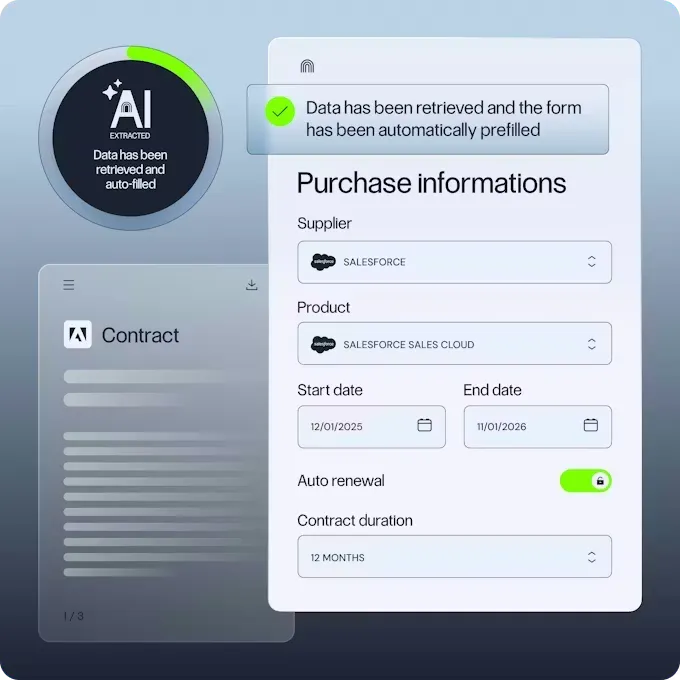
Depending on the platform, contract management software can help you:
- centralise contracts and related contract data
- extract important terms, dates and other information
- assign clear contract ownership
- track renewal dates and notice periods
- manage approvals and contract workflows
- connect contracts with spend and usage data
- flag contracts that need attention
- support renewal and negotiation decisions
This is also where AI can add useful support.
in contract management software, AI can help extract information from it, identify important dates and terms, summarise relevant details or surface agreements that need review.
The difference is important: contract management software doesn't replace contract management. It gives you the tools to manage your contracts with greater visibility and less manual effort.
Who is contract management software for?
Contract management software can be useful for anyone that handles several contracts and finds themselves going through endless documents and still missing data when going into a negotiation, but the value tends to increase as your contract portfolio grows, more teams become involved and contracts become harder to track manually.
It is particularly useful when contracts affect more than one department, although teams that benefit most from contract management software include:
- Procurement teams
Procurement teams can use contract management software to manage supplier agreements, renewals and negotiations across a larger contract portfolio.
Having contract terms, supplier information, spend and upcoming renewals in one place also gives you more context when reviewing agreements or preparing for negotiations.
You can use the information in your contracts to support sourcing decisions, supplier management and ongoing spend optimisation.
- Finance teams
Finance teams need visibility into what the business has committed to spend, as well as when those commitments may change.
Contract management software can make contractual spending and upcoming renewals easier to track, particularly when agreements are spread across different departments and suppliers.
This can give finance a clearer view of upcoming financial commitments and help connect contractual information with actual spend.
- IT teams
IT teams can benefit when they are responsible for a growing portfolio of SaaS applications, technology suppliers and licences.
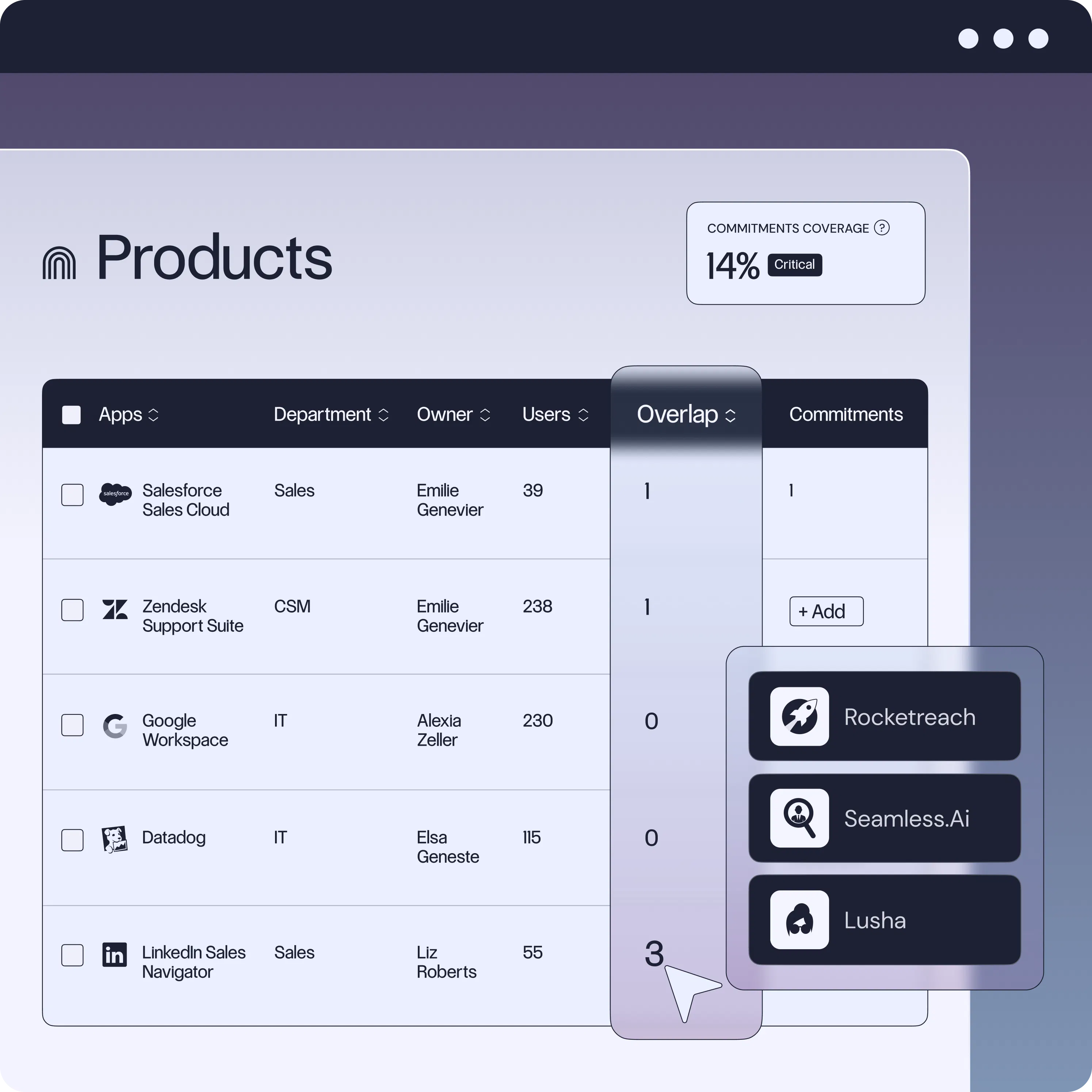
A contract tells you what you've agreed to buy, but you may also need to know how many licences you have, how much you're paying and whether the software is being used.
Connecting contracts with applications, licences, usage and spend gives you a more complete picture when you're reviewing technology costs or approaching a renewal.
- Legal teams
Legal teams can use contract management software to centralise agreements, manage workflows and maintain visibility over contractual terms and obligations.
Rather than being asked to locate contracts or answer questions about individual agreements every time someone needs information, you can keep a structured record of contracts and make relevant information easier for authorised stakeholders to access.
- Operations and business teams
Contracts are ultimately tied to the products, services and suppliers that people across the business rely on.
Operations and business teams therefore have an important role in making sure agreements remain connected to the people actually using those products and services.
Clear ownership makes it easier to know who should review a contract, confirm whether a service is still needed or provide input before a renewal. It also prevents contracts from becoming disconnected from the business context in which they are being used.
Why use software to manage contracts?
Once you have more than a handful of contracts to keep track of, managing them manually can become surprisingly difficult.
Information ends up spread across procurement systems, shared drives, inboxes, spreadsheets and individual employees' files. Even when the contract itself is easy to find, the information you need to act on it may not be.
Contract management software offers many benefits.
It gives you one view of your contracts
Your contracts rarely live in one place by default.
A supplier agreement might be saved in a shared drive, renewal details might sit in a spreadsheet, and the person who actually manages the relationship might have the relevant information in their inbox.
That makes it difficult to answer simple questions. Which contracts do you have with a particular supplier? Who owns them? How much are you spending? When do they renew? Which ones need attention?
Centralising your contracts and their key information gives procurement, finance, IT, legal and other stakeholders access to the same information.
It makes renewal dates easier to manage
Renewal dates and notice periods are some of the easiest parts of contract management to overlook, particularly when you are managing dozens or hundreds of agreements.
Software can make these dates visible alongside the relevant contract and its owner, with notifications to help you act before a deadline arrives. But the value isn't simply remembering that a contract renews on a particular date.
You need enough time to review the agreement, check usage and licences, assess pricing and decide what you want to do.
If you only look at a contract when the renewal is days away, your options may already be limited. Starting the review earlier gives you time to renegotiate terms, adjust licences, compare alternatives or decide whether you want to continue with the supplier at all.
It connects contracts with commercial information
A contract tells you what you have agreed to, but that information becomes much more useful when you can view it alongside the commercial context.
For example, for a SaaS contract, you may want to see the:
- supplier
- spend
- users and licences
- actual usage
- renewal date
- contract terms
- contract owner
This gives you a more complete picture of the agreement you're managing. Instead of treating contracts as documents that need to be stored and retrieved, you can use them as part of the information you need to make procurement and spend decisions.
It creates clearer ownership
A contract needs an owner, but that isn't necessarily the person who uses the product or service.
For example, most employees might use Slack, Notion, or Salesforce on a daily basis, howevwr they are not involved at all in the supplier relationship, budget or renewal decision.
Without clear ownership, important contract information can become tied to the person who happened to arrange the purchase rather than the person who needs to manage it.
With contract management software you can assign ownership and make that responsibility visible. That makes it easier to know who should review a contract, respond to a renewal notification or help decide what happens next.
It reduces manual contract administration
There is a lot of repetitive work involved in keeping contracts organised. You might maintain spreadsheets of renewal dates, set individual calendar reminders, search documents for key terms or repeatedly ask colleagues for information that should already be available.
Software can automate parts of this work through notifications, information extraction, workflows and tracking. AI can also help pull relevant information from contracts, reducing the amount of manual reading and data entry required.
The goal isn't to automate every decision. It's to spend less time maintaining the system and more time using the information it contains.
It gives you the upper hand in negotiations
Good contract management gives you a stronger position when it's time to negotiate.
When you have your contract terms, current spend, usage, licences and supplier information in one place, you have the context you need before entering a negotiation. You can see what you're currently paying, what you're actually using and which terms may need to change.
Effective negotiation depends on having information the supplier doesn't necessarily have access to.
If you're negotiating a renewal, for example, knowing that you're paying for unused licences gives you something concrete to negotiate. Having previous pricing and contract terms to hand can also help you understand what you're asking for and where there may be room for improvement.
The same applies when you're negotiating with a new supplier.
You may not have an existing contract to benchmark against, but your contract and spend data from similar suppliers can give you useful context around pricing, terms and commitments.
Instead of going into a negotiation with a contract and a few assumptions, you can go in with the information you need to ask better questions, challenge terms and negotiate from a more informed position.
What can you use contract management software for?
Contract management software is most useful when it helps you manage the work around your contracts, not just the documents themselves.
The exact use cases will depend on your organisation, but the biggest benefits tend to come from making renewals, suppliers, procurement activity and contractual commitments easier to manage in one place.
Managing contract renewals
Renewals are one of the most practical reasons to use contract management software.
You can keep renewal dates, notice periods and contract owners connected to the relevant agreement, instead of depending on scattered spreadsheets.
This gives you time to review a contract before you are committed to another term. You can check whether the business still needs the product or service, review usage and licences, assess pricing and terms, and decide whether to renew, renegotiate or cancel.
For SaaS contracts, this can be particularly valuable when you're managing a large software portfolio with different suppliers, renewal dates and licence arrangements.
Managing SaaS and software contracts
Software contracts can be difficult to manage because the contract is only one part of the picture.
To make a good renewal decision, you may also need to know how much you're spending, how many licences you have, who is using the software and whether those licences are actually being used.
Contract management software can bring these details together:
contract → application → supplier → spend → users → licences → usage → renewal
With that context in one place, you can identify contracts that need attention and make renewal decisions based on more than the terms of the agreement alone.
Connecting contracts with procurement
A contract doesn't exist in isolation from the procurement process that led to it.
You may have started with a purchase request, compared suppliers, collected quotes, negotiated pricing and secured internal approval before signing the agreement.
Contract management software can connect this activity across the wider procurement lifecycle:
request → approval → sourcing → supplier selection → negotiation → contract → renewal
That gives you a clearer record of how a supplier was selected and what was agreed, while making it easier to manage the relationship after the contract has been signed.
Finding important contract information quickly
You shouldn't have to open dozens of documents to find one renewal date or check what you agreed with a supplier.
Contract management software can make contract information searchable and structured, allowing you to find relevant agreements and key details more quickly.
AI can take this further by helping extract terms, dates, clauses and other information from contracts rather than requiring you to locate and read everything manually.
This becomes increasingly useful as your contract portfolio grows. The more agreements you have, the less practical it becomes to rely on people's memory or manually maintained spreadsheets.
What to look for in the best contract management software
The best contract management software helps you manage the commercial reality behind your contracts: what you're buying, who you're buying it from, what you're spending, how much you're using and what you want to do when the contract comes up for renewal.
This is particularly important for SaaS and technology contracts.
If your contract management system only tells you what you agreed to, you may still need to look elsewhere to work out whether the agreement is worth renewing.
Contract management begins before an agreement is signed. When choosing your platform, consider whether the software supports the lifecycle from initial request or contract creation through review, approval, signing, ongoing management and renewal or termination.
Ideally, contract management should connect with the processes that happen before and after the agreement is signed. That means procurement activity, supplier selection, negotiation, spend and renewal decisions shouldn't sit completely separately from the contract itself.
Other features should include:
- Centralised contract management
Your contracts and the information around them should be easy to find in one place. Look for a platform that lets you organise agreements alongside suppliers, owners, dates, value, terms and status.
For SaaS contracts, it's even more useful if you can connect the contract to the application, spend, licences, usage, and overlap with similar tools.
51% of organisations that use an AI writing tool have two or more running at the same time, while 16% have three or more. This creates a contract management problem as much as a software spend problem.
You might have separate agreements for ChatGPT, Claude, Microsoft 365, Gemini, Grammarly, Notion or other platforms, while different teams are using overlapping AI capabilities. If those contracts, suppliers, spend and usage sit in separate places, it becomes difficult to spot unnecessary duplication before another renewal goes through.
A contract management platform would help you notice this issue, and by eliminating one redundant AI writing tool in a 200-person organisation, you could save €15,000–€30,000 a year.
- Supplier management
A contract is part of a supplier relationship, not an isolated document.
Your software should make it possible to connect contracts with the suppliers behind them, so you can see the agreements you have in place, what you're spending and when relationships need to be reviewed.
This becomes particularly valuable when you're negotiating. Having supplier information and historical contract data available gives you more context before you sit down with a vendor.
- Automated renewal tracking
Renewals are one of the clearest reasons to move away from spreadsheets and manual reminders.
Look for renewal dates, notice periods, reminders and clear ownership. More importantly, ask whether the software gives you enough context to do something about an upcoming renewal.
A notification telling you that a SaaS contract expires in 30 days is useful. Knowing the contract value, supplier, usage, licences and terms at the same time is much more useful. It gives you a chance to review the agreement, negotiate, reduce licences or decide not to renew before you're locked into another term.
- Search and contract data extraction
Look for search and extraction capabilities that can help you retrieve renewal dates, pricing, terms, commitments and other important clauses without manually opening every document.
AI can make this particularly useful by helping extract and organise contract information. But the real value comes when that information can be used alongside the rest of your procurement and spend data.
- Workflow and approvals
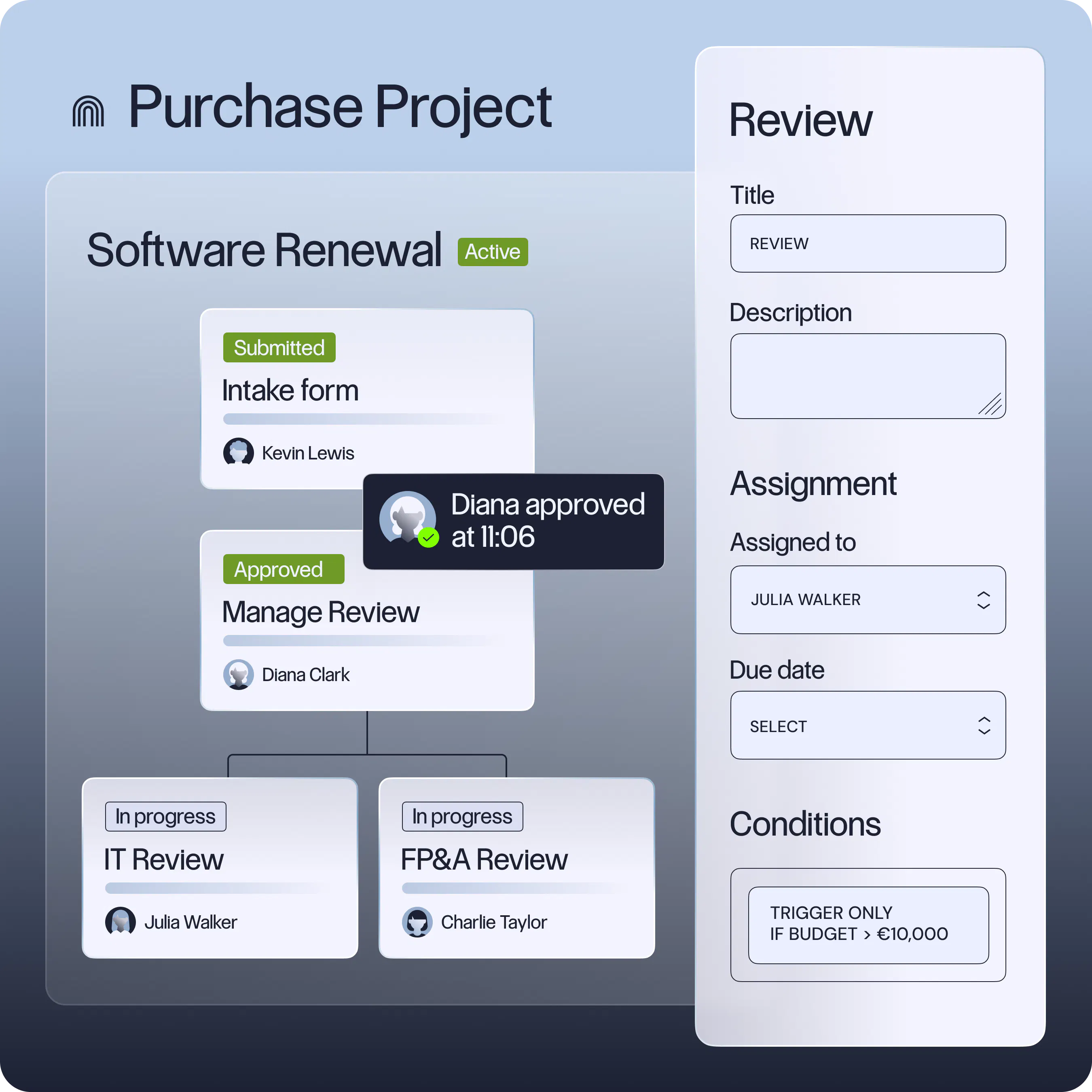
Contracts rarely involve just one person. Procurement may manage the supplier, finance may approve the budget, legal may review the terms and an IT or business owner may be responsible for the product.
Your software should support these processes rather than simply storing the final agreement.
Consider whether you can manage approvals, assign responsibilities and track where a contract is in its lifecycle. Better still, look for software that connects contract workflows with the wider purchasing and procurement process.
- AI capabilities
AI can make contract management software considerably more useful, but "AI-powered" shouldn't be a deciding factor on its own. Look at what the AI actually helps you do.
Useful capabilities can include:
→ extracting important information from contracts
→ identifying relevant terms and clauses
→ summarising agreements
→ connecting contract information with other business data
→ flagging contracts that require attention
→ supporting analysis and decision-making
The important question is whether the AI helps you get from contract information to a better decision. Combining renewal dates with spend, usage and supplier information allows you to prioritise which renewals need attention.
7 best contract management software
The best contract management software depends on the agreements you manage and what you need to do with them. Some platforms focus on legal drafting, review and approvals, while others connect contracts with procurement, supplier relationships, software usage and spend.
If you manage SaaS subscriptions or work in procurement, look for software that helps you act on contract information: tracking renewal dates, reviewing commitments, comparing costs and preparing for negotiations. Here are eight platforms worth comparing, with different strengths depending on your needs.
1. Najar - Best for SaaS spend and procurement contract management
⭐⭐⭐⭐⭐ Ratings
G2 4.6/5 | Capterra 4.9/5
Najar connects contract management with the full procurement process, from purchase requests and approvals to supplier sourcing and spend analysis. You can centralise contracts, automatically extract key details and track deadlines, keeping important information accessible when a renewal or purchasing decision comes up.
This approach is particularly useful when you need to understand a contract in the context of your software spend. By connecting procurement information with supplier and contract data, Najar helps teams identify potential savings, review purchasing decisions and prepare for negotiations.
It is a strong option for organisations that are looking to manage SaaS contracts alongside procurement workflows rather than treating contracts as standalone documents.
See how Najar saved Back Market an average of 16% across contracts.
2. Vertice - Best for SaaS contract renewals
⭐⭐⭐⭐⭐ Ratings
G2 4.6/5
Vertice offers contract management designed around vendor agreements, with centralised storage, contract data extraction, ownership tracking and renewal visibility. Its platform helps teams organise agreements, review key terms and monitor upcoming deadlines.
It is useful for businesses that need to manage a large software portfolio. Connecting contract information with SaaS spend and licence usage can help teams decide which subscriptions to renew, renegotiate or reassess before a deadline approaches.

3. Vendr - Best for AI-powered negotiations
⭐⭐⭐⭐ Ratings
G2 4.6/5 | Capterra 4.1/5
Vendr handles contract management with Ruth, their AI agent. Its contract tools allow teams to centralise agreements, track renewal dates and organise contract information, including for SaaS and non-SaaS agreements.
This platform is a good choice if you’re just looking for automated renewal negotiation. Ruth will gather all the necessary data and handle the negotiation for you. However, if you’re looking for more advanced negotiation strategies for other contracts, you might need a platform that offers a negotiation team.

4. Spendflo - Best for renewal workflows
⭐⭐⭐⭐⭐ Ratings
G2 4.6/5 | Capterra 4.7/5
Spendflo brings procurement, contract management and spend visibility together. Its capabilities include managing agreements and supplier information, tracking renewals and connecting contracts with purchasing and financial workflows.
Consider Spendflo if you want to coordinate software purchasing and renewals while giving finance and procurement teams a clearer view of vendor commitments. Check which contract management features are included in the plan that fits your organisation. With the simplest plan you get basic renewal alerts and contract storage, however, if you want to get AI in the mix you’ll have to upgrade your plan.

5. Tropic - Best for contract oversight
⭐⭐⭐⭐⭐ Ratings
G2 4.5/5 | Capterra
Tropic combines contract management with SaaS and AI procurement and it uses contract data to surface upcoming renewals, pricing information, compliance gaps and potential savings opportunities.
The platform supports renewal prioritisation and proposal reviews through AI agents, and its proprietary pricing benchmarks and procurement experts help teams prepare for supplier negotiations. Tropic can flag redundant software spend, overlapping capabilities, contract risks and invoice discrepancies.

6. Sastrify - Best for software portfolio and renewal management
⭐⭐⭐⭐⭐ Ratings
G2 4.5/5 | Capterra 5/5
Sastrify helps IT, finance and procurement teams manage SaaS portfolios by bringing software contracts, licences, usage, supplier information and spend into one platform.
For contract and renewal management, Sastrify centralises vendor agreements and key renewal details, automates alerts and workflows, and uses pricing benchmarks to help teams assess whether they are getting a competitive deal. Its procurement features also cover purchase requests, approval routing and negotiation support, with specialists available to assist with new purchases and renewals.
This makes it a good fit if your main issue is reducing redundant subscriptionsand controling SaaS costs before contracts renew.
However, getting the most out of Sastrify requires someone internally to oversee the process. It is recommended to point out a person to monitor contract expiry dates and follow up with tool owners to realise potential savings. For organisations with a large SaaS portfolio, this means contract visibility and automated reminders still need to be backed by clear ownership and active renewal management.

7. Zylo - Best for SaaS discovery and licence optimisation
⭐⭐⭐⭐⭐ Ratings
G2 4.7/5 | Capterra 4.5/5
Zylo helps IT, finance and procurement teams manage SaaS contracts alongside software inventory, licence usage and spending. Its Contract Center centralises agreements and key contract details, while automated alerts and renewal calendars give teams advance notice of upcoming deadlines and renewal tasks.
Zylo’s main strength is connecting contract information with the data needed to make informed renewal decisions. Teams can review licence utilisation, compare vendor pricing against market benchmarks, identify overlapping applications and assess whether subscriptions still meet business needs.
Renewal workflows, reporting and cost allocation also help teams coordinate with application owners, prepare for negotiations and identify opportunities to reduce or consolidate spend before committing to another term.
However, realising these savings requires more than having renewal dates and usage data in one place. Teams need accurate contract records, reliable usage insights and clear ownership of each application, as well as internal follow-up to turn findings into action.

How to choose the right contract management software
Start by identifying what you need to manage. For SaaS contracts, this usually means agreement terms, renewal dates, contract owners, subscription costs and licence usage. Choose software that brings this information together and makes it easy to find.
- Check renewal management
Look for automated reminders, notice-period tracking and clear records of renewal dates. You need enough time to review a contract before it renews automatically.
- Look for spend and usage data
Contract records alone won't tell you whether a subscription is still worth paying for. Choose a platform that lets you compare contract costs with licence usage, identify redundant tools and review pricing before negotiations.
- Review procurement workflows
Check whether you can manage purchase requests, approvals, supplier details and contracts in one place. This helps your you assess existing commitments before approving new software.
- Check integrations and reporting
Make sure the platform connects with your existing finance and IT systems, and that you can assign contract ownership and track upcoming decisions.
Platforms such as Najar combine SaaS contract management with supplier information, spend visibility and procurement approvals, helping IT, finance and procurement teams manage renewals and software purchasing in one workflow.
Trust Najar for the best SaaS contract management
Contract management isn't simply keeping contracts somewhere you can find them.
The real value comes from knowing what you've agreed to, who owns each contract, how much you're spending, when decisions need to be made and what should happen next.
Actually being able to keep track of this information across separate documents, spreadsheets and systems is pretty unmanageable (and way too stressful). SaaS spend platforms with contract management give you a way to connect contract terms with the suppliers, software, licences and spending decisions they affect.
With Najar, you can centralise agreements, keep track of contract owners and key dates, review licence usage before renewals, and prepare for negotiations with a clearer picture of your commitments. AI-assisted contract information extraction also helps you access important details without manually reviewing every document.
With this connected view, procurement, IT and finance teams can spot upcoming decisions earlier, identify potential savings and make better-informed choices about which contracts to renew, renegotiate or cancel.
Work with Najar to connect your SaaS contracts, spend, suppliers and renewals, and make every procurement decision
with the context it needs.