
Somewhere in your company right now, a SaaS contract is quietly auto-renewing.
Nobody remembers signing it. Nobody’s using half the seats, yet the invoice just went up 12% because the fine print allowed it.
This is what happens without proper SaaS Contract Management.
When contracts are managed with just spreadsheets and emails, they tend to accumulate, renewal dates get missed, and negotiations usually happen only when there is urgent pressure, if they happen at all.
What is SaaS Contract Management
SaaS Contract Management is the process of tracking, negotiating, and controlling every software agreement a company holds by contract, from first evaluation through renewal, renegotiation, or cancellation.
It’s much broader than just storing PDFs in a shared folder. A good process includes clear ownership, meaning someone is responsible for each vendor.
It also ensures visibility into what is being paid, for example, when contracts renew, and what the terms are.
Finally, it supports taking action, such as renegotiating, downgrading, or canceling before auto-renewal happens.
SaaS Contract Management is often confused with SaaS portfolio management, but the two solve different problems.
Portfolio management looks at the full software stack from a usage and spend angle, tracking which tools exist, who’s using them, and where there’s overlap.
Contract management focuses on the legal and financial terms of each agreement.
The two approaches work best together. Portfolio data shows which contracts are worth renegotiating, while contract data explains how to do so.
→ 💻 For more, read our article about Top SaaS Portfolio Management Software
What Does Contract Management Include
SaaS contracts are now the fastest-growing type of agreement to manage since they renew more often and spread across departments much more quickly than traditional IT purchases.
They hold a handful of related disciplines working together:
Discipline | Purpose |
|---|---|
IT Contract Management | Manages hardware, infrastructure, services, and SaaS contracts. |
SaaS Contract Negotiation | Negotiates pricing, terms, renewals, and SLAs. |
SaaS Pricing Negotiation | Focuses on lowering software costs and securing better pricing. |
SaaS Subscription Management | Tracks subscriptions, licenses, and software usage. |
Contract Renewal Management | Prevents missed renewals and unwanted auto-renewals. |
IT Contract Management forms the base and covers a wide range of agreements handled by IT and procurement teams, such as hardware, infrastructure, services, and SaaS contracts.
SaaS Contract Negotiation is part of this process and involves setting commercial terms before signing or renewing a contract. This covers pricing, contract length, auto-renewal clauses, and service-level commitments.
SaaS Pricing Negotiation focuses specifically on costs. The aim is to get better pricing, negotiate volume discounts, limit yearly price increases, and make sure pricing tiers reflect real usage instead of just initial estimates.
After contracts are signed, SaaS Subscription Management handles the day-to-day work. This includes tracking subscriptions, license numbers, feature tiers, and software use throughout the organization.
Finally, Contract Renewal Management helps make sure agreements are not missed when it is time to renew. It uses renewal calendars, automated alerts, and regular contract reviews before important deadlines.
Why is SaaS Contract Management Important for Growing a Business?
As your company grows, so does the number of SaaS contracts you need to manage. Without a structured process, it's easy to miss renewals, overpay for unused licenses, or end up with duplicate tools.
A strong SaaS Contract Management process helps you:
- Save time
- Reduce SaaS costs
- Avoid surprise renewals
- Strengthen contract negotiations
- Eliminate duplicate software
For starters, keeping all contracts, pricing details, license counts, and renewal dates in one centralized location saves valuable time.
Instead of digging through emails and PDFs, procurement, finance, and IT teams can quickly access the information they need.
At the same time, regular contract reviews help reduce unnecessary SaaS spending. By comparing contract terms with actual software usage, businesses can identify unused licenses, remove redundant subscriptions, and optimize contracts before renewal.
Another important benefit is avoiding expensive auto-renewals. Automated reminders give teams enough time to review usage, evaluate alternatives, and decide whether to renew, renegotiate, or cancel a contract.
On top of that, centralized contract data gives buyers more leverage during negotiations. Historical pricing, usage metrics, and contract terms make it easier to challenge price increases and secure better commercial agreements.
Finally, having complete visibility into your SaaS portfolio helps eliminate duplicate software. Teams can see which tools are already available across the organization, reducing unnecessary purchases and software sprawl.
💡 Tip
Start reviewing your SaaS contracts at least 90 days before renewal. This gives you enough time to assess usage, benchmark vendors, and negotiate better pricing before you're locked into another contract term.
Why Is Renewal Management Your Biggest Enemy
Renewal management is often where good intentions fail, mainly because no one is watching the calendar closely enough.
The solution is to use a renewal calendar that flags contracts 60 to 90 days before their renewal date. This gives enough time to negotiate rather than simply approve the next invoice.
Every flagged renewal should trigger three questions:
“Is this tool still being used at the level we’re paying for?”
“Has the price changed since last time?”
“And is there a better deal available elsewhere?”
It is important to track price increases each year, because even small annual changes can add up quickly across many software tools.
Usage data should sit alongside the contract itself, so decisions to renew, downgrade, or cancel are based on actual adoption rather than a gut feeling.
Deciding whether to cancel or renegotiate becomes easier when a system prompts you at the right time, rather than relying on someone to remember a date buried in an old email.
The SaaS Contract Management Lifecycle
Every SaaS contract moves through the same core stages, whether anyone’s tracking it or not.
Intake: A team requests a new tool, and someone needs to log the request, the budget, and the business case.
Negotiation: Terms, pricing, and contract length get discussed before signature, ideally with input from procurement rather than just the requesting team.
Approval: Legal, finance, and sometimes security sign off before the contract is finalized.
Signature: The agreement is executed and stored in a place where it can be found later.
Active management: Usage, cost, and performance get tracked against what was agreed.
Renewal or termination: Ahead of the renewal date, the decision is made whether to renew as-is, renegotiate, downgrade, or cancel.
Most companies manage the first four stages well because the signing process adds structure. The last two stages are often missed because there is nothing requiring anyone to review a contract after it is signed.
4 Tips To Negotiate Better SaaS Contract Terms
The terms you agree to can have just as much impact on the total cost of the software, especially as your usage and business needs change:
1. Start Negotiating Early
Finally, don't wait until the contract is about to expire to start negotiating. Review usage, business needs, and alternative vendors well in advance so you can negotiate from a stronger position rather than accepting the vendor's terms under time pressure.
💡 Negotiation tip: Go into every discussion with data. Knowing your actual usage, current pricing, future needs, and available alternatives gives you much more leverage than simply asking for a discount.
2. Negotiate Flexibility Into Multi-Year Contracts
Multi-year commitments can unlock significant discounts, but they can also become expensive if you're locked into licenses you no longer need. Before committing, ask for flexibility to reduce seat counts, adjust plans, or renegotiate pricing if your usage changes.
3. Choose the Right Pricing Model
It is also worth discussing the pricing model itself. If your software usage fluctuates, usage-based pricing may be more cost-effective than a fixed contract. On the other hand, predictable usage may make a flat-rate agreement easier to budget for.
4. Review Auto-Renewal Terms Carefully
Beyond pricing, pay close attention to auto-renewal clauses and cancellation windows. A contract that requires notice 60 or 90 days before renewal can easily roll over for another year if the deadline is missed. Ask for a shorter notice period, renewal reminders, or the removal of automatic renewal altogether.
→ 💻 For more details about a successful negotiation, read our guide on SaaS contract negotiation
Red Flags To Catch Before Signing a Contract
It's easiest to negotiate a contract before you sign it. After the agreement is finalized, making changes can be much harder and costlier.
Most people focus on pricing, but some of the biggest risks are actually in the contract details. Spending a little extra time reviewing the terms can help you avoid surprise costs, operational problems, and tough renewal talks down the road.
Watch out for these common red flags:
- Short auto-renewal windows: Cancellation notice periods of just 30 or 60 days, often without any reminders.
- Vague SLAs: The contract may not clearly promise uptime or explain what happens if the service falls short.
- Unclear data ownership: The vendor might have broad rights to your data, or it may not be clear what happens to your data when the contract ends.
- Hidden fees: Extra charges for setup, premium support, or going over usage limits may only show up after you sign.
- Rigid seat commitments: You might not be able to lower the number of licenses if your team size changes before renewal.
These clauses are not always dealbreakers. Still, it's much easier to spot and negotiate them before you sign than to try to change them later.
8 Tips for Successful SaaS Contract Management
Managing SaaS contracts well means ensuring each agreement continues to deliver value over time and helps you avoid additional costs and risks:
1. Centralize all your contracts
Storing all your contracts in one place is important to managing them well. When teams like procurement, finance, IT, and legal use the same system, they can easily find pricing, renewal dates, contract terms, and important details without searching through emails or folders.
2. Track renewal deadlines well in advance
Missing a cancellation window can be a costly mistake. Set reminders 60 to 90 days before each renewal, so you have time to review your software usage, consider other options, and talk to vendors before the contract renews automatically.
3. Review software usage regularly
Your software needs may change, but contracts often stay the same. Every few months, check how many seats you bought versus how many you use. This helps you spot unused accounts, features you don’t need, or subscriptions that aren’t worth it. Even small changes can save money when it’s time to renew.
4. Standardize your contract reviews
Every SaaS contract should be reviewed using the same checklist. Besides pricing, verify renewal clauses, SLAs, security requirements, compliance obligations, data ownership, and exit terms. A standardized review process reduces the chances of overlooking costly clauses.
5. Negotiate more than the price
Discounts are important, but they’re just one part of the deal. Things like how much notice you need to give for renewal, payment plans, setup fees, support, and being able to change the number of seats can all affect your total costs.
For example, if you can reduce the number of licenses during the contract, you might save more than a small upfront discount, especially if your team size changes.
💡 Tip
Keep a record of your past negotiations, even after the contract is signed. Write down old prices, discounts, vendor offers, and agreed terms so your team has more power when it’s time to renew.
7. Monitor your SaaS portfolio continuously
Don’t manage contracts alone. Look at all your SaaS tools together to spot duplicates, overlapping features, or apps you don’t use anymore. Seeing the full picture helps you make better buying decisions later.
8. Assign ownership to every contract
Make sure each contract has a clear owner. This could be someone from procurement, finance, or IT. Having one person in charge helps make sure renewals, vendor talks, and reviews don’t get missed.
Use A SaaS Tool To Manage Your Contracts
Spreadsheets may work for a few contracts, but they become unmanageable when a company has to handle dozens of vendors across different teams.
A dedicated SaaS Contract Management tool centralizes every agreement in one place, so nothing lives in someone’s personal inbox waiting to be forgotten.
It automatically flags renewal dates before the cancellation window closes and links contract data to actual usage and spending. This way, decisions are based on real data instead of guesses.
Integrations add another layer of value.
A tool that connects to finance systems and SSO platforms can automatically flag unused licenses. This helps catch waste that is almost impossible to find by manually checking spreadsheets every quarter.
The bigger benefit is time back.
Instead of searching for contract terms before each renewal, teams have the data organized and ready whenever a decision needs to be made.
→ 💻 For more, read our article about Top SaaS Portfolio Management Software
Najar Handles Contract Management For You
Most companies don’t lack the willingness to manage SaaS contracts well. They often lack sufficient time, visibility, or negotiating leverage to manage contracts effectively with multiple vendors simultaneously.
That’s where Najar comes in.
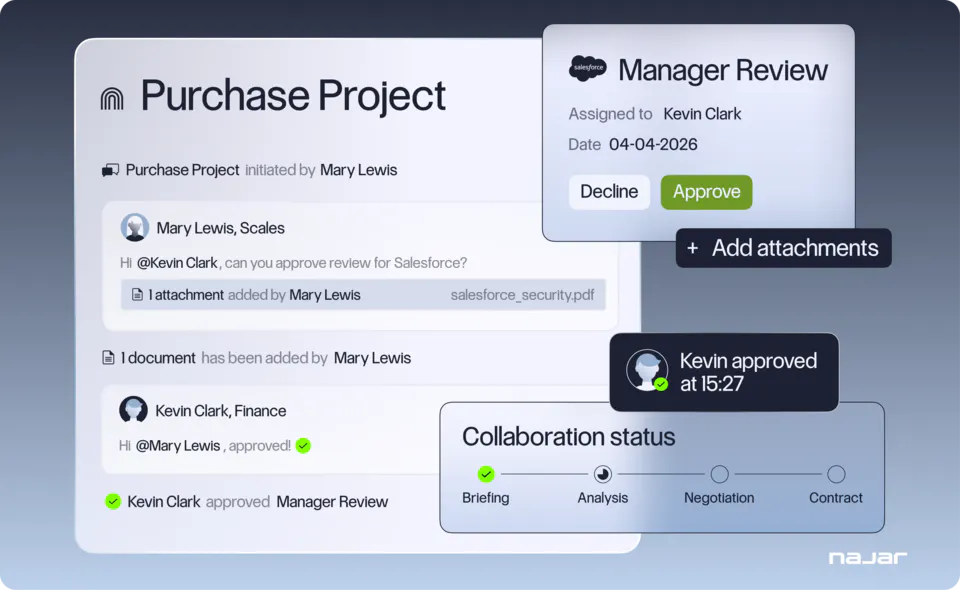
Najar centralizes all SaaS contracts in one place, automatically tracks renewal dates, and flags underused licenses before they become wasted spend.
The biggest advantage is the negotiation support.
Najar provides a team with up-to-date market data on what other companies pay for the same tools, along with procurement expertise that turns every renewal into an opportunity to save money, not just a routine task.
Instead of rushing before a renewal deadline or accepting any price a vendor offers, Najar’s customers negotiate with real leverage.
Ready to stop losing money on autopilot renewals?