
SaaS spend rarely explodes overnight, it quietly spirals through auto-renewals, duplicate tools, and contracts no one fully tracks.
Before long, you're overspending by thousands without a clear way to fix it.
That's where SaaS spend management platforms come in. Built to bring structure and visibility into SaaS procurement.
Although there are many great tools, some are sometimes chosen based on popularity alone, but there’s much more to take into consideration.
In this Vertice review we help you decide if this is the right tool for your company.
→ 💻 Looking for more options? Check out our comparison of the top 7 Vertice alternatives to find the best fit for your procurement and SaaS spend management needs.
What is Vertice?
Vertice is a SaaS procurement and spend management platform that helps companies control software spending through visibility, structured workflows, and contract management. It centralises software requests, offers some pricing guidance, and supports procurement teams during vendor negotiations.
The platform is divided into two main products: Intake-to-Procure and SaaS Purchasing.
Who is Vertice for?
Vertice is primarily designed for mid-market and enterprise companies that manage a large SaaS stack with complex internal procurement processes.
It tends to be a good fit for:
- Finance teams with rising SaaS budgets
- Procurement teams that juggle multiple vendor renewals
- IT teams that need to reduce shadow IT and improve governance
- Operations leaders who want spend visibility across departments
Vertice is most valuable for companies where SaaS spending has grown too large for spreadsheets and where a formal procurement process already exists internally.
However, Vertice may be less suitable for organizations that are looking for a more streamlined and procurement-centric experience.
It can be a challenging fit for:
- Teams that prefer a lightweight procurement workflow
- Organizations focused on driving high employee adoption across purchasing processes
- Companies looking to centralize procurement, vendor management, and contract oversight in a single collaborative workspace
- Businesses that want greater flexibility in how stakeholders participate in purchasing decisions
While Vertice offers strong SaaS purchasing and optimization capabilities, some organizations may find its approach better suited to companies with established procurement structures and dedicated resources to manage the platform.
For organizations that prioritize procurement adoption, cross-functional collaboration, and operational simplicity, alternatives such as Najar may provide a stronger fit. Najar combines procurement, vendor management, contract management, spend visibility, and SaaS negotiations in a single platform designed to make purchasing decisions easier for finance, procurement, IT, security, and business stakeholders alike.
Vertice Products
Vertice is built around two main products that cover different stages of procurement.
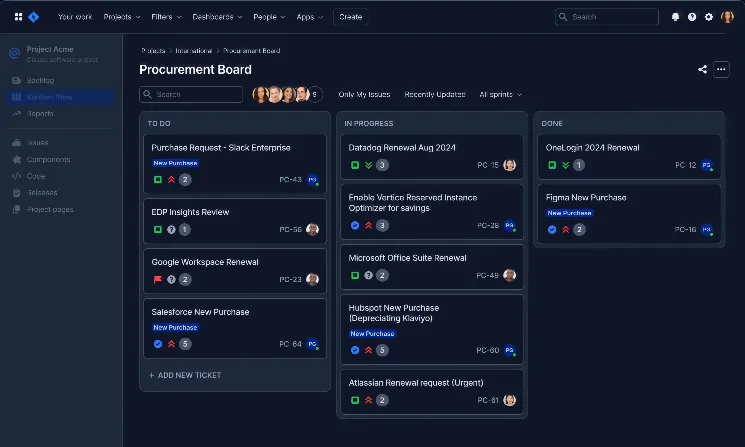
Intake-to-Procure focuses on how companies buy anything, orchestrating internal approval workflows.
SaaS Purchasing is specifically designed for software buying, with tools around vendor selection, renewal tracking, and negotiation support.
Intake-to-Procure
Intake-to-Procure automates the purchasing workflow. Requests are routed through approval chains based on company policy, budget thresholds, and category rules.
Teams can build no-code workflows to reflect their own processes. Each request can trigger steps such as budget validation, vendor risk checks, and stakeholder approvals.
Requests can be tracked in real time to identify where bottlenecks occur.
SaaS Purchasing
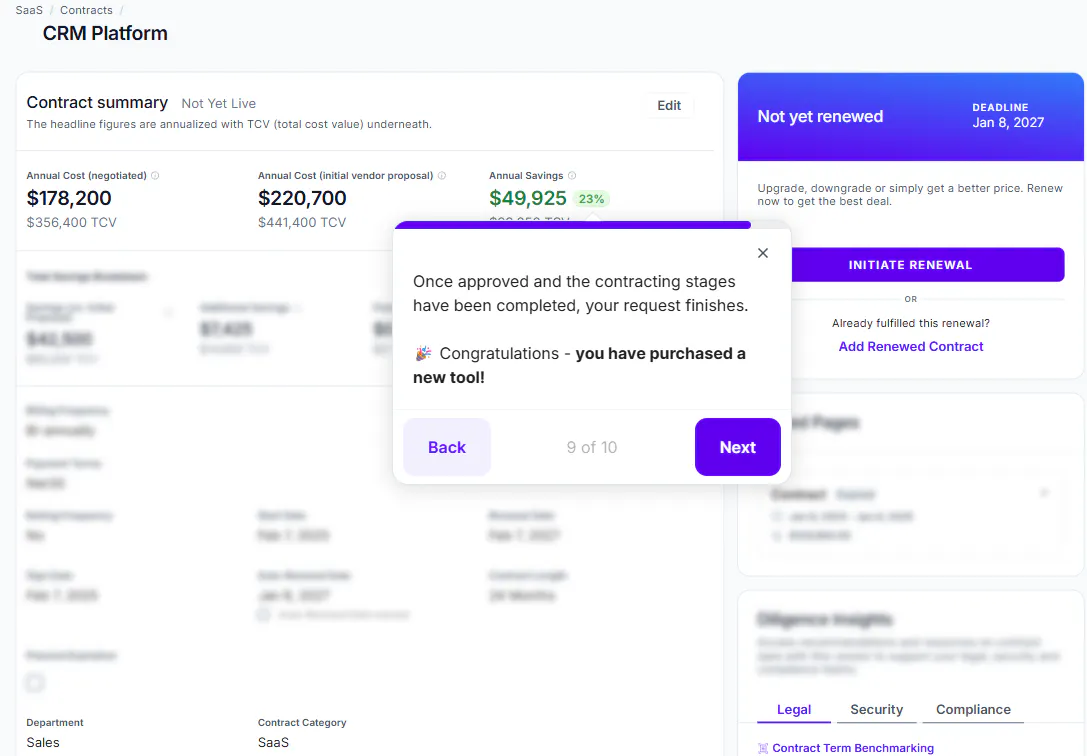
Vertice's SaaS Purchasing functionality focuses on vendor selection and renewal management. It provides access to some pricing benchmark data so teams can get a general sense of market rates when negotiating contracts.
Renewal tracking is a central part of the workflow, helping teams avoid unexpected auto-renewals and giving them a window to renegotiate before commitments roll over. The platform also connects you with a team who can assist with negotiation, though the depth of support will depend on your plan.
Vertice’s Features
Vertice allows you to build your procurement workflows and manage vendors and different contracts. This is done through several features, including:
Contract Center
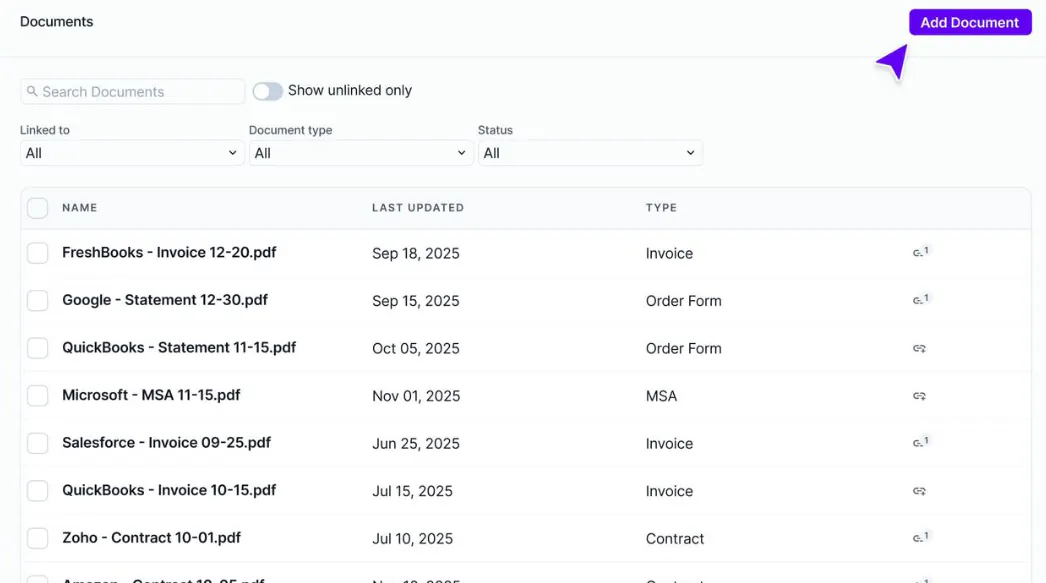
The Contract Center stores SaaS agreements, such as contracts, renewal dates, pricing terms, and key clauses. It gives teams visibility into upcoming renewals through a pipeline view and sends automated alerts via email or tools like Slack or Teams.
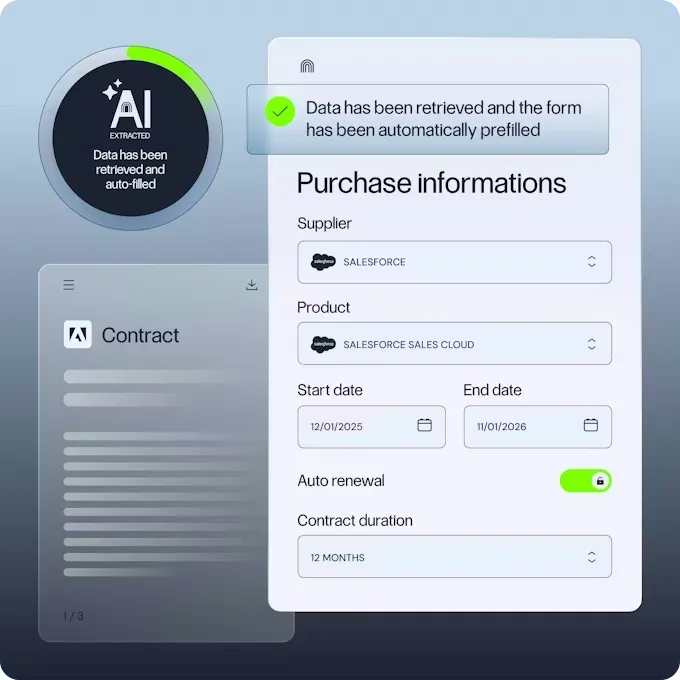
Contracts can be uploaded and reviewed within the platform, with key data points extracted to reduce manual entry.
Workflow Builder
The no-code Workflow Builder lets finance, procurement, IT, and legal teams design custom approval flows using a drag-and-drop interface.
Workflows can include conditional logic, for example, routing high-value purchases to finance leadership or triggering a security review for specific tools.
However, it is important to remember that the Workflow Builder is a process automation tool, not a procurement strategy solution.
Its value depends heavily on how well your internal team configures it. If your procurement processes aren't yet mature, there may be a meaningful setup investment before you see results.
Vendor Management
Vertice's Vendor Management consolidates vendor-related information, including contracts, pricing history, risk data, and communications. It covers the full vendor lifecycle from sourcing and RFPs through to renewals.
The platform monitors vendor risk across security, compliance, and financial stability dimensions, and includes a vendor portal for managing communications and documentation.
That said, this is primarily an organisational and visibility layer. It helps you track vendors and stay informed, but it doesn't replace the need for internal procurement expertise or hands-on negotiation skills.
Risk Management
Vertice's Risk Management feature gives visibility into third-party vendor risk and embeds compliance checks into procurement workflows. As vendors are evaluated or approved, teams can access risk signals across security, legal, financial, and compliance dimensions.
Vertice generates risk scores based on public sources and proprietary monitoring, and integrates with tools like Vanta, OneTrust, and Dun & Bradstreet to incorporate existing compliance frameworks.
Pricing
Vertice does not publicly disclose pricing. It operates on a custom model based on company size, SaaS spend volume, and the modules selected.
The three product areas, Intake-to-Procure, SaaS Purchasing, and Cloud Cost Optimisation, can be deployed individually or together, with pricing scaling accordingly.
This custom structure can make it difficult to forecast costs upfront, particularly if you need features across multiple modules.
What Do Users Really Think?
⭐⭐⭐⭐ G2: 4.6/5 | Gartner: 4/5
Vertice is not widely reviewed on platforms like Capterra, which limits the breadth of public feedback available.
Users who do review the platform tend to value the structured approach to procurement and the attentiveness of the support team. However, a consistent set of concerns also surfaces.
✔️ Pros
- Good visibility into SaaS contracts and renewal timelines
- Helpful customer support with genuine engagement
- Structured workflows that work well for teams with defined procurement processes
- Renewal tracking reduces the risk of unexpected auto-renewals
✖️ Cons
- Implementation takes time
- Limited execution support
- Usability challenges and a poor UI
- Accuracy issues in contract renewal data and the product catalog
- Siloed workflow
- Integration gaps
Best Alternative to Vertice
Vertice is a capable platform for companies that want to formalise procurement processes and gain visibility into their SaaS stack. It works well when you have internal procurement expertise to configure and run it effectively.
However, if you're looking for a more hands-on approach to SaaS cost reduction (particularly around contract negotiation) Najar is worth considering as an alternative.
Rather than focusing primarily on workflow orchestration, Najar pairs software with embedded procurement expertise.
Its Procurement Partners work directly with your team to benchmark pricing, negotiate contracts with vendors, and identify savings across your SaaS stack. This is especially useful if you don't have dedicated procurement resources internally or want faster, more measurable results without a long setup phase.
Najar is also designed for ongoing cost management, actively supporting renewals, pricing changes, and vendor consolidation rather than simply tracking them.
Najar tends to be a stronger fit if you:
- Need expert-led contract negotiations, not just tooling
- Want to reduce SaaS costs without building internal procurement capacity
- Are managing fast-growing or frequently renewing SaaS stacks
- Prefer a high-touch model focused on execution and outcomes
Is Vertice the Right Fit for You?
Vertice is a reasonable choice if your priority is governance, workflow standardisation, and visibility across a complex SaaS environment, and if you have the internal capacity to configure and manage procurement processes within the platform.
If, on the other hand, you are looking for a solution that combines procurement software with hands-on sourcing, negotiation expertise, and vendor management support, Najar may be the stronger fit.
While both platforms help organisations gain control over software spending, Najar places equal emphasis on technology and procurement execution.
In addition to providing a centralized platform for procurement, contract management, vendor oversight, approval workflows, and spend visibility, Najar also helps teams identify savings opportunities, benchmark pricing, and negotiate better vendor agreements.
Choose Vertice if your primary focus is SaaS governance, workflow control, and managing procurement processes internally.
Choose Najar if you want a procurement platform that combines spend management, vendor management, contract oversight, and negotiation support to help drive both operational efficiency and measurable cost savings.