
As SaaS stacks grow, it becomes harder to track subscriptions, manage renewals, and control software spending across teams.
That's why many organizations are turning to the best SaaS management platforms to gain visibility and reduce costs.
If you are thinking about Vertice but want to see what else is available, here are the main alternatives to consider.
→ 💻 Want a closer look at Vertice? Read our detailed Vertice review to explore its features, pricing, strengths, and limitations.
What is vertice
Vertice is a smart procurement platform that combines intake-to-procure workflows, SaaS purchasing, contract management, and AI automation into a single system.
It gives finance and procurement teams a clear view of their software stack, lets them compare vendor prices with real market data, and ensures savings on every contract renewal.
The platform includes over 32,000 vendors and has a team of expert buyers who negotiate for you.
It also helps optimize cloud costs for AWS, Azure, and Google Cloud, so you can manage both SaaS and cloud spending in one place.
Pricing:
- Vertice pricing runs on a fixed annual subscription tied to your total SaaS spending.
- Custom quotes available on request after a demo.
Vertice is a good choice for companies that want expert negotiation along with automated procurement workflows. That said, it’s not suitable for businesses of all sizes.
If you're evaluating Vertice alternatives, whether you need deeper procurement controls, more flexible pricing, or stronger SaaS cost visibility, there are several solid options worth considering. Here are the top 7 Vertice alternatives for 2026.
7 Best Vertice Alternatives Overview
What Is SaaS Management?
SaaS management means keeping track of all your company’s software subscriptions, making sure you control costs and get the most value from each one, from the moment you buy to when you stop using them.
As companies use more SaaS tools, managing them gets harder. Many mid-sized businesses have dozens of apps across teams, but often lack a clear overview of what’s in use, what’s unused, or what needs renewing soon.
A SaaS management platform puts all this information in one place. It helps finance, IT, and procurement teams see the same data about software spending, contracts, and usage.
→ Explore our complete guide to IT asset management to better track, optimize, and secure your entire technology stack
1. Najar – Best All-in-One SaaS Procurement Platform
Ratings ⭐⭐⭐⭐⭐
G2 4.6/5 (36) Capterra 4.9/5 (22) FeaturedCustomers 4.8/5.0 (426)
Pricing: Contact Najar for a demo and personalized quote.
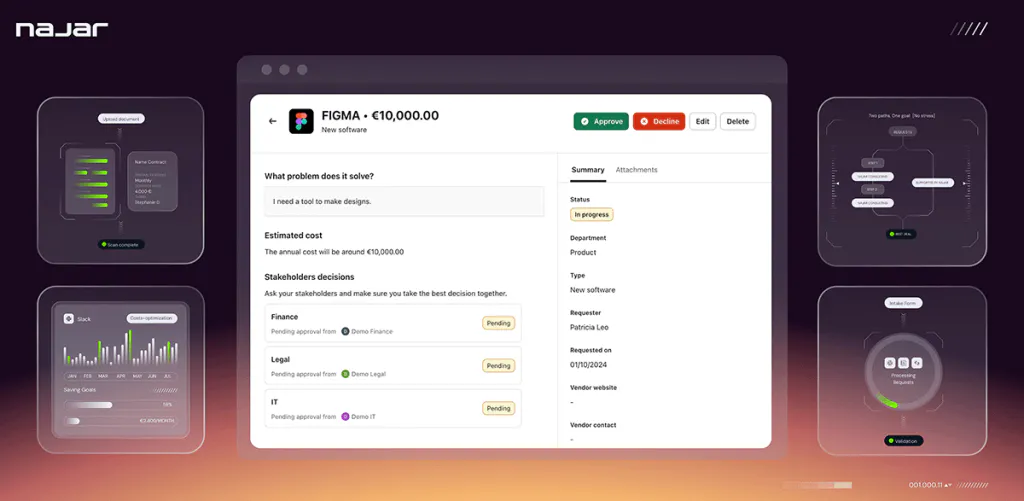
Najar is an AI-native platform that optimizes the entire software purchase lifecycle, from intake to renewal, giving companies full control over their spending without needing to build their own procurement team.
The platform centralizes:
- spend tracking
- automated approval workflows
- contract management
- supplier intelligence
- collaborative decision-making in a single platform.
It automatically surfaces inefficiencies, duplicate subscriptions, shadow IT activity, and renewal risks, so leadership always has full visibility and control.
What makes Najar unique is also the combination of advanced AI technology with hands-on support from experienced procurement specialists.
Rather than just providing a tool, Najar acts as an extension of your team, refining requests, sourcing the right vendors, and negotiating the best commercial terms on your behalf.
Finance, IT, and procurement teams can easily track all software subscriptions, contracts, and renewal dates, while built-in workflows ensure structured intake and faster, compliant approvals.
The results speak for themselves: clients have saved up to 36% on individual contracts, with some achieving savings of over 45%.
Najar delivers higher savings, stronger contract terms, and full compliance, without adding operational burden.
7 Major Najar Features
- Complete SaaS discovery and inventory → Centralizes all SaaS tools, licenses, and ownership across the organization.
- Usage and spend tracking → Tracks license usage, spending, and utilization to identify waste and optimization opportunities.
- Smart purchase requests and Workflows → Structured intake system with automated routing, approvals, and workflow configuration.
- Collaborative approval and Procurement Hub → Brings stakeholders together to review vendors, contracts, and decisions in one place.
- Vendor sourcing and Negotiation Support → Helps identify vendors, compare options, and negotiate pricing, terms, and contracts.
- Contract and renewal management → Centralizes contracts, tracks renewals, and prevents unwanted auto-renewals.
- AI-Powered insights and automation → Provides recommendations, forecasting, benchmarking, and automates multi-step procurement tasks.
Cons
Requires integrations to unlock full value
May be too robust for very small teams
Primarily operates in Europe; less suited for global organizations
Pros
Automatically surfaces shadow IT, duplicates, and renewal risks
Delivers higher savings and stronger contract terms through expert negotiation
Streamlines the entire purchase lifecycle with automated approvals and structured intake
Full visibility over spend, suppliers, contracts, and decisions in one place
Acts as an extension of your team without adding operational burden
Ensures full compliance across all software purchases
Provides supplier intelligence to source the right vendors at the right price
2. Zluri
Ratings ⭐⭐⭐⭐⭐
G2 4.6/5 (177) Gartner 4.6/5 (73)
Pricing: Zluri has a flexible pricing model based on employee count. Plans start at about $4-$8 per user per month for their core SaaS management platform.
The pricing includes Standard, Professional, and Enterprise options. Higher tiers include additional features such as advanced automation, custom integrations, and dedicated support.
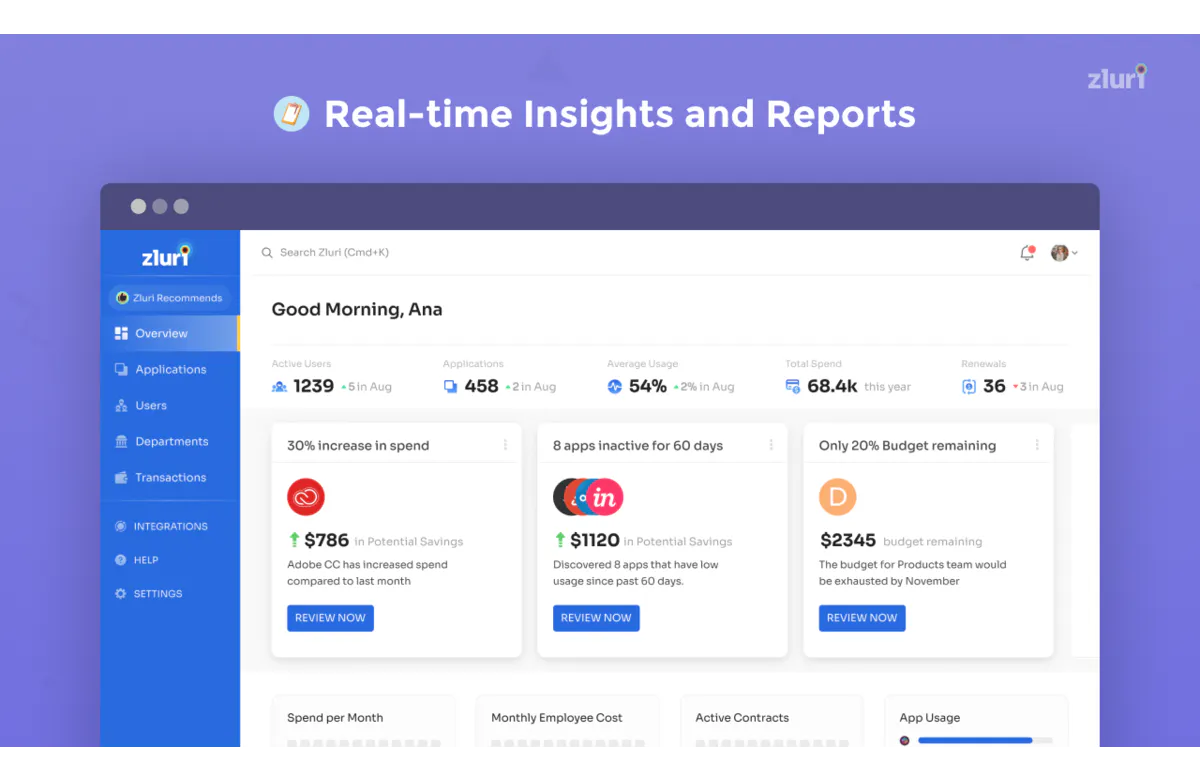
Zluri is an advanced Identity Governance and Administration (IGA) platform that helps manage SaaS applications and control software spending.
Zluri uses a patented 9-method discovery engine to find all applications in use across an organization, even those not officially approved. IT teams can manage licenses, access reviews, usage data, and compliance from one dashboard.
Zluri is built for IT and security teams who need to manage user identities, control application access, and keep software costs in check, unlike tools that focus only on procurement.
It automates onboarding, role changes, and offboarding, makes user access reviews easier, and tracks inactive users so teams can recover unused licenses.
Features:
- Compliance tooling for SOX, HIPAA, SOC 2
- License optimization with inactive user detection
- Multi-source SaaS discovery (IDP, browser agent, financial integrations, direct integrations)
- Automated access reviews and user provisioning/deprovisioning
Cons
Setup can take several weeks to complete
Generally seen as more expensive for mid-market companies
Some users say that direct integrations can be "finicky" to set up.
Some analytics dashboards may take time to update
Pros
Powerful app discovery features
Intuitive user interface
Cost optimization features
3. Sastrify
Ratings ⭐⭐⭐⭐⭐
G2 4.5/5 (87) FeaturedCustomers 4.8/5.0 (1306)
Pricing: Modular pricing. Software Management starts from €12.5k/year; Expert Procurement from €25k/year.
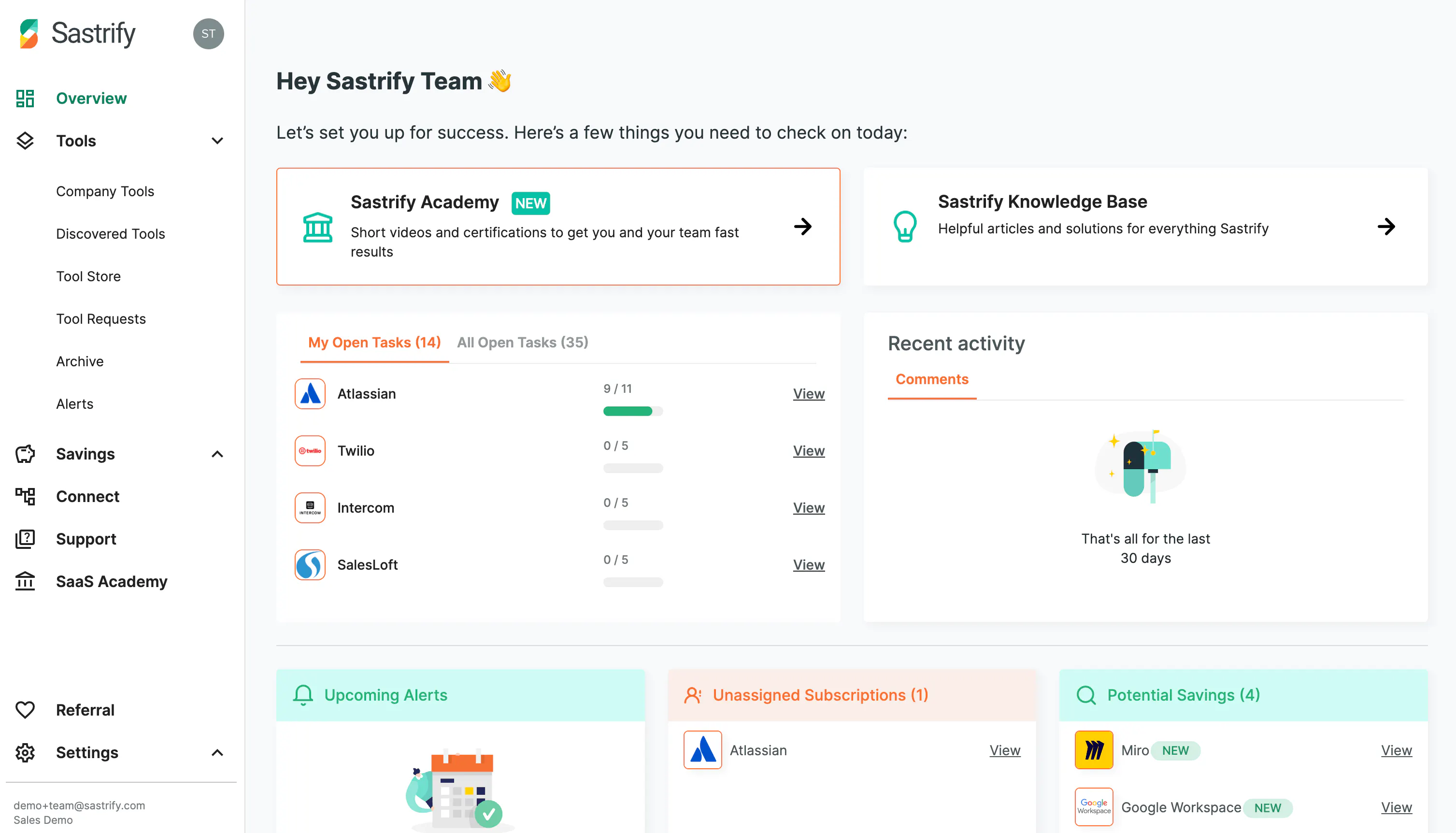
Sastrify is an AI-powered platform designed to simplify software management and SaaS procurement by bringing your entire stack into one centralized dashboard.
It integrates with identity providers, browsers, and ERP tools to automatically detect all the applications your company uses. From there, it organizes key data like ownership, usage patterns, renewal timelines, and overall spend into a single, clear inventory.
The platform is particularly well-suited for companies operating in the EMEA region, with support adapted to local compliance requirements and vendor ecosystems.
Beyond visibility, Sastrify also offers hands-on procurement support through dedicated customer success managers. With its SastriMarket feature, teams can benefit from pre-negotiated deals and discounts with various vendors.
Implementation is quick and straightforward, allowing teams to get up and running in just a few minutes.
Features:
- Renewal Management: Automated alerts for notice periods and contract end dates.
- Market Price Benchmarking: Data-driven insights for competitive vendor negotiations.
- SaaS Spending Visibility: Real-time dashboards tracking spend by vendor and department.
- Collaboration Hub: Tools for stakeholders to communicate on upcoming renewals.
- Vendor Discovery: Insights into alternative tools to help with software consolidation.
- SastriMarket for fast access to pre-negotiated deals
Cons
Some users find the interface confusing
No API is available, so deep customization is limited
Setting up the tool can take time because of the initial data entry required
Pros
Fast setup, live in minutes, not weeks
Cuts approval cycle times by 60%+
Strong presence in the DACH region
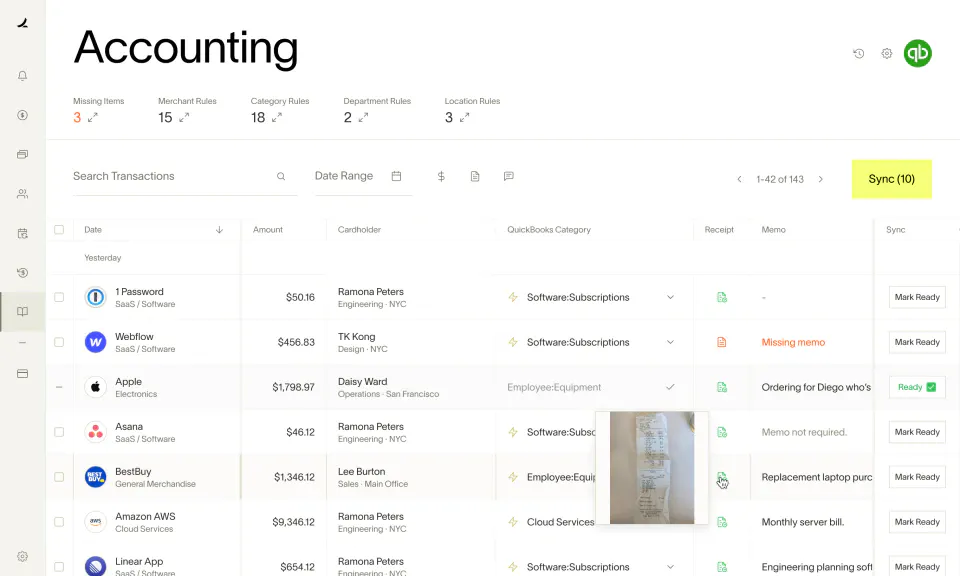
Ramp is a finance automation platform that combines corporate cards, expense management, bill payments, and SaaS cost tracking in one place. Startups and fast-growing teams like it for its simple goal: helping them cut costs automatically.
Finance teams can issue as many physical and virtual cards as they need, set controls by vendor, category, or amount, and automatically block purchases that don’t follow company policy. You can track every transaction as it happens, giving you a clear view of all spending
Ramp can also alert you if you’re overpaying for a SaaS tool by comparing your invoices with data from other companies using the platform.
It works with major ERPs like NetSuite, QuickBooks, and Xero, and about 90% of transactions are auto-coded before syncing.
→ 💻 Compare Ramp with other leading platforms in our guide to the best Ramp alternatives
Features:
- Unlimited physical and virtual cards with custom limits, categories, and vendor-level controls
- Receipts auto-captured, matched, and categorized with minimal manual input
- Invoice management, approval workflows, and vendor payments in one place
- Connects with NetSuite, QuickBooks, Xero, and Sage Intacct
- Flags duplicate subscriptions, unused tools, and unexpected price increases
- Benchmarks your invoices against other companies on the platform to flag overpayments
Cons
No contract lifecycle management or vendor negotiation support
SaaS spend features are limited compared to dedicated procurement platforms
NetSuite integration has known limitations reported by users
Pros
Clean, intuitive interface that requires little to no onboarding
Automated AP workflows covering invoices, approvals, and payments
Native email integrations for seamless day-to-day use
5. Spendflo
Ratings ⭐⭐⭐⭐⭐
G2 4.6/5 (143) Software Advice 4.7 (55)
Pricing: Custom. Contact Spendflo for a demo and pricing tailored to your organization’s size and SaaS spend.

Spendflo is a platform for SaaS procurement and spend management. It works as both a software tool and a partner to help with procurement.
It supports the entire process, from requesting software to getting approvals, validating needs, and creating purchase orders.
Employees can submit requests through a simple system that sends them to the right teams. This keeps procurement, finance, and IT on the same page and avoids unnecessary delays.
Flash AI, a conversational AI feature, lets users create requests, review contracts, or get procurement insights just by using everyday language.
A dedicated contract management tool pulls out key terms, highlights risks, and finds ways to save money. It also shows pricing benchmarks next to contracts, so teams can see if they are getting a fair deal.
Vendor management includes supplier directories, onboarding steps, and risk checks for third parties before any contracts are signed.
Usage analytics show how different tools are being used across the organization, giving teams ongoing visibility.
If your team needs extra help, Spendflo also offers managed services. Experts can negotiate contracts for you or handle all procurement tasks through a Procurement as a Service option.
→ 💻 If Spendflo isn't quite the right fit, see our breakdown of the 9 best Spendflo alternatives for SaaS spend management.
Features:
- AI-powered document intelligence and usage tracking
- Automated intake-to-procure workflows with no-code customization
- Slack integration for approvals and purchase requests
- Expert negotiation support from in-house procurement specialists
Cons
Response times can be inconsistent for some accounts
Reporting and dashboard features could be better
Few suggestions for alternative apps within the platform
Pros
Strong negotiation track record and customer results
Deep ERP integrations, including NetSuite
Intuitive UI with positive user experience reviews
6. Vendr
Ratings ⭐⭐⭐⭐⭐
Pricing: Plans from $12k a year. Custom quotes are available. Free access to pricing benchmarks is available before committing.
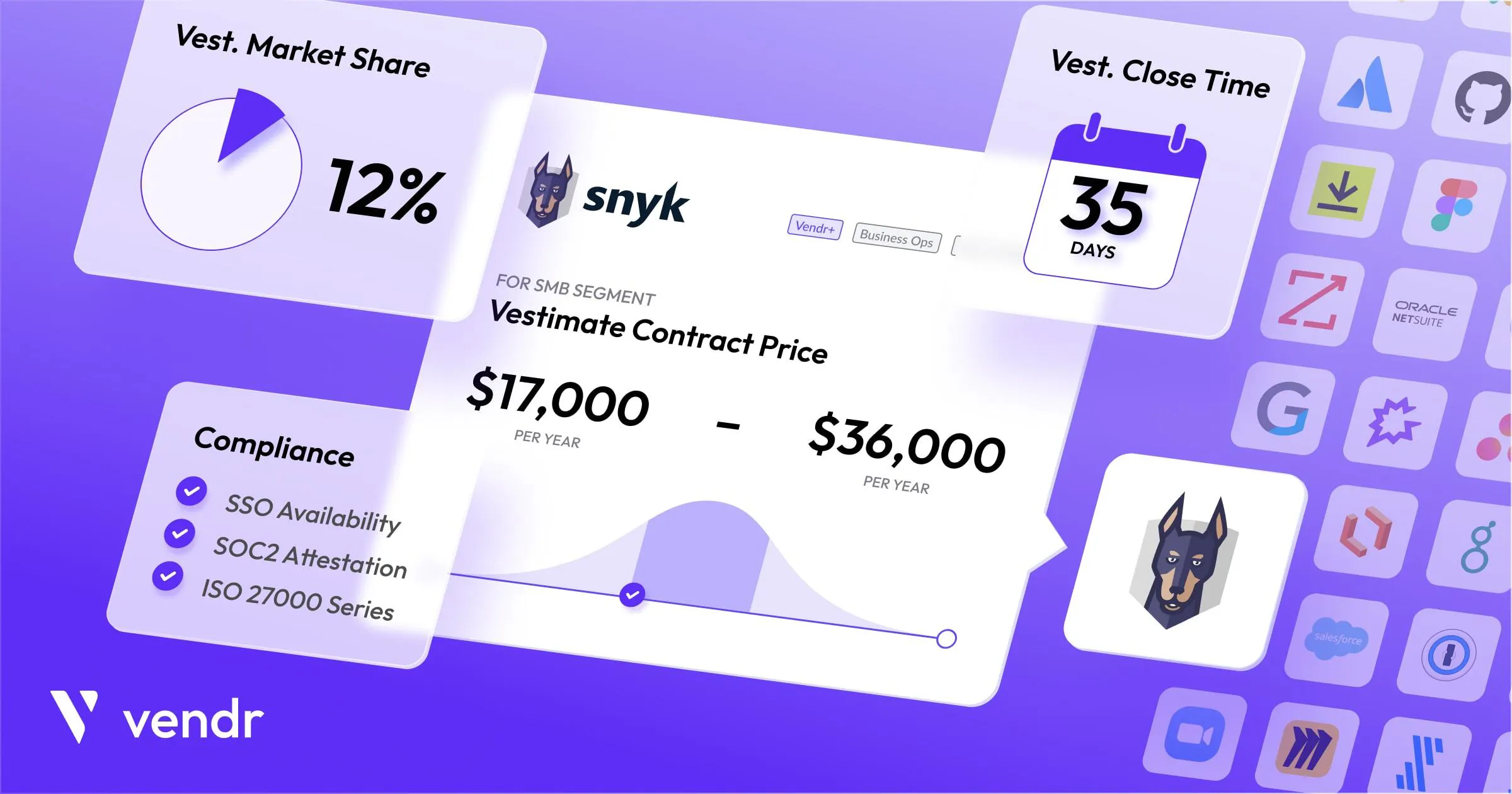
Vendr is a SaaS buying platform that blends technology with expert support to help fast-growing companies buy software quickly and save money.
Vendr uses pricing intelligence to give teams access to real SaaS transaction benchmarks, helping them negotiate with confidence instead of relying on guesswork.
Vendr supports every step of procurement, from intake requests and approvals to tracking renewals and managing supplier relationships, all in one platform.
Users can connect with negotiation experts for real-time advice on purchases and renewals whenever they need it.
Contract analysis capabilities allow teams to manage agreements and automate data extraction from contracts in a centralized platform.
Vendr now focuses on the entire vendor intelligence lifecycle, offering benchmarking data, expert negotiation advice, and contract analysis, not just procurement workflows.
→ 💻 Explore our guide to the best Vendr alternatives to compare leading SaaS procurement and spend management platforms.
Features:
- Pricing benchmarks from 130,000+ enterprise deals.
- AI negotiation agents with human sign-off before execution
- Procurement workflow automation and renewal tracking
- SOC 2 compliant with clear AI data policies
Cons
Pricing starts at $12,000 a year, which can be steep for smaller teams
Limited SaaS management features, such as user provisioning and license tracking
The quality of negotiations can vary depending on your assigned account manager
Pros
Works with or without an internal procurement team
Deep, verified pricing intelligence database
Trusted by HubSpot, Canva, Brex, and Reddit
What To Look For In A SaaS Spend Management Tool
SaaS spend management platforms can vary a lot, and what sets a great one apart from a good one is often found in the details.
A good platform should let your team see all software spending, automate procurement tasks, and help cut unnecessary costs.
Before committing to one, evaluate it across these 6 factors.
1. Negotiation Support
Benchmarks are useful, but knowing the right price does not guarantee you will get it.
If you often struggle with vendor negotiations, choose a tool that provides expert support, not just numbers on a dashboard. It makes a real difference if a platform only gives you data or actually negotiates with vendors for you.
Some platforms include dedicated procurement specialists who handle negotiations directly, which can make a significant difference on high-value contracts.
2. Integration Capabilities
A spend management tool is only as good as the data it can access. If it can’t connect to your ERP, SSO provider, HRIS, or financial systems, you’ll end up managing two sources of truth instead of one.
Check which systems the platform integrates with before you look at its features and choose platforms that offer strong, two-way syncing instead of simple exports that still need manual work.
3. Platform Functionality & Innovation
AI features can be very different from one platform to another, ranging from basic renewal alerts to advanced tools that manage intake, review, and approval on their own.
There is a big difference between these options. Look for platforms that keep adding new features, not just maintaining old ones. A vendor’s product roadmap and how often they release updates can show you where the platform will be in a year.
4. Procurement Automation
Manual intake and approval steps often slow down SaaS procurement.
All the email chains, spreadsheet handoffs, and waiting for approvals can add up. Choose platforms with no-code workflow tools, Slack or Teams integration, and automated routing from request to purchase order. The best platforms let people outside procurement join the process easily, without extra training.
5. Access to Benchmarking Data
Knowing what other companies pay for the same software fundamentally changes your negotiating position.
Without that data, you’re negotiating blind.
The more deal data a platform has access to, in terms of both volume and recency, the more accurate and actionable those benchmarks will be.
Ask vendors specifically how their benchmark data is sourced, how often it’s updated, and how granular it gets by company size, contract length, or region.
6. Savings Guarantee
Some vendors are confident enough in their results to put a number behind their promise. Others aren’t.
If ROI matters to your buying decision, and it should, ask directly whether the platform offers a savings guarantee and what that actually covers.
A guaranteed saving tied to contract value is very different from a vague claim about average customer outcomes. Get specifics before you sign.
→ Read about SaaS Procurement, what it is, its process, vendors and best practices
Why Choose Najar For Your SaaS Management
Najar is Europe’s fastest-growing SaaS management platform, designed for scaleups and enterprises facing software sprawl. With Najar, you get the control of a full management platform and the advantages of an in-house procurement team, without needing to hire one.
On average, our clients save up to 36% on SaaS costs thanks to expert negotiation and improved contract terms. Some clients have reported savings of over 45%.
Our platform handles the entire procurement cycle in one place, from purchase requests to contract management and renewal tracking. On average, customers see a 7x return on investment and save over 300 hours each year.
Collaborative approval rooms help finance, IT, and legal teams stay aligned on every decision.
Our Vendor sourcing is supported by a procurement team who negotiates pricing, terms, usage rights, and support clauses for you. With a focus on Europe, Najar offers detailed regional vendor data and a strong local presence where most customers are based.
Unmanaged SaaS keeps growing every quarter, leading to more tools, more renewals, and more blind spots. Najar gives you complete visibility, helps cut wasted spending, and reduces shadow IT before it becomes an issue.