
Ramp began as a platform focused on expense management.
Since then, the company has added features like procurement, accounts payable, vendor management, and SaaS spend management.
With software subscriptions making up more of company budgets, many organizations want better SaaS spend management platforms to control costs and see how they use software.
In this Ramp review, we look at its features, pricing, pros, and cons to help you decide if it fits your business.
→ 💻 Compare Ramp with other leading platforms in our guide to the best Ramp alternatives.
What is Ramp?
Ramp is a spend management platform that started off as an expense management platform with corporate cards and incorporated SaaS spend management features.
It has now included expense management, accounts payable automation, procurement workflows, travel booking, and treasury products.
Although still focuses very heavily on corporate cards and accounts payable.
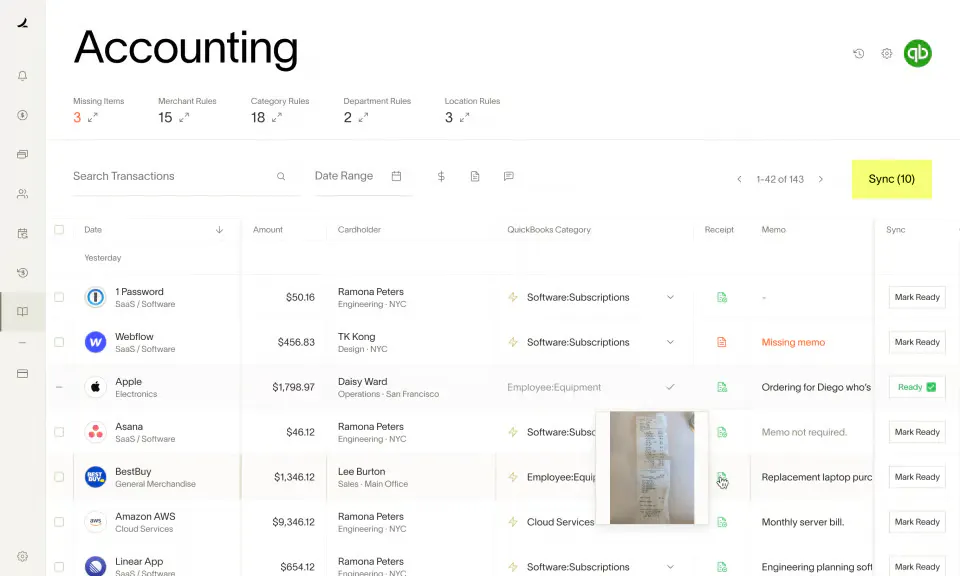
Ramp is built to centralize spending data and provide controls designed to help companies manage budgets.
Ramp's platform consists of several interconnected products. Its corporate card solution remains one of its most widely adopted offerings, allowing businesses to issue physical and virtual cards.
The platform also includes expense management tools that automate receipt collection, expense categorization, reimbursement workflows, and policy enforcement. For accounts payable teams, Ramp provides invoice processing, approval workflows, and payment automation capabilities.
The company also offers travel management and treasury products, allowing businesses to manage additional financial operations from a single platform.
Much more recently, Ramp has expanded into procurement by introducing purchasing workflows and approval controls.
The question remains: when is Ramp enough?
Who is Ramp For?
Ramp is primarily designed for finance teams that need control over company spending.
Organizations that manage a large number of employee expenses, corporate card transactions, or accounts payable processes could benefit from the platform's automation capabilities.
It combines expense management, accounts payable, purchasing controls, and spend reporting to reduce administrative complexity and improve financial oversight.
However, organizations with more advanced procurement requirements may encounter limitations. Companies that rely heavily on vendor management, SaaS procurement, contract oversight, supplier negotiations, or cross-functional purchasing processes often require capabilities beyond traditional spend management.
While Ramp includes procurement functionality, its primary focus remains financial operations rather than strategic procurement.
This distinction becomes more noticeable in mid-market and enterprise environments, where purchasing decisions often involve multiple stakeholders across procurement, finance, IT, legal, and security teams.
As vendor portfolios grow and software spending increases, organizations typically require more structured procurement processes, contract visibility, renewal management, and vendor governance than finance-focused spend management platforms are designed to provide.
While Ramp includes procurement features, its primary focus remains financial operations rather than strategic procurement.
So mid-market businesses and enterprises that likely need a more mature procurement function, should consider dedicated procurement platforms such as Najar, which focus on vendor management, contract oversight, SaaS procurement, and cross-functional purchasing workflows.
Ramp's Features
Features can be broken down in three categories: Card & expense; procure to pay; banking and more.
In this review we will be focusing primarily in the P2P section.
Vendor management
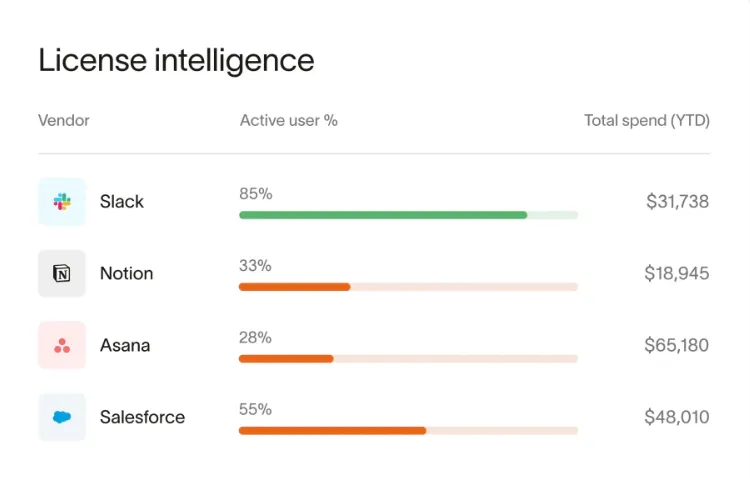
Ramp's vendor management feature provides a view of vendor spending, contracts, and renewal dates. The platform automatically tracks transactions across vendors in order to understand where money is being spent.
Ramp offers contract tracking capabilities to extract data such as start dates, end dates, and pricing details and it provides renewal reminders.
Although these capabilities help finance teams gain visibility into vendor spend, Ramp's vendor management offering remains relatively lightweight compared to dedicated SaaS management and procurement platforms. Its primary focus is spend visibility, contract tracking, and pricing insights rather than managing the full vendor lifecycle.
Organizations with more mature procurement processes may require capabilities such as SaaS spend management, contract visibility, renewal tracking, vendor management, structured purchase requests, collaborative approval workflows, and software negotiation support.
Accounts Payable
Ramp's accounts payable solution is designed to reduce the amount of manual work involved in invoice processing and vendor payments.
Finance teams can capture invoices, route them through approval workflows, and schedule payments from a centralized dashboard.
For organizations that need to process a large amount of invoices, this automation can be useful to improve operational efficiency and reduce the risk of errors.
Procurement
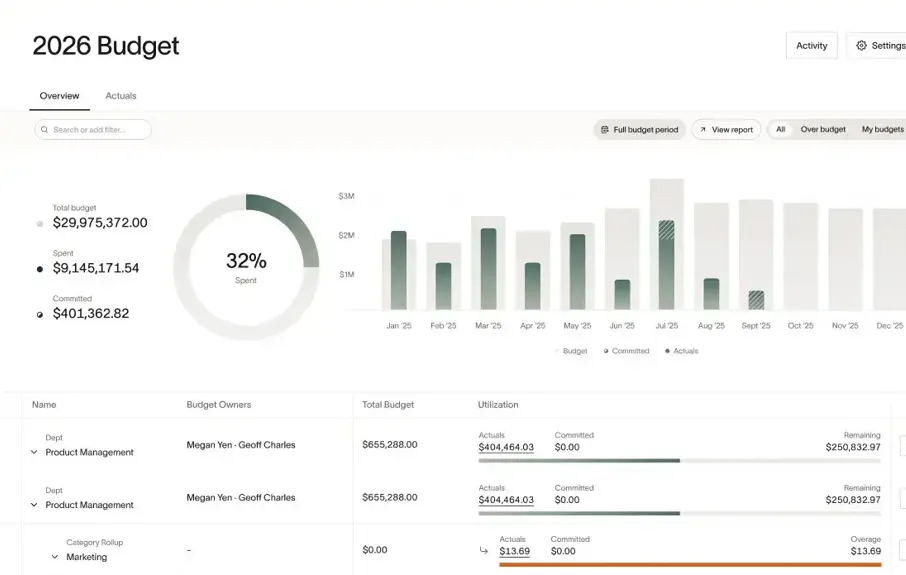
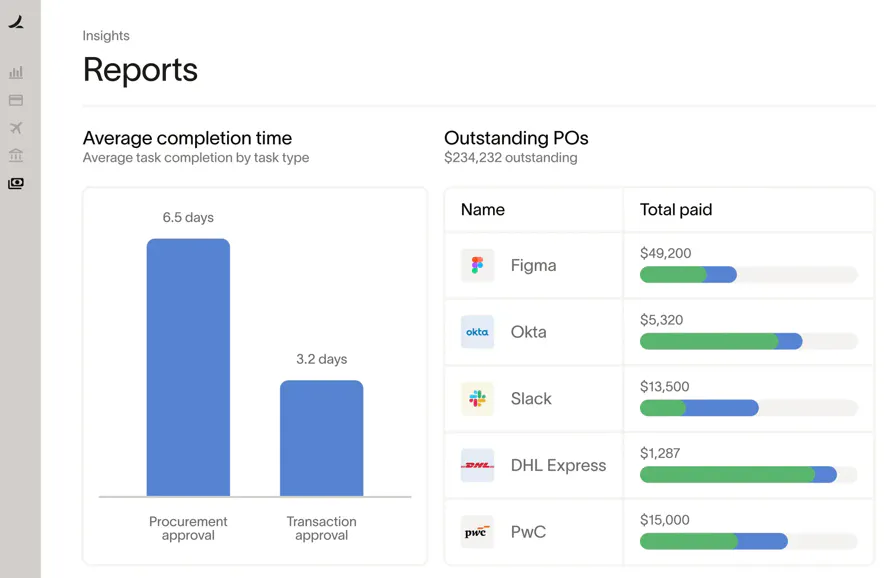
Ramp also offers procurement functionality that allows organizations to manage purchase requests and approval workflows.
The procurement experience is primarily focused on purchasing controls, budget oversight, and approval routing. This helps organizations ensure spending follows established policies and approval processes.
However, businesses that need deeper procurement functionality, such as vendor sourcing, contract lifecycle management, supplier performance tracking, or SaaS procurement, may find Ramp's procurement capabilities more limited than those offered by dedicated procurement platforms.
Ramp Pricing
Ramp uses a tiered pricing model consisting of three plans: Free, Plus, and Enterprise.
The Free plan includes corporate card, expense management, accounts payable, reporting, and vendor tracking capabilities at no monthly software cost.
Ramp’s Plus plan starts at $15 per user per month, and includes an additional platform fee based on company size.
The Plus tier introduces more advanced automation, reporting, accounting integrations, approval workflows, and multi-entity support. Procurement functionality is also available as an add-on for Plus customers, rather than being included by default.
The Enterprise has custom pricing and includes advanced integrations, global card issuing capabilities, custom workflow configurations, implementation support, dedicated account management, and enterprise-grade administrative controls.
Pricing is not publicly disclosed and requires contacting Ramp's sales team.
One important consideration for procurement teams is that some functionality have to be purchased separately.
While spend management, corporate cards, and expense controls are central to Ramp's platform, advanced procurement capabilities are offered as an add-on rather than a core part of the standard platform. Organizations evaluating Ramp for procurement use cases should confirm which features are included in their plan and whether additional costs apply.
What Do Users Really Think?
⭐⭐⭐⭐ Ratings
G2 4.8/5 | Capterra 4.9/5
Ramp receives strong ratings across major review platforms and is praised for its ease of use, automation capabilities, and implementation experience.
Many users highlight how quickly they were able to deploy the platform compared to traditional finance systems. The user interface is frequently described as intuitive, while finance teams often praise the visibility Ramp provides into company spending.
Users also commonly mention the effectiveness of Ramp's expense management workflows and the time savings generated through automation.
That said, some customers note that Ramp's procurement capabilities are not as comprehensive as dedicated procurement platforms. Others point to limitations around vendor management, software procurement, advanced reporting requirements, or international coverage depending on their specific use case.
✔️ Pros
- AI agents helps reduce manual work
- Built-in renewal reminders
- SaaS usage insights through integrations
- Customizable approval workflows
- Spend visibility across vendors
✖️ Cons
- It is not typically used to manage SaaS
- Reporting is not clear or intuitive
- Contract management focuses on visibility rather than lifecycle management
- Negotiation support is relatively basic
- Procurement functionality requires higher-tier plans and add-ons
Best Alternative to Ramp
Organizations looking beyond spend management often evaluate procurement-focused solutions.
One reason companies consider Najar is its focus on software procurement and vendor management. Rather than concentrating on employee expenses and payment controls, Najar helps procurement, finance, IT, and business teams manage purchasing decisions from request through renewal.
The platform includes contract management, vendor oversight, SaaS spend visibility, procurement workflow automation, and renewal management capabilities. Features such as Smart Purchase Requests and Collaborative Approval Rooms are designed to improve purchasing coordination across multiple stakeholders while creating greater visibility into procurement activity.
As a result, organizations with growing software portfolios and increasingly complex procurement processes may find that a procurement-focused platform better addresses their long-term needs.
Check out 6 best Ramp alternatives
Ramp vs Najar
Ramp is fundamentally a finance operations platform.
Its strengths lie in corporate cards, expense management, accounts payable automation, and company-wide spend visibility. Organizations looking to streamline financial operations and improve spending controls often find Ramp to be a strong fit.
Najar takes a procurement-first approach. Rather than focusing on employee expenses and payment workflows, the platform is designed to help organizations manage software purchases, vendor relationships, contracts, approvals, and procurement operations.
The difference becomes increasingly important as organizations scale.
Finance teams need visibility into spending, while procurement teams are often responsible for influencing purchasing decisions before money is committed. This includes evaluating vendors, managing renewals, coordinating stakeholders, and identifying opportunities to optimize software costs.
Ramp's procurement functionality focuses largely on purchasing controls and approval workflows.
Najar extends further into procurement management by providing vendor oversight, contract negotiation, SaaS spend management, renewal tracking, and collaborative procurement workflows.
Is Ramp the Right Fit for You?
Ramp is a strong choice for organizations whose primary objective is improving spend visibility, controlling employee expenses, managing corporate cards, and automating accounts payable processes.
Its combination of financial controls, automation, and ease of implementation makes it particularly attractive to finance teams seeking operational efficiency.
However, organizations whose biggest challenge is managing software vendors, controlling SaaS spending, negotiating contracts, or improving procurement processes may require a more specialized procurement solution.
The right choice ultimately depends on whether your priority is finance operations or procurement operations.
For advanced SaaS spend management and procurement, book a free demo with Najar today