
Procurement problems pop up the minute faulty requests (or lack thereof) come through.
Companies adopt intake-to-procure (I2P) processes to standardize how spending requests are captured, reviewed, approved, and converted into purchases.
Better yet, with advanced SaaS spend management platforms, procurement issues do not have to be expensive.
What is intake-to-procure?
Intake-to-procure (I2P) is a structured procurement process that starts when an employee requests a product or service and ends when that request is approved and purchased.
In simple terms, it’s the front end of procurement. The part that captures demand, organizes it, and ensures every purchase follows the right process before any money is spent.
Basically, intake to procure is the front gate for all spending requests. Instead of having scattered message threads, I2P sets a proper workflow so procurement teams can control spending with proper policies.
A full intake-to-procure process can include:
- Capturing purchase requests in a structured format
- Validating needs, budgets, and policies
- Routing approvals to the right stakeholders
- Preparing and issuing a purchase order
You can use different procurement process models to manage requests and expenses: I2P, P2P, or ITP.
Intake-to-procure (I2P) focuses on making sure a purchase request is accurate, justified, and aligned with company policies before any money is committed. It’s about getting the request right before procurement starts.
This stage emphasizes request validation, stakeholder approvals, budget checks, supplier recommendations, and compliance with procurement policies.
Procure-to-pay (P2P) focuses on the operational execution of purchasing and payment activities after a request has been approved. It is mainly concerned with executing purchases and completing the payment cycle efficiently.
This process typically includes creating purchase orders, sending them to suppliers, receiving goods or services, processing invoices, and issuing payments.
Intake-to-pay (ITP) combines both intake-to-procure and procure-to-pay into one connected, end-to-end workflow. It manages everything from the initial request to the final supplier payment.
It starts from the moment a need is identified and continues through approvals, sourcing, purchasing, invoicing, and final payment.
How does intake to procure work?
An intake-to-procure workflow follows a simple sequence:
1. Request intake
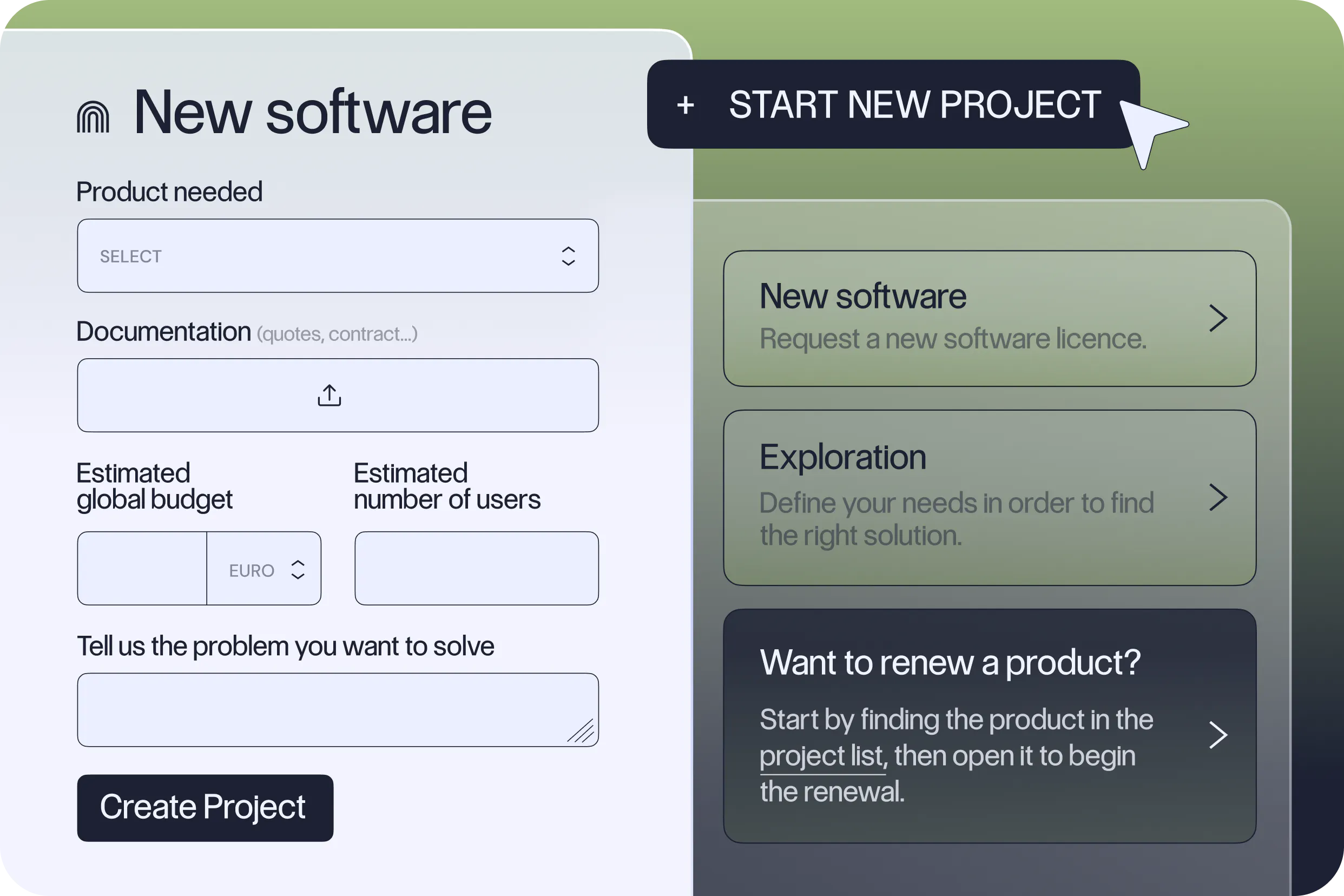
The process begins when an employee or department submits a purchase request through a centralized intake system or procurement platform.
The request usually includes important details such as the product or service needed, preferred vendor, estimated budget, business justification, delivery timeline, and purchasing category.
For example, imagine the marketing department needs a new design software subscription for an upcoming campaign. Instead of emailing multiple managers for approval, the employee submits a formal request through the procurement portal. They specify the software vendor, subscription cost, department budget, and explain why the software is required for the project.
This allows procurement teams to collect all information upfront in order to evaluate requests more efficiently and avoid incomplete submissions.
2. Validation and policy checks
After submission, the request goes through validation and compliance checks.
The procurement system or procurement team reviews the request to ensure it follows company purchasing policies and budget guidelines. This step may include verifying budget availability, checking whether the purchase falls under approved spending limits, and ensuring all required documentation is attached.
For instance, if an employee requests office equipment worth €8,000 but the department only has €5,000 remaining in its budget, the system automatically flags the request for review or rejection.
Also, if company policy requires three supplier quotations for purchases above a certain amount, the system could prevent the request from moving forward until the necessary documents are uploaded. These controls help organizations prevent unnecessary spending, policy violations, and procurement delays early in the process.
3. Approval routing
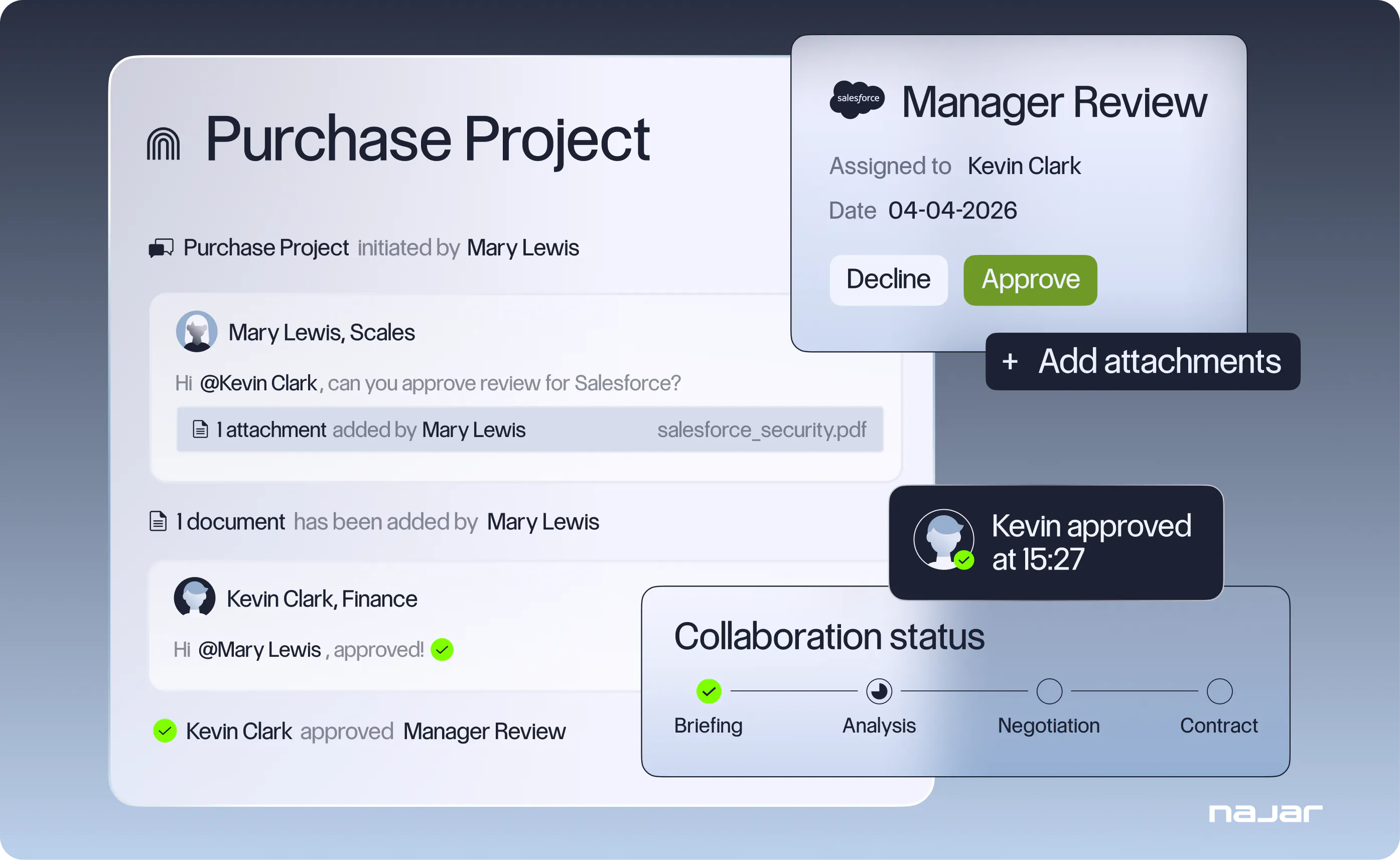
Once the request passes validation, it is automatically routed to the appropriate stakeholders for approval.
Approval workflows are usually based on predefined rules such as department, spending amount, project type, or procurement category. Automating this process clarly marks who needs to approve what and creates a transparent audit trail.
For example, a small software purchase under €1,000 may only require approval from the department manager. However, a €50,000 IT infrastructure request might require approvals from the IT director, finance department, and procurement team.
Procurement systems automatically send approval notifications to the right individuals and track approval status in real time.
4. Supplier confirmation
After approvals are completed, procurement verifies the supplier information before proceeding with the purchase. The team checks whether the supplier already exists in the company’s approved vendor database or whether a new vendor needs to be onboarded and evaluated.
For example, if the finance department requests consulting services from a vendor that has already passed compliance and risk checks, procurement can move forward quickly.
However, if the requested supplier is new, procurement may need to collect tax information, banking details, contracts, insurance certificates, or compliance documents before approving the vendor.
5. Purchase order creation
Once the request is fully approved and the supplier is confirmed, the procurement system generates a purchase order (PO).
The purchase order is an official document that outlines the agreed products or services, pricing, delivery terms, and payment conditions. The PO is then sent to the supplier to formally initiate the purchase.
For example, after all approvals are completed for the marketing software subscription, the system automatically creates a purchase order containing the subscription details, contract value, and billing information. The supplier receives the PO and begins delivering the service.
At this stage, the intake-to-procure process is complete, and the organization moves into the procure-to-pay phase, which includes receiving invoices and processing supplier payments.
What are the benefits of intake-to-procure?
A strong intake-to-procure process fundamentally improves how a company controls spend, collaborates internally, and makes purchasing decisions.
Some benefits include:
- Full visibility into company spend
Without intake-to-procure, purchase requests are often scattered across emails, chat tools, and informal conversations. This makes it nearly impossible to track commitments before they become actual expenses.
With a centralized intake process, every request is logged, categorized, and tracked from the start. Procurement and finance teams gain a real-time view of upcoming spend, not just what has already been invoiced.
This directly impacts budget forecasting, spend analysis, and financial planning.
- Faster and more predictable approval cycles
Manual approval processes create bottlenecks as requests sit in inboxes, ownership is unclear, and follow-ups slow everything down.
Intake-to-procure introduces automated routing and clear approval paths, which means the right person is notified at the right moment so both ownership and deadlines are clearly established.
The result is shorter cycle times and fewer delays for employees waiting on purchases.
- Stronger policy enforcement and compliance
Procurement policies often fail because they’re hard to follow. An intake-to-procure system embeds policies directly into the request process.
For example budget limits are checked automatically, required approvals are enforced, and preferred vendors are suggested
This ensures compliance before money is committed, not after.
- Reduced maverick spend
Maverick spend refers to purchases made outside the organization’s approved procurement process, such as when employees buy products or services directly from vendors without going through procurement or obtaining proper approvals.
It can also be linked to shadow IT, which occurs when employees or departments purchase and use software, cloud tools, or technology services without the knowledge or approval of the IT or procurement teams.
For example, a marketing team might subscribe to a project management or design software tool using a company credit card without involving procurement or IT.
While the purchase may seem convenient at the time, it can create several problems, including duplicate software subscriptions, higher overall costs, security vulnerabilities, compliance risks, and fragmented vendor contracts. Different departments may unknowingly pay for similar tools, leading to wasted budget and reduced visibility into organizational spending.
An effective intake-to-procure process helps reduce both maverick spend and shadow IT by giving employees a simple, centralized way to request purchases through approved workflows.
- Better cross-functional collaboration
Procurement does not operate independently. At one point or another, all departments will have to be involved in some decisions.
Intake-to-procure creates a centralized system where all team members can view requests, approvals, and procurement activities in real time. This shared visibility helps teams stay aligned throughout the purchasing process and reduces communication gaps caused by disconnected emails, spreadsheets, or manual workflows.
For example, if a department requests a new SaaS, the procurement team may involve IT early to evaluate cybersecurity and system compatibility, while the legal team reviews contract terms and finance verifies budget availability.
This collaborative approach improves decision-making, increases transparency, and ensures procurement activities support broader business goals.
- Improved supplier management
The intake-to-procure process also strengthens supplier management by making sure that vendor selection and onboarding follow a consistent approaches.
Instead of employees choosing vendors independently or relying on informal relationships, procurement teams can guide purchases toward approved suppliers that already meet company standards for pricing, compliance, quality, and risk management.
For example, when an employee submits a request for office equipment or consulting services, the procurement system may recommend suppliers from a pre-approved vendor list. If a new supplier is required, the system can automatically trigger onboarding workflows to collect necessary documents such as tax forms, banking details, insurance certificates, and compliance information.
As supplier management becomes more organized, you can gain better negotiation power, improved contract terms, and greater long-term procurement efficiency.
How to improve your procurement process
A successful intake-to-procure process needs to remove friction and increase control.
In other words, your procurement process should be simple and intuitive to make sure all team members follow it without being tempted to step outside the framework because “it’s not a big deal”.
There are six quick tips you can implement in your procurement process:
1. Standardize and structure all requests
Unstructured requests create confusion and delays.
Define:
- Mandatory fields (budget, category, justification)
- Request types (software, services, hardware, etc.)
- Clear categorization rules
This allows automation to work effectively and reduces manual clarification.
2. Integrate procurement with finance and IT systems
Disconnected systems create data silos and duplicate work.
A strong intake-to-procure setup should integrate with:
- ERP/accounting tools
- Budget tracking systems
- Vendor databases
- Contract management tools
This ensures data flows seamlessly from request to execution.
3. Make policies visible and actionable
Policies shouldn’t live in long and boring PDFs that no one reads. And probably can’t find either.
Instead:
- Embed them directly into the intake workflow
- Provide real-time feedback during request submission
- Flag non-compliant requests automatically
This shifts compliance from reactive to proactive.
4. Track key procurement metrics
You can’t improve what you don’t measure.
Monitor metrics like:
- Request-to-approval time
- Approval bottlenecks
- Spend by category
- Vendor usage patterns
These insights help identify inefficiencies and optimize workflows over time.
5. Focus on SaaS and recurring spend control
SaaS is one of the fastest-growing and hardest-to-control expense categories.
Without proper intake you could be facing duplicate tools or expensive renewals which all lead to hidden costs piling up.
Adding structured intake for SaaS purchases guarantees better contract and renewal management, and centralized vendor tracking.
6. Implement intake-to-procure platform
Manual processes and generic tools don’t scale as they are usually built around emails, spreadsheets, or generic request forms.
Modern intake-to-procure platforms provide features that help procurement teams manage purchasing activities more efficiently and collaboratively. These platforms typically include
- Centralized request intake portals
- Automated approval workflows
- Real-time dashboards
- Supplier and contract management capabilities
Platforms such as Najar are designed to support these workflows by combining intake management, procurement automation, supplier oversight, and spend visibility within a single solution.
Choose the best intake-to-procure platform
Najar is a procurement and SaaS management platform designed toradically improve the intake-to-procure process from the very first request.
Instead of relying on scattered tools, manual approvals, or rigid legacy systems, Najar creates a unique, centralized environment where all purchase requests are captured, reviewed, and approved in a structured way.
Najar focuses on making intake effortless for employees while giving procurement and finance teams full control over spend.
Employees can submit purchase requests through guided, intuitive forms that ensure all required information is included upfront.
Once a request is submitted, Najar automatically routes it through the appropriate approval flow based on predefined rules like spend amount, department, or purchase category.
Automated notifications and tracking also keep the process moving, reducing approval bottlenecks and giving full visibility into request status.
Najar focuses on SaaS and vendor management by centralizing all vendors, contracts, and subscriptions in one place. This allows you to track software usage, monitor upcoming renewals, and make more informed decisions about their technology stack before committing to new spend.
If you’re looking for a platform that combines ease of use with powerful automation and a strong focus on modern procurement challenges like SaaS management, this is it.
It replaces fragmented, manual processes with a streamlined intake-to-procure system that improves efficiency, enforces policy, and gives organizations a clear, centralized view of all purchasing activity.
Improve intake-to-procure processes with Najar
Intake-to-procure is the foundation for spend control, compliance, supplier management, and cross-functional collaboration.
By standardizing how requests are submitted and approved, you can reduce maverick spend, improve visibility into upcoming expenses, accelerate approval cycles, and make better purchasing decisions before money is committed.
The best intake-to-procure platforms, such as Najar, take this even further by automating workflows, connecting procurement with finance and IT, and centralizing supplier and contract management in one place. As procurement becomes increasingly complex, especially with growing SaaS and recurring software spend, implementing a structured intake-to-procure process is essential for organizations that want more control, efficiency, and transparency across their purchasing operations.
Try Najar today to improve your SaaS spend management.