
SaaS contract renewals have a habit of creeping up on you.
One minute, a subscription is happily running in the background; the next, you're staring at a renewal notice wondering who owns the contract, when the cancellation deadline was and whether anyone is even using all those licences.
If you're wondering how to avoid missing contract renewals, you need a process that gives you visibility over your contracts well before you reach the point of renewal.
That's essentially what contract renewal management is about: keeping track of your contracts, renewal and notice dates, ownership, terms and usage so you have enough time to decide what happens next.
Why do SaaS contract renewals get missed?
Missed SaaS renewals are rarely caused by someone simply forgetting to put a date in their calendar.
More often than not, the problem is visibility.
When contract details, renewal dates, ownership and usage data are spread across different systems, it becomes surprisingly difficult to know what is coming up, who needs to act and whether a subscription is still worth renewing.
By the time someone notices a renewal, the window to negotiate or cancel may already be closing.
Here’s where things tend to go wrong.
Contract information is scattered
Your SaaS contracts probably don’t all live in one neat, centralised system.
One might be buried in someone’s email inbox, another in a shared drive, while procurement has information about the purchase and finance has the invoices.
You might also have renewal dates sitting in spreadsheets or tied to individual employee accounts. Each source contains part of the picture, but rarely the whole thing.
That makes it difficult to build a reliable view of upcoming renewals.
Nobody clearly owns the renewal
SaaS ownership can get complicated quickly. The person who bought the software might have left the business. Procurement may have negotiated the contract, finance may process the invoices, and an entire department may rely on the platform every day.
So, who is actually responsible for the renewal?
If the answer isn't obvious, it becomes much easier for important dates and decisions to fall through the cracks. Everyone assumes someone else is keeping an eye on the contract, until the renewal notice arrives.
Clear ownership matters because someone needs to assess the software, check usage, review the commercial terms and decide whether renewing is actually the right move.
SaaS contracts renew automatically
Auto-renewal is one of the biggest reasons SaaS renewals can catch businesses off guard.
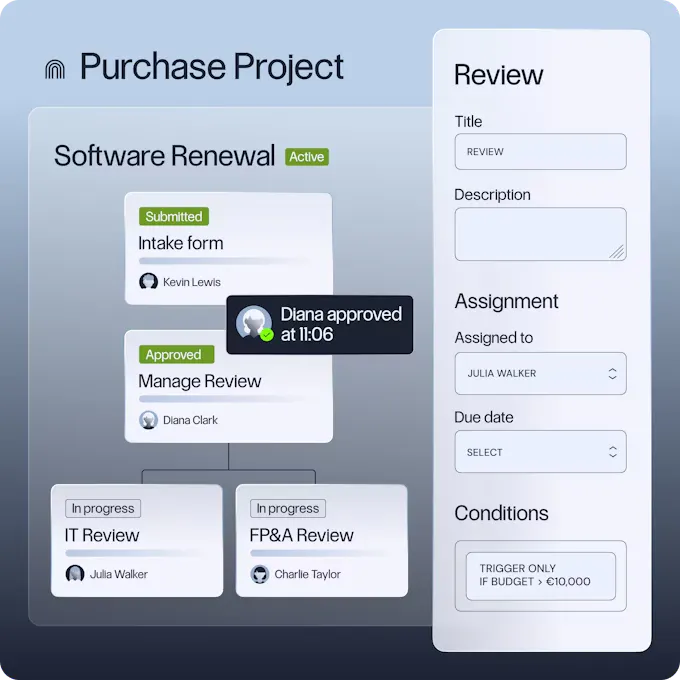
Many vendors include clauses that automatically extend a contract unless you provide notice within a specific period.
And that notice period can arrive much earlier than the renewal date itself.
So, the issue isn't simply remembering to cancel. You need enough time to decide whether you want to cancel, negotiate better terms, reduce your licence count or renew as-is.
Usage isn't reviewed before renewal
A renewal date tells you when you need to make a decision. It doesn't tell you what that decision should be.
Before renewing, you need to understand whether the software is still delivering enough value to justify the cost. That means looking beyond the contract itself and considering how the tool is actually being used.
For example, you might want to check:
- Who is actively using the software?
- How frequently is it being used?
- How many licences do you actually need?
- Are you paying for inactive or unused accounts?
- Does another tool in your SaaS stack already provide similar functionality?
Without this context, renewal can become the default option. The contract reaches its renewal date, the payment goes through and the subscription continues for another year, even if your business no longer needs everything it's paying for.
What happens when you miss contract renewals?
Missing a SaaS contract renewal closes a window to an opportunity to make changes to the agreement, reduce your spend or decide whether you still need the software at all.
The consequences can continue well beyond the renewal date, when you lose that vital time frame…
- You can get locked into another contract term
If a SaaS contract includes an automatic renewal clause, missing the required notice period can mean you're committed to another contractual term.
By the time you realise what has happened, the decision may already have been made for you and it might be too late to back out. And there goes money down the drain on unused licenses.
- You lose negotiating leverage
A renewal is a great chance to negotiate. You may want to challenge a price increase, ask for better terms, reduce the number of licences or compare the vendor with alternative options.
But all of that takes time.
If you only start looking at the contract shortly before it renews, you have much less room to negotiate. You're working against the clock rather than approaching the vendor with a clear understanding of your requirements and alternatives.
The earlier you identify an upcoming renewal, the more leverage you have to decide what happens next.
- You keep paying for unused software
A missed renewal can also mean another period of spending on software that isn't being used.
Perhaps the team has stopped using the platform. Maybe only a fraction of the purchased licences are active. Or perhaps another application now provides the same functionality.
If nobody reviews the subscription before renewal, that unnecessary spend sticks to the SaaS costs.
- Your SaaS estate becomes harder to manage
There is a cumulative effect, too.
When SaaS contracts are repeatedly renewed without being reviewed, your software estate can gradually become bloated.
Applications that are no longer needed remain active, overlapping tools accumulate and nobody has a clear picture of why certain subscriptions are still being paid for.
That makes future renewal decisions even harder. The more contracts you have, the more renewal dates, owners, costs and usage information you need to keep track of.
5 tips to avoid missing a contract renewal
Avoiding missed SaaS renewals starts with having a process in place before a contract gets anywhere near its renewal date.
If you're relying on individual calendars, inbox reminders or someone's memory, you're already making the process harder than it needs to be.
A better approach is to treat each renewal as a process with clear ownership, deadlines and review points. That gives you enough visibility to act before you're locked into another term and, just as importantly, gives you time to decide whether renewing is actually the right choice.
Here are the five main tips you need to build into your contract renewal process.
1. Create a central record of every SaaS contract
Start with visibility.
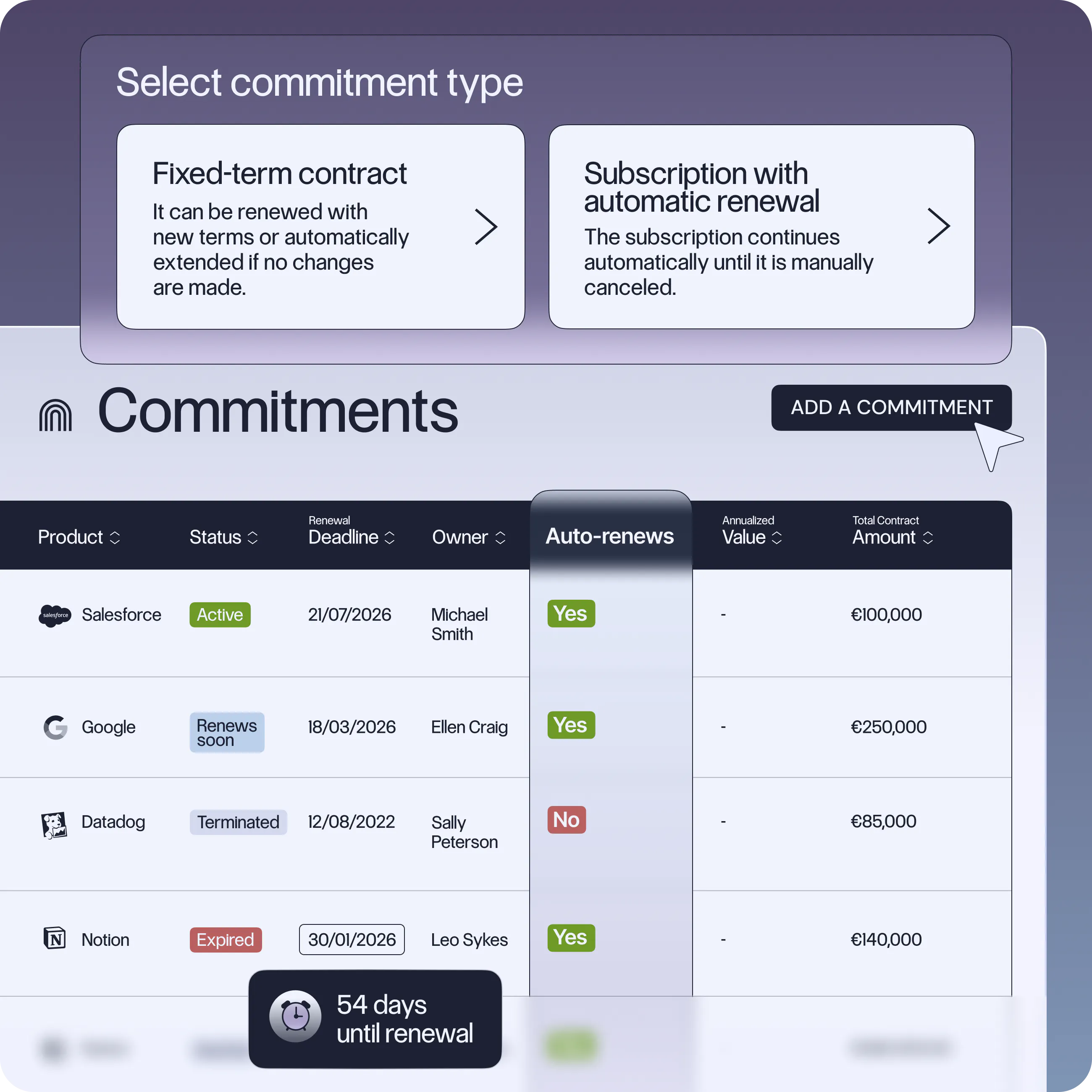
You can't effectively manage renewals if you don't have a reliable record of the contracts your business has in the first place.
For every SaaS contract, keep the key information in one central record, including:
- Vendor
- Application
- Contract owner
- Renewal date
- Notice period
- Contract value
- Number of licences
- Renewal terms
The aim isn't to create another spreadsheet that someone has to constantly remember to update. It's to establish a single source of truth for your SaaS contracts, so you can quickly see what you have, what it costs and when action is required.
This is much more reliable than having renewal dates scattered across individual calendars and email inboxes. If the person who originally purchased an application leaves the business, for example, the contract information shouldn't disappear with them.
A central record also makes it much easier to see upcoming renewals across your entire SaaS estate rather than finding out about them one at a time.
2. Assign someone responsibility for each contract
Every SaaS contract needs an owner. Not necessarily someone who handles every part of the renewal, but someone who is responsible for making sure the renewal decision actually happens.
This is an important distinction because the person who uses a tool isn't necessarily the person responsible for renewing it.
A marketing team might use a platform every day, for example, while procurement manages the commercial relationship and finance handles the payments. Without a clearly assigned owner, everyone may assume someone else is keeping track of the renewal.
The contract owner should know when the agreement is coming up, understand who needs to be involved in the decision and make sure there is enough time to review the subscription before the notice deadline.
3. Set reminders before the renewal deadline
Don't make the renewal date your deadline.
If a contract automatically renews, unless you provide notice 30, 60 or 90 days beforehand, you’re already way too late. By then, you may already have missed your opportunity to cancel or negotiate.
Instead, work backwards from the notice period and set contract renewal reminders early enough to give you time to make an informed decision.
That time should allow you to:
- Review usage
- Confirm current requirements
- Gather user feedback
- Check alternatives (and if there are any already being used)
- Negotiate with the vendor
- Cancel if necessary
How far in advance you need to start will depend on the contract and its notice period, but the principle is simple: the reminder should come before the point of no return.
4. Review usage before you renew
A renewal should trigger a review, not an automatic payment.
It's easy to look at a contract and think, "We've always used this, so we'll renew it." But your SaaS environment can change considerably between contract terms. Teams grow or shrink, applications get replaced and employees stop using tools that were once essential.
Before renewing, look at whether the software is still being used and whether that usage justifies the cost.
You should consider whether the tool is:
- Still being used
- Being used enough to justify the cost
- Used by the right number of people
- Duplicating another application
SaaS renewal optimisation gives you an opportunity to reduce unnecessary licences, identify overlapping applications and make sure your SaaS spend reflects what the business actually needs.
Good SaaS contract optimisation also depends on having reliable SaaS usage analytics. The more accurately you can see how applications and licences are being used, the easier it becomes to make a sensible renewal decision rather than relying on assumptions.
5. Start negotiations early
The earlier you start, the more options you have.
Once you've identified an upcoming renewal and reviewed how the software is being used, don't wait until the notice deadline is approaching to contact the vendor.
Starting negotiations early gives you wiggle room to work through the commercial side of the renewal without having to make a rushed decision.
You might want to negotiate a better price, reduce your licence quantities or change the terms of the agreement.
And if the software no longer fits your requirements, you have time to investigate alternatives rather than being forced to renew simply because there's no time to migrate.
The earlier you start, the more options you have. But how early is early enough?
There isn't one universal timeframe for every SaaS contract. Notice periods, renewal terms and contract lengths can vary considerably, so your starting point should always be the individual contract.
Work backwards from the contract's renewal date → notice period → internal review → negotiation window.
Your notice deadline is particularly important because missing it could mean the contract automatically renews before you've had a chance to make a decision.
A practical renewal process might look something like this:
- 90–120 days before: Review usage and ownership
- 60–90 days before: Decide whether to renew
- 30–60 days before: Negotiate or adjust licences
- Before the notice deadline: Renew, renegotiate or cancel
The key is to give yourself options. A well-managed renewal process starts long before the contract actually renews.
Although there is one extra tip we could add to this list that can give you all the leverage you need in contract renewals and negotiations: Use SaaS management software.
How SaaS management platforms help you avoid missed renewals
SaaS management software can help turn the renewal process into a more consistent process that is much easier to manage.
The goal of these tools is to bring all the information you will need for renewal decisions into a single dashboard so you can see what is happening across your SaaS stack at a glance.
SaaS management platforms like Najar help you:
- Centralise SaaS contracts
Instead of searching through different systems to find contract details, SaaS management software can bring contracts, vendors and renewal information together in one place.
AI can help make this process less dependent on manual data entry by extracting relevant information from contracts and identifying details such as renewal dates, notice periods and contract terms.
- Monitor upcoming renewals
Once your contracts are centralised, you can see which renewals are coming up and which ones need attention.
SaaS management software can automatically surface upcoming renewal activity and help prioritise contracts that require review.
AI can add context by identifying relevant contract information and bringing potential actions to your attention, rather than leaving you to work through every contract manually.
- Understand SaaS spend
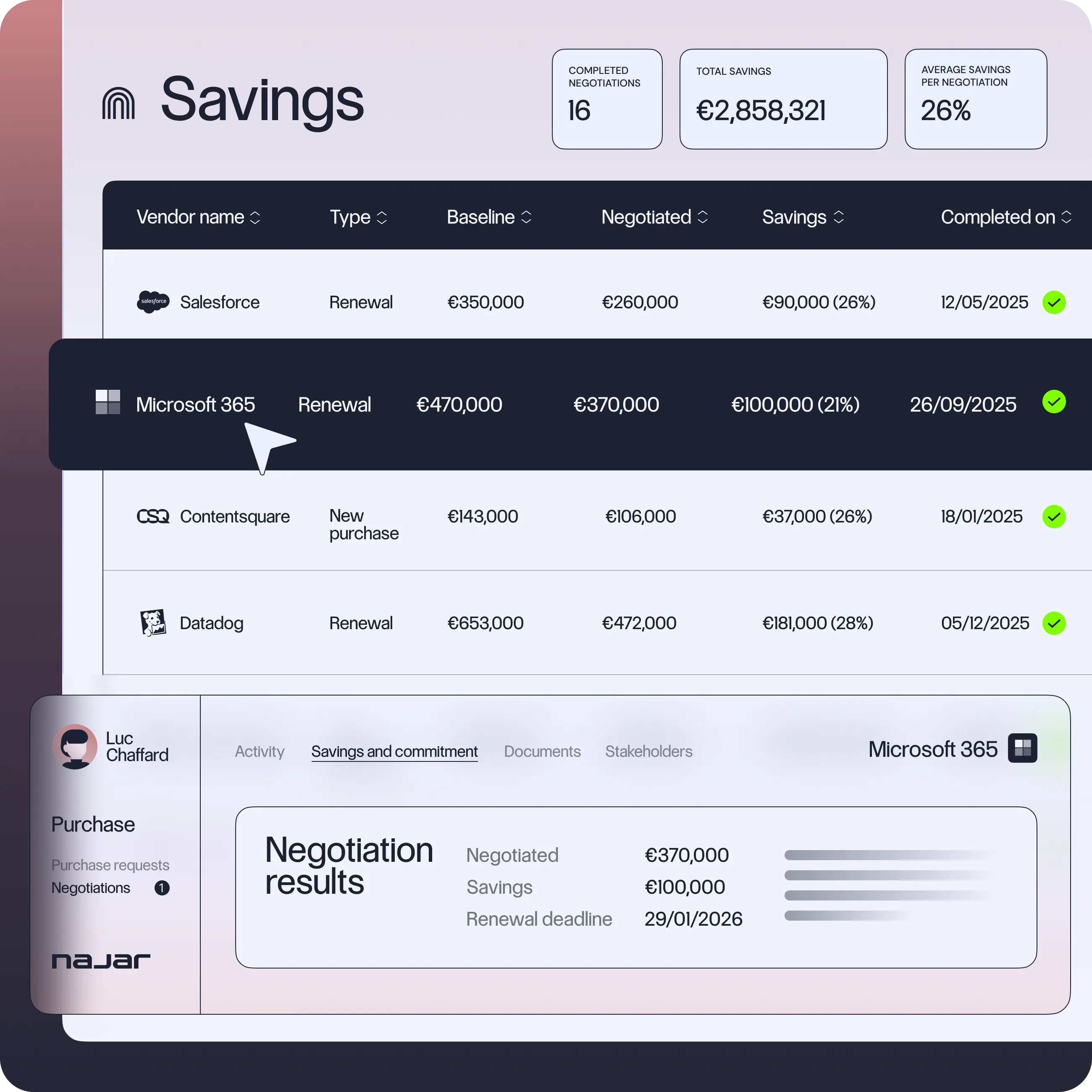
Renewals can represent a significant portion of your ongoing SaaS expenditure, particularly when several contracts come up around the same time.
Having renewal and contract information in one place makes it easier to see how much you're committing to upcoming renewals and where that spending is concentrated.
Instead of simply knowing that a contract costs a certain amount, you can start to understand how that commitment fits into your wider SaaS spend.
- Keep ownership clear
SaaS management software can connect ownership information to each application and contract, making it clearer who needs to review a renewal and when they need to act.
Platforms can automatically pull up contracts that require attention, so the right people aren't left searching through a long list of applications to work out where they should focus.
Najar brings these different pieces together, using AI to help teams make sense of SaaS contracts, usage and spend without turning renewal management into another manual admin task.
The aim is simply to give you better visibility so you can make renewal decisions with the right information in front of you.
Don't let your next SaaS renewal sneak up on you
You don't avoid missed SaaS renewals by trying to remember more dates. You avoid them by creating visibility and a realistic process.
Start by centralising your contract information so you know what you have and when it renews. Assign clear ownership so there's no confusion about who needs to act. Track both renewal and notice dates, rather than waiting for the contract to come up for renewal. Review usage before committing to another term, and start negotiations early enough to give yourself options.
For a small SaaS stack, this may be manageable, but as the number of contracts, vendors and applications grows, keeping everything up to date manually becomes much harder.
That's where SaaS management software can take some of the work off your plate.
With AI helping to extract contract information, surface upcoming renewals and connect contract data with usage and spend, you can spend less time chasing information and more time making informed decisions about what your business actually needs.