
Did you know that poor contract renewal management could be costing you 9.2% of your annual revenue?
Contract renewal management involves much more than knowing when you’re going to be billed for the different tools in your SaaS stack.
It involves being aware of renewal dates to prepare for successful negotiations, establishing clear ownership for each tool, analysing usage and duplicates, keeping all your tools (with their renewal dates and negotiation results) in a unique dashboard, and, most importantly, saving your money.
What is contract renewal management?
Contract renewal management is the process of tracking, reviewing, and managing your SaaS subscriptions before they automatically renew.
Rather than waiting for a vendor's renewal email to land in your inbox or to randomly receive a payment receipt, you can proactively monitor upcoming renewal dates, evaluate software performance, assess business needs, and decide whether to renew, renegotiate, downgrade, or cancel the agreement.
A structured renewal process typically includes reviewing contract terms, confirming software usage, identifying upcoming price increases, preparing negotiations, and ensuring there is enough time to make an informed decision that involves other team members’ input.
Essentially, contract renewal management helps you stay in control instead of letting vendors control the timeline.
What are multi-year SaaS contracts
Multi-year SaaS contracts are renewals that extend a software agreement for two or more years. These subscription models usually come at a lower price or with additional discounts and perks.
On paper, these deals can look incredibly attractive, especially if you're confident the software will remain a core part of your tech stack.
Sometimes, committing to multiple years makes perfect sense. It provides predictable costs, protects you from annual price increases, and can significantly improve your negotiating position.
However, longer contracts also reduce flexibility. If your priorities change or adoption drops, you're committed to paying for software that may no longer deliver the same value.
The key isn't avoiding multi-year agreements altogether. It's making sure you've evaluated software adoption, long-term business needs, and vendor performance before committing.
Why is managing contract renewals important?
Renewals can be one of the few moments when you have real leverage over your software costs, but it is also one of the most vulnerable points in which you may pay more than you need without having time to negotiate or cancel.
Once a contract renews, you've often committed to another year (or more) of spending. That makes the weeks leading up to renewal incredibly valuable.
A well-managed renewal process helps you identify unused licenses, remove unnecessary seats, renegotiate pricing, and reassess whether a vendor still meets your business needs.
It also reduces one of the biggest causes of SaaS waste: automatic renewals.
It’s safe to assume you don’t intend to overspend on software. However, if you don’t have proper visibility into upcoming renewals, you probably are since contracts renew by default before anyone has reviewed them.
Managing renewals proactively also strengthens relationships between procurement, finance, IT, and business teams. Instead of scrambling for approvals days before expiration, everyone has enough time to evaluate the software together and make strategic decisions.
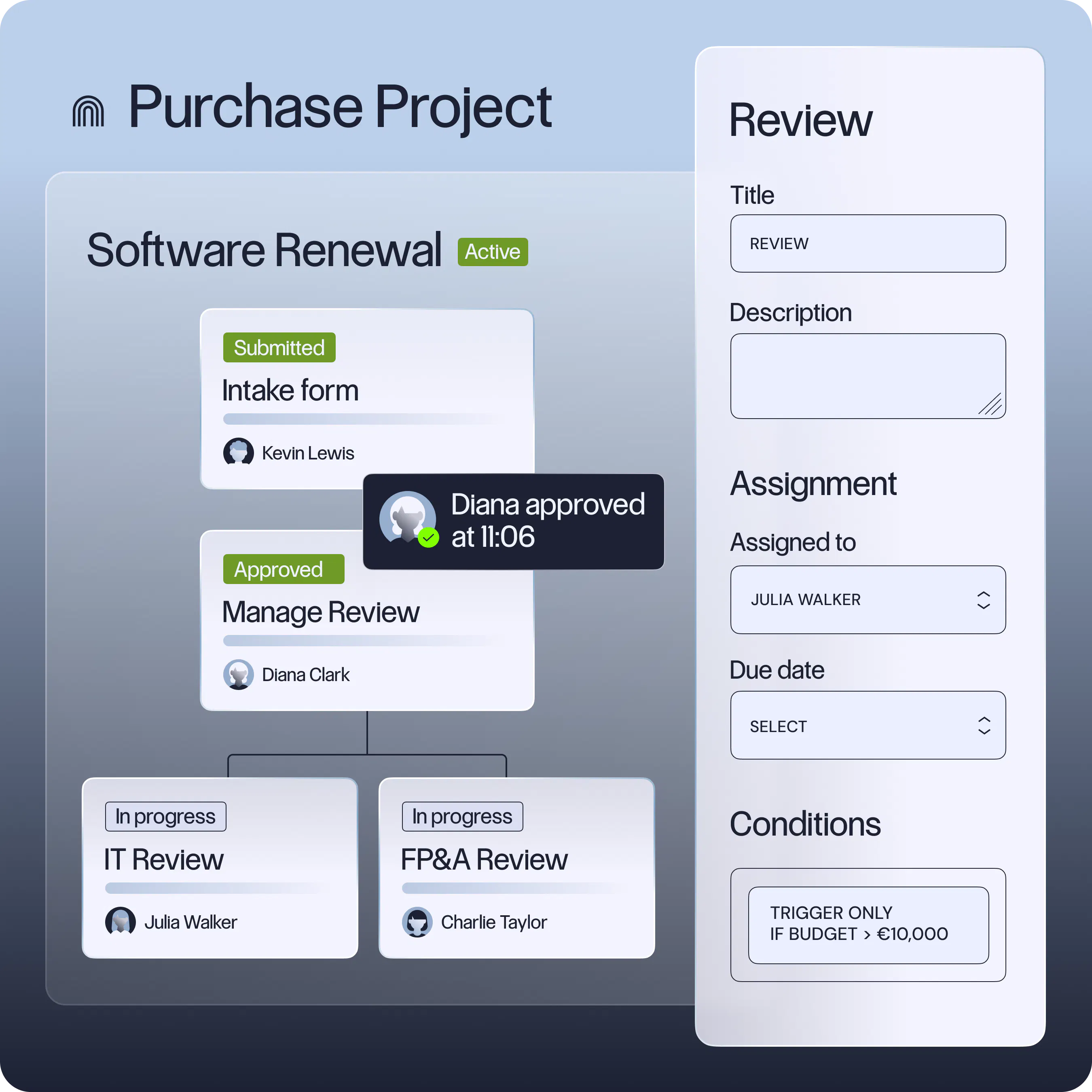
Perhaps most importantly, contract renewal management puts you in a stronger negotiating position.
Vendors know that once a contract renews, switching becomes much less likely. By starting conversations early, you gain time to benchmark pricing, evaluate competitors, and negotiate from a position of confidence instead of urgency.
Best contract renewal strategy
Successful renewal management isn't just setting a handful of calendar reminders; it should involve creating a repeatable process that works for every contract.
Step 1: Centralisation
If contracts are scattered across inboxes, shared folders, spreadsheets, and procurement systems, nobody has complete visibility.
Every software agreement should live in one centralised repository alongside renewal dates, contract values, owners, and important terms.
Step 2: Ownership
Every contract should have a clearly assigned owner responsible for reviewing usage, gathering stakeholder feedback, and making renewal recommendations.
Without ownership, decisions tend to happen at the last minute or, even worse, team members assume someone else is on it and along come those automatic renewals no one was expecting.
Once ownership is established, review contracts well before the renewal date.
Thirty days is rarely enough. Most organisations benefit from reviewing important software contracts 60 to 120 days in advance, especially for enterprise vendors where negotiations can take several weeks.
Step 3: Revision
During the review process, ask a few simple questions to get the full picture of software usage and to see where your wiggle room for the negotiation truly is.
Some useful questions include:
- Is the software still being actively used?
- Are all purchased licenses necessary?
- Has the vendor delivered value?
- Are there comparable alternatives?
- Is this the right time to negotiate pricing or contract terms?
Step 4: Documentation
Don’t forget to document every renewal decision.
Keeping a history of negotiations, pricing changes, contract amendments, and vendor performance makes future renewals significantly easier.
Over time, these insights become one of your strongest negotiating assets.
Bonus point: How to avoid missing renewals
Missing a renewal is usually caused by fragmented information.
When contract data lives across spreadsheets, emails, finance systems, procurement tools, and individual employees' calendars, important dates inevitably fall through the cracks.
The simplest way to avoid missed renewals is to centralise every software contract into a single system that automatically tracks renewal dates and sends notifications long before action is required.
Automated reminders are far more reliable than manual calendar events because they can notify multiple stakeholders, trigger approval workflows, and keep everyone aligned throughout the renewal process.
It's equally important to establish standard review timelines.
Instead of reviewing every contract a few days before expiration, define clear milestones. For example, beginning strategic reviews 90 days before renewal and finalizing decisions 30 days before the deadline.
Organisations with hundreds of SaaS contracts simply can't rely on memory or spreadsheets anymore. Automation is much more than a nice-to-have, it is completely necessary.
Manage your contracts on autopilot with Najar
Contract renewal management shouldn't require dozens of spreadsheets, endless email chains, or last-minute negotiations.
Najar centralises your entire contract portfolio, giving procurement, finance, IT, and operations teams a single place to manage contracts, vendors, renewals, and software spending.
Instead of wondering what's renewing next month, you'll have full visibility into every upcoming contract, along with automated renewal notifications that keep your team ahead of important deadlines.
But software is only part of the equation.
One of Najar's biggest advantages is our procurement and contract negotiation expertise.
Our team works alongside customers to prepare for renewals, benchmark pricing against the market, negotiate with vendors, and secure better commercial terms. Rather than handling difficult renewal conversations alone, you have experienced procurement specialists advocating on your behalf.
Combined with automated renewal tracking, centralised contract management, and structured approval workflows, Najar helps organisations reduce software waste while making renewals dramatically less stressful.
The results speak for themselves.
Many customers have reduced software costs, improved procurement efficiency, and gained complete visibility into contracts that were previously scattered across multiple systems. Be sure to check out our customer success stories to see how organisations have transformed their SaaS procurement process with Najar.
For example, Lucca managed to save €493,000 by tracking renewals with Najar’s help.
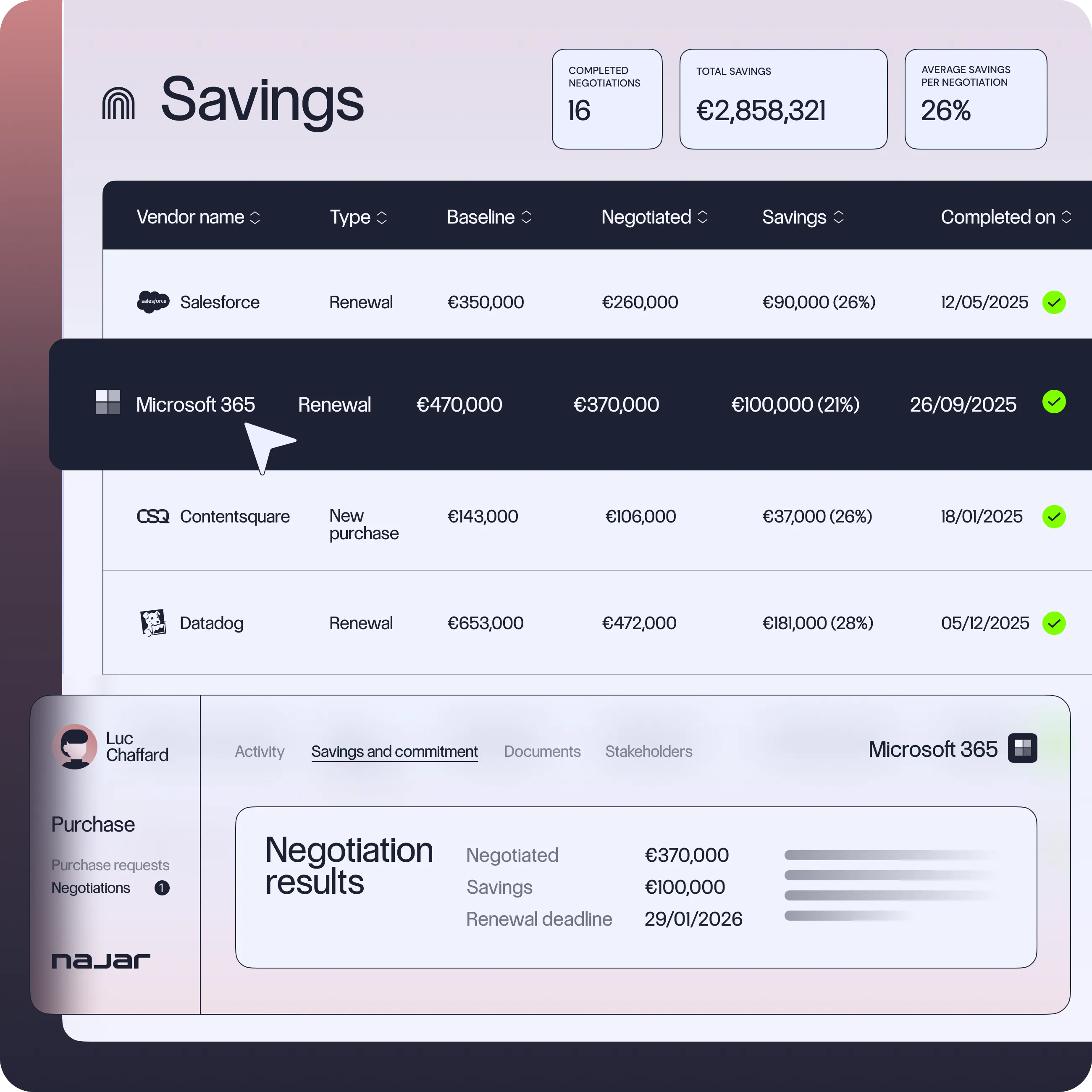
Contract renewal management relies on the expected…
Contract renewals shouldn't be surprises.
When managed proactively, every renewal becomes an opportunity to optimise costs, strengthen vendor relationships, and ensure your software investments continue delivering value.
By centralising contracts, assigning ownership, reviewing renewals early, and automating reminders, organisations can eliminate last-minute decisions and build a more strategic procurement process.
If you're ready to take the manual work out of contract management, Najar combines automated renewal tracking, centralised contract management, and expert procurement support in one platform, helping you stay ahead of every renewal while getting more value from every software contract.
Book a free demo now.