
Vendor lock-in becomes a problem when a supplier raises its prices, changes its terms, or stops meeting your needs, and switching to a competitor is too expensive or disruptive to justify.
Ask VMware's customers. After Broadcom bought VMware, Gartner saw some clients' costs as much as triple, and European cloud providers reported increases of 800% to 1,500%.
Vendor lock-in isn't always avoidable, nor is it always harmful. The important thing is understanding what you're committing to and preserving enough flexibility to negotiate or leave when necessary.
This guide covers the five types of vendor lock-in, the risks they create, and how to protect your business before the next renewal.
What is vendor lock-in?
Vendor lock-in occurs when switching suppliers becomes so expensive, difficult, or disruptive that a business continues using a product even when a better alternative is available.
Every software purchase involves some switching costs. Your employees learn the system, teams build processes around it, and other applications become connected to it.
The risk increases when those dependencies make leaving commercially or operationally unrealistic. At that point, the vendor may have considerable influence over your future costs and technology choices.
What are the types of vendor lock-in?
Lock-in comes in five main forms, and most cases mix several of them.
Type of lock-in | What it looks like | Example |
|---|---|---|
Technical | Your systems depend on features available only from one provider | Applications built around a cloud provider's proprietary database |
Data | Exporting or transferring information is difficult or expensive | Proprietary formats, limited bulk exports, or high data-transfer costs |
Contractual | Contract terms make leaving costly | Long commitments, automatic renewals, or substantial termination fees |
Commercial | Pricing arrangements make replacing part of a service unattractive | Discounts that disappear if you cancel one product in a software bundle |
Organizational | Employees and business processes depend heavily on the existing tool | Teams avoid migrating because they lack experience with alternatives |
Organizational lock-in deserves attention. In a discussion about vendor lock-in among DevOps professionals, participants spoke about the difficulty of moving established teams and workflows, not just the technical work involved.
A company may have complete access to its data and still struggle to change suppliers because the migration would require extensive retraining or disrupt essential operations.
Why is vendor lock-in a risk?
Relying on one vendor isn't necessarily a problem. The risk appears when pricing changes, contract terms, or technical dependencies leave you with few realistic alternatives.
1. Price increases you can’t refuse
VMware is a particularly instructive example. Following Broadcom's acquisition in November 2023, VMware moved away from perpetual licenses toward subscription packages and changed its product offerings.
In October 2025, Gartner reported that VMware renewal increases averaged approximately three to four times customers' previous costs among the cases it examined.
Some reported increases were substantially larger.
AT&T stated in 2024 that Broadcom had proposed a 1,050% annual price increase for VMware services. According to court filings reported by Ars Technica, AT&T estimated that migrating away could cost $40 million to $50 million.
European cloud providers also reported VMware licensing increases of 800% to 1,500% through the European Cloud Competition Observatory. Those figures reflect reported customer experiences rather than a universal pricing change.
The lesson is that a vendor doesn't need to prevent customers from leaving outright. A sufficiently difficult migration can make even a substantial price increase seem preferable to switching.
2. Losing your negotiating power
Negotiations become harder when a supplier knows you have no realistic alternative.
A competing quote gives procurement teams something concrete to negotiate against. Without one, discussions often revolve around accepting the proposed renewal or attempting to secure a modest discount.
Our 2026 research found that buyers who prepared competing offers roughly 90 days before renewal secured an additional 5–10% in savings across the deals studied.
The practical advantage comes from having time to act on an alternative. If your contract expires in two weeks and moving would take several months, the vendor knows that switching isn't a credible immediate option.
3. Paying for software you no longer need
Sometimes companies keep paying for software long after it has stopped being the best option.
In a Reddit discussion about vendor lock-in, an engineer described an organization that continued maintaining MicroStrategy and QlikView systems because enough employees still depended on them. Removing either product would have involved retraining users, migrating reports, and disrupting established processes.
The company continued paying rather than undertaking the migration, while other teams developed separate reporting solutions.
This is a familiar form of organizational lock-in: the software remains in place because replacing it has become an inconvenient project that nobody wants to own.
4. Compliance and data risks
A business that depends on one provider may struggle when its data protection, security, or regulatory requirements change.
For example, a company might discover that its software can't meet a new internal security requirement without a major upgrade. Moving to another provider could require exporting sensitive records, rebuilding integrations, and validating that the replacement meets its obligations.
The difficulty depends on what data can be exported, which information must be retained, and how dependent the business is on proprietary functionality.
Contractual rights to retrieve data are important, but organizations also need a practical way to use that data elsewhere.
5. New dependencies created by AI features
AI is introducing another source of software dependency.
Some SaaS vendors bundle AI functionality into higher-priced plans, while others charge separately for features that were previously performed through standard workflows.
At Najar, we found AI-related SaaS price increases ranging from 8% to 25% annually in the agreements analyzed, compared with a previous norm of approximately 4% before 2024. AI add-ons purchased outside renewal negotiations also carried premiums of around 15–20% in its findings.
The commercial exposure isn't limited to licensing costs. Businesses may build internal processes around a provider's AI tools, saved configurations, prompts, and data connections.
Before committing, establish which information can be exported, what happens to your workflows if AI functionality is removed, and whether usage-based charges could increase unexpectedly.
Is vendor lock-in always bad?
No. Sometimes committing to one provider is the most practical decision.
Using a single platform can mean fewer integrations, simpler administration, one support relationship, and better discounts. Those advantages can outweigh switching costs, particularly when the software is stable and the business expects to use it for several years.
The Gartner Peer Community poll below illustrates how divided technology professionals are on the subject.

The responses vary considerably by quarter. Everyone who responded in Q1 and Q3 2025 selected Yes, it can, while approximately two-thirds selected No, it never is in Q4 2025. By Q1 2026, the responses were evenly split.
The chart doesn't show how many people participated in each quarter, so the percentages shouldn't be treated as a representative measure of industry opinion. What it illustrates is the lack of agreement on whether dependence on a vendor is necessarily a disadvantage.
There are costs to avoiding lock-in, too. Maintaining multiple providers, duplicating infrastructure, and designing every application to be portable can require more work than switching would ever have cost.
For most businesses, the sensible approach is to accept dependencies where the benefits justify them while keeping the cost of leaving manageable.
How to avoid vendor lock-in
You don't need to avoid every long-term agreement or spread your software across multiple providers. The aim is to prevent a useful commercial relationship from becoming one you can't realistically renegotiate or end.
The following five measures address the main sources of lock-in.
1. Calculate the cost of switching before you sign
Software comparisons usually concentrate on subscription fees, implementation costs, and expected benefits. Add the potential cost of leaving to that assessment.
Consider what a migration would involve:
- Exporting and validating your data
- Rebuilding integrations and custom workflows
- Training employees on the replacement
- Running two systems during the transition
- Paying any applicable termination or migration fees
You don't need a detailed migration project for every software purchase. For critical systems, however, even a rough estimate helps you understand the commitment you're making.
If an alternative costs €20,000 less annually but would require €150,000 to implement and migrate to, the cheaper subscription may not justify switching immediately. Conversely, a low initial subscription price may be less attractive when it introduces costly dependencies that are difficult to remove later.
2. Make data portability a purchasing requirement
Don't wait until cancellation to find out what the vendor will let you export.
Before signing, confirm whether you can retrieve your data in a usable format, whether the export includes relevant metadata, and whether API access or data-transfer services carry additional charges.
For business-critical applications, test the process. Export a representative set of records and check whether another system can use them without extensive manual reconstruction.
Pay particular attention to information stored in proprietary formats, along with custom workflows and integrations. Having a file containing your data doesn't mean you can automatically reproduce the process that used it.
3. Negotiate contractual flexibility
A contract can create lock-in even when switching would be technically straightforward.
During SaaS contract negotiations, pay particular attention to the terms governing:
- Data return: The format, timing, cost, and scope of data exports.
- Exit assistance: What help the supplier must provide during a migration.
- Renewal notices: How much advance notice is required to cancel or renegotiate.
- Termination rights: What happens if service levels aren't met or the vendor materially changes its offering.
- Price protection: Limits on increases, including charges for new modules and AI features.
A two- or three-year commitment may offer worthwhile savings, but it also reduces flexibility if your requirements change.
Before accepting the discount, weigh the savings against the cancellation terms, expected adoption, and the risk of needing a different product. These are central considerations when evaluating multi-year SaaS contracts.
The contract should reflect the risks of the particular product. A minor productivity application and a business-critical cloud platform don't need identical exit arrangements.
4. Review bundles and technical dependencies
Software bundles can offer good value, especially when the products work well together. But the discount may depend on keeping every component.
Before purchasing a suite, compare the bundled price with the cost of the services individually. Check what would happen if you replaced one product and whether the remaining subscriptions would become more expensive.
Apply similar scrutiny to technical dependencies.
For example, a company might rely on one cloud provider's database, analytics, identity management, and infrastructure services. That arrangement can simplify operations, but migrating a single component may affect several others.
You don't need duplicate services for everything. Focus on avoiding single points of failure in business-critical operations and documenting where proprietary features would make replacement difficult.
5. Prepare for renewals before your options narrow
Many companies begin reviewing software when the renewal invoice arrives. By then, notice periods may have passed and there may be insufficient time to evaluate alternatives.
For important contracts, begin the review around three to four months before renewal, allowing for longer preparation where migration would be complicated.
Review actual usage, the vendor's performance, proposed pricing changes, and whether competing products could meet your requirements.
For your most critical systems, maintain a basic contingency plan: one or two potential alternatives, an estimated migration timeline, and the people responsible for making the decision.
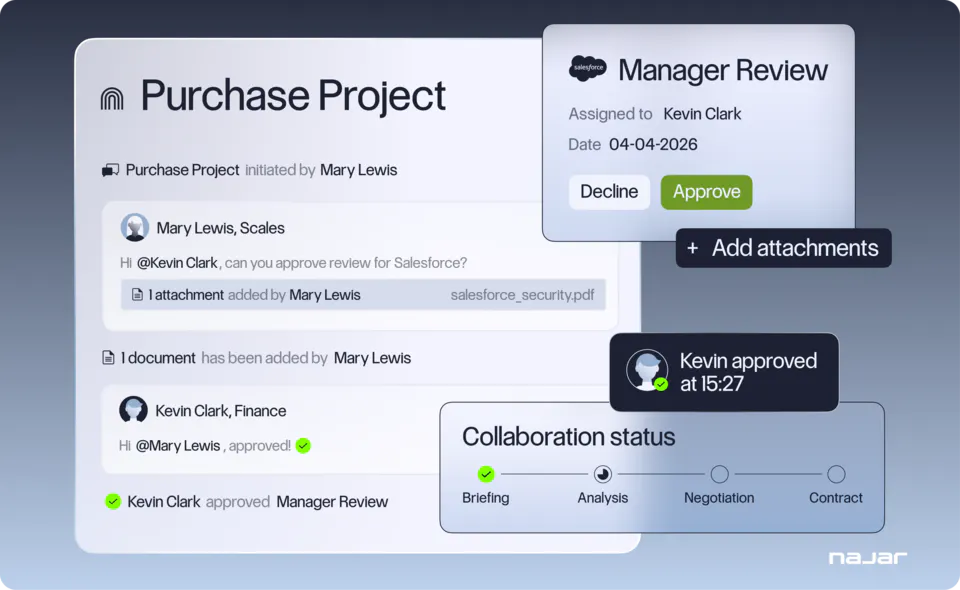
Centralized contract renewal management can help teams keep track of notice periods and start discussions while switching remains an option, rather than discovering contractual restrictions after renewal.
How the EU Data Act addresses cloud vendor lock-in
European customers now have additional protections when switching between covered cloud and other data processing services.
The EU Data Act's switching provisions have applied since September 12, 2025. They establish requirements intended to remove obstacles to switching providers or moving eligible services to on-premises infrastructure.
- Notice periods: The contractual notice period to start a switching process generally cannot exceed two months.
- Data portability: Providers must facilitate the transfer of eligible data and digital assets under the applicable requirements.
- Transition assistance: Contracts must address switching procedures, with a generally applicable 30-day transition period and specified exceptions.
- Switching charges: Charges are subject to transitional limits and are due to be prohibited from January 12, 2027.
The distinction between switching charges and early termination fees matters.
The Data Act doesn't automatically cancel every fixed-term SaaS contract without financial consequences. Ordinary subscription charges and legally permissible early termination compensation are separate from the switching fees being phased out.
Nor does the legislation guarantee that every application or proprietary feature will work identically with another provider.
Organizations should review their particular service, contract, and migration requirements against the EU Data Act and the European Commission's guidance.
Disclaimer
This section provides general information, not legal advice. The applicability of the switching rules and any contractual charges should be reviewed with your legal team.
Why are cloud platforms hard to cancel?
Cloud vendor lock-in is especially difficult when applications depend on services unique to one provider.
A business might use a proprietary database, serverless computing tools, managed security services, and other infrastructure that has no direct equivalent elsewhere. Moving the application may involve redesigning parts of it rather than simply transferring the data.
Employee expertise also matters. A team experienced with one cloud platform may need considerable time to become proficient with another, especially where the infrastructure is complicated.
Open standards, containers, and infrastructure-as-code tools can reduce some dependencies, but they don't make every application portable automatically.
For business-critical cloud services, document the proprietary components, estimate what migration would require, and assess whether the benefits of using them outweigh the additional switching costs.
Spot renewal risks before vendor lock-in happens with Najar
Avoiding vendor lock-in starts with understanding your existing contracts and addressing renewal risks before your options disappear.
Najar helps European companies manage software agreements, track renewal deadlines, and negotiate with vendors while there's still time to evaluate alternatives.
Its platform provides visibility into contracts, notice periods, and upcoming renewals. Najar's IT buying team also uses pricing benchmarks drawn from more than €6 billion in analyzed European spend data, with experience negotiating across more than 25,000 vendors.
That’s what helps procurement teams examine the full cost of a software agreement, challenge renewal terms, and negotiate provisions concerning pricing, data portability, and future flexibility.
See how your business can regain visibility and control over its software contracts
What is vendor lock-in in simple terms?
Vendor lock-in is when leaving a supplier would cost so much time, money, or effort that you're effectively stuck with them, even if their prices go up or their product stops fitting your needs.
What is an example of vendor lock-in?
VMware is the best-known recent example. After Broadcom acquired it, many customers faced steep price increases but stayed because migrating their systems would have taken years of work.
How do you get out of vendor lock-in?
Start by measuring your real switching cost and finding a realistic alternative. Then use that alternative as leverage at your next renewal.
If you're in Europe, check whether the EU Data Act gives you the right to switch early. Next time, write data return and exit terms into the contract before you sign.
Can the EU Data Act help me leave a SaaS contract?
It can. Since September 2025, business customers in the EU can switch away from most cloud and SaaS providers with a maximum of two months' notice.
Vendors can still charge proportionate early termination fees, so check your contract and ask your legal team how the rules apply to you.
Is vendor lock-in always bad?
No. Committing to one vendor can make you faster and simpler to run. It only becomes a problem when leaving is so hard that the vendor can raise prices or lower service without losing you.
How we put this together
This guide draws on what Najar’s IT buyers see when negotiating software renewals for European companies, Najar’s 2026 research on AI-driven price increases, the text of the EU Data Act, industry reporting on the VMware price changes, a Gartner Peer Community poll, and real experiences shared by IT and data professionals.