
According to Najar’s 2025 SaaS Trends Report, retail and eCommerce companies spent an average of €1,644 per employee on SaaS in 2025, the leanest SaaS spend of the three sectors in the report. The report draws on real usage and spend data from over 180 European companies, all Najar customers.
For a retail finance lead, the interesting part is what that budget is built around.
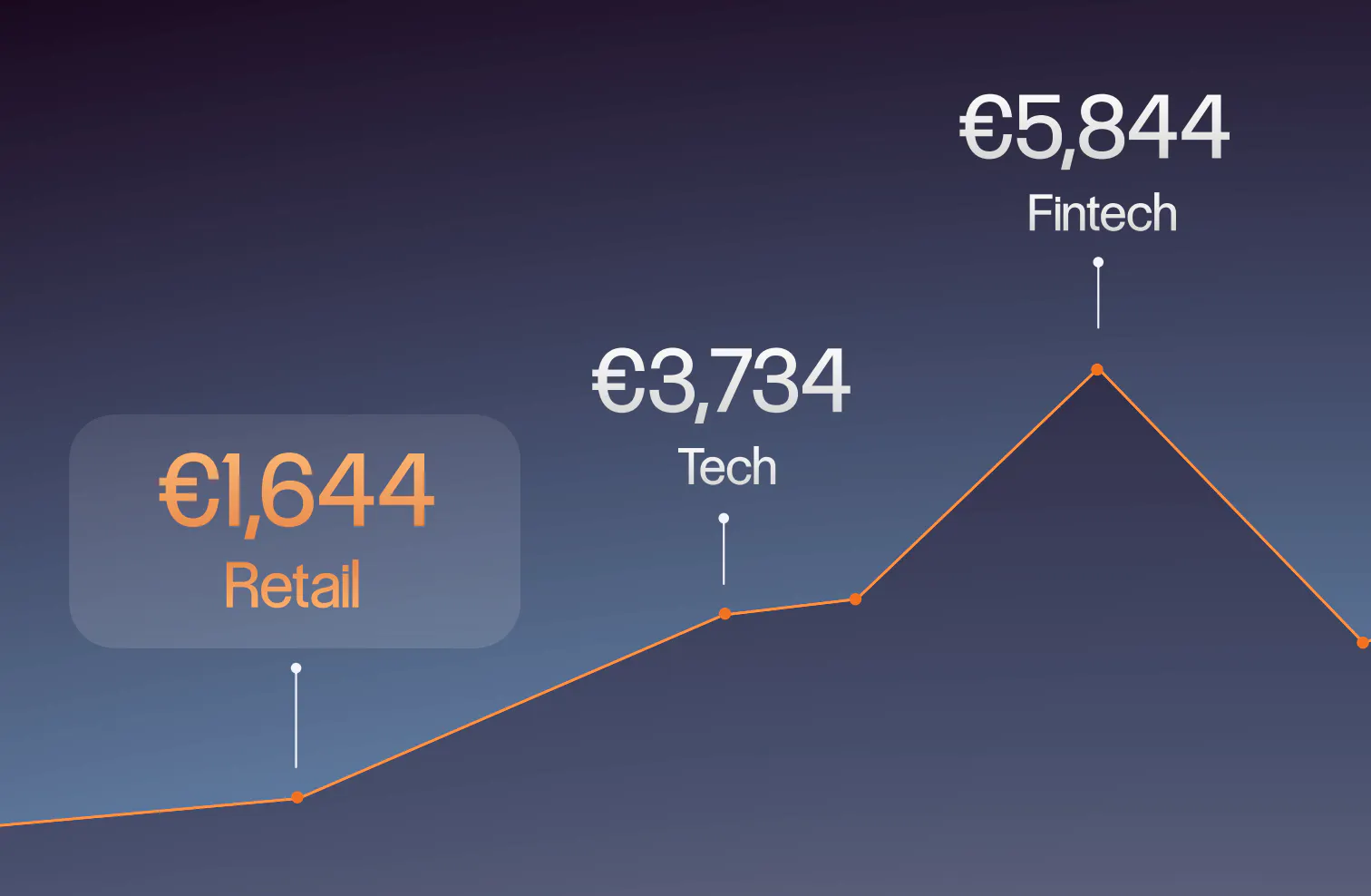
Why is SaaS spend per employee so low in retail?
It reflects a ruthless focus on ROI. Retail stacks are built around essential workflows such as support, communication and operational visibility.
Workforce shape plays a big part. With large teams, many employees don’t need licences for design or development tools, and a significant portion of the workforce, like salespeople in physical stores or logistics staff in warehouses, doesn’t use SaaS at all. Spend goes to high-impact, customer-facing tools instead.
Frontline teams now have a newer option.
“While many frontline workers don’t use traditional SaaS tools, there’s growing momentum around specialised licenses built for them. Solutions like Google Workspace Frontline are designed to give warehouse staff or retail employees secure, lightweight access to essential company information, at a much lower cost.”
Which SaaS tools do retail and eCommerce companies use?
Zendesk was used by 38% of retail and eCommerce companies in the dataset, Miro by 33%, Salesforce by 32% and Figma by 30%.
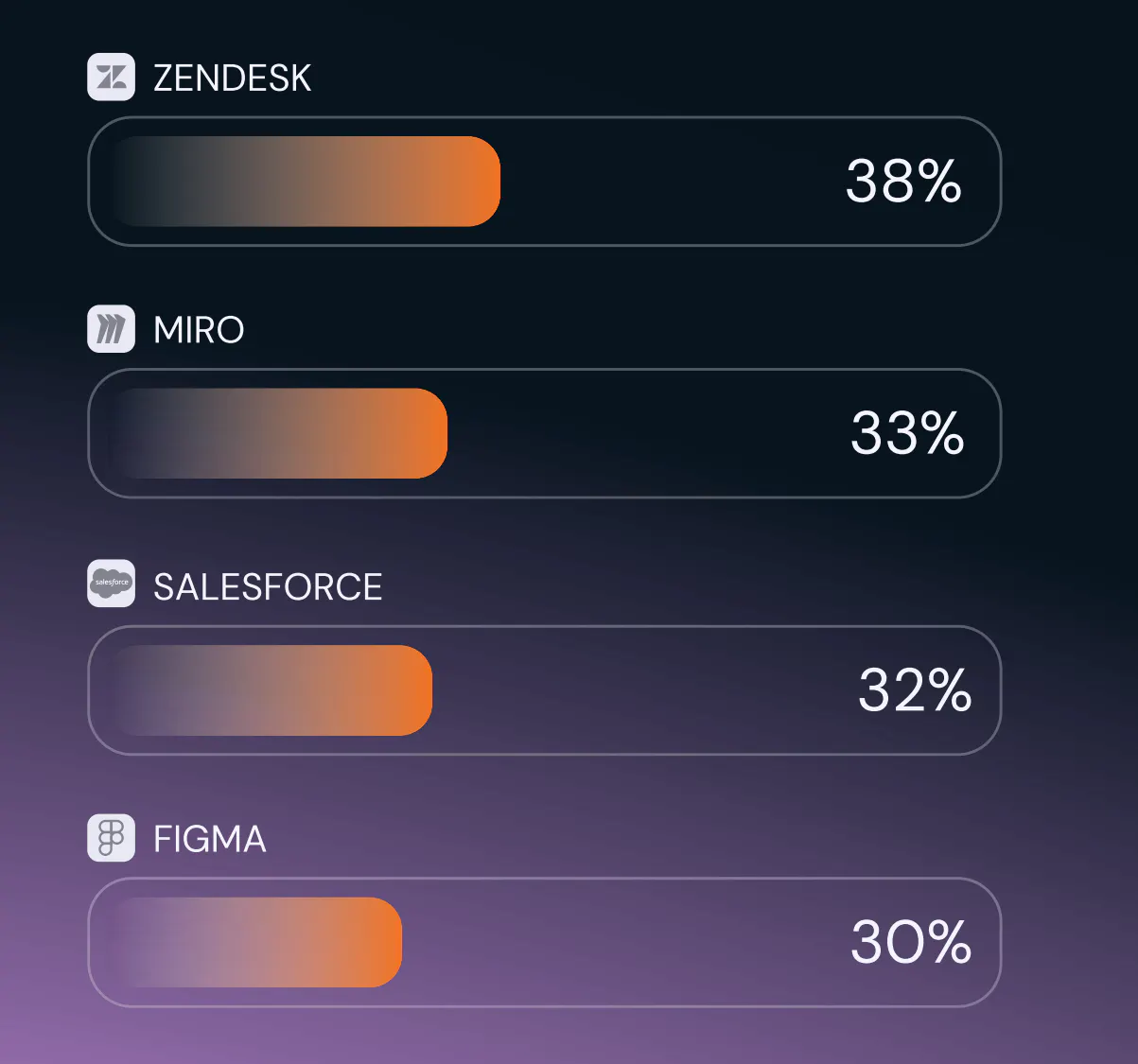
Zendesk and Miro lead, reflecting a focus on seamless support and visual collaboration. Salesforce’s presence points to a shift toward structured, scalable customer management, and with Figma close behind, design is clearly as critical as delivery.
How are retail and eCommerce companies using AI?
58% of retail and eCommerce companies used AI-enabled tools in 2025. Customer service led AI usage at 82%, followed by marketing and sales at 64% and inventory management at 45%.
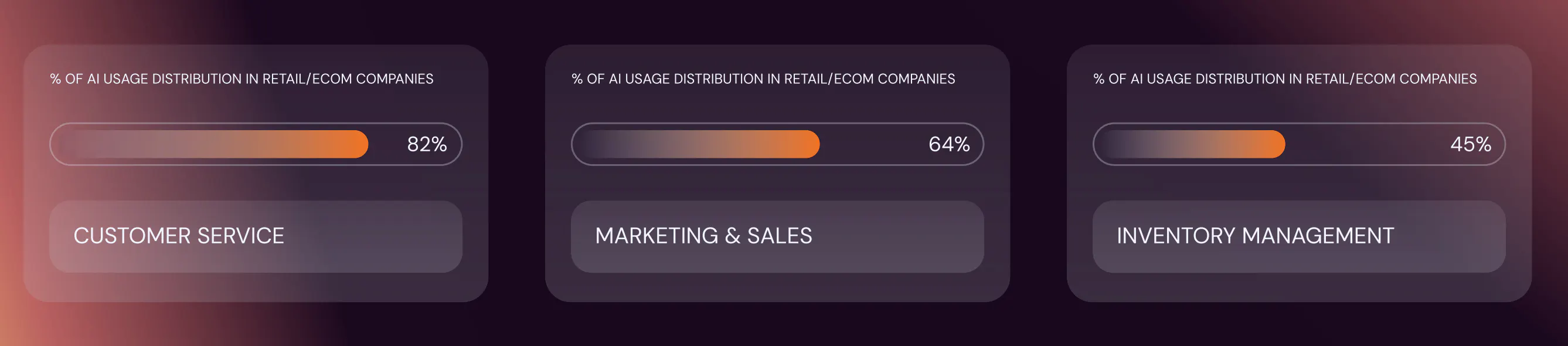
Retailers are deploying AI where it directly shapes the customer experience, through automation, personalisation and smarter service. According to the report, these companies prioritise AI that touches revenue, with a more focused adoption curve that’s no less strategic.
What should retail finance teams take from this?
Match licences to roles. Frontline licences like Google Workspace Frontline give store and warehouse staff access at a much lower cost, so not every employee needs a full seat.
And put your negotiating effort where the spend is concentrated, in the customer-facing tools your stack is built around.
Najar’s SaaS buyers help keep a growing stack coherent, from spotting redundancies to negotiating renewals. For company-wide benchmarks, see What is a normal SaaS spend for a company your size?, and for the tools each team relies on, How many SaaS tools does a company use, and which teams use them?.
Get the full 2025 SaaS Trends Report
Frequently asked questions
What is the average SaaS spend per employee in retail?
€1,644 per employee per year for retail and eCommerce companies in Najar’s 2025 data.
How do retailers use AI?
58% of retail and eCommerce companies used AI-enabled tools in 2025, and customer service was the leading use at 82%.