
Fintech companies spent an average of €5,844 per employee on SaaS in 2025, according to Najar's 2025 SaaS Trends Report, based on real usage and spend data from over 180 European companies, all Najar customers.
If you run finance at a fintech and that figure feels high, the report has a clear explanation for it.
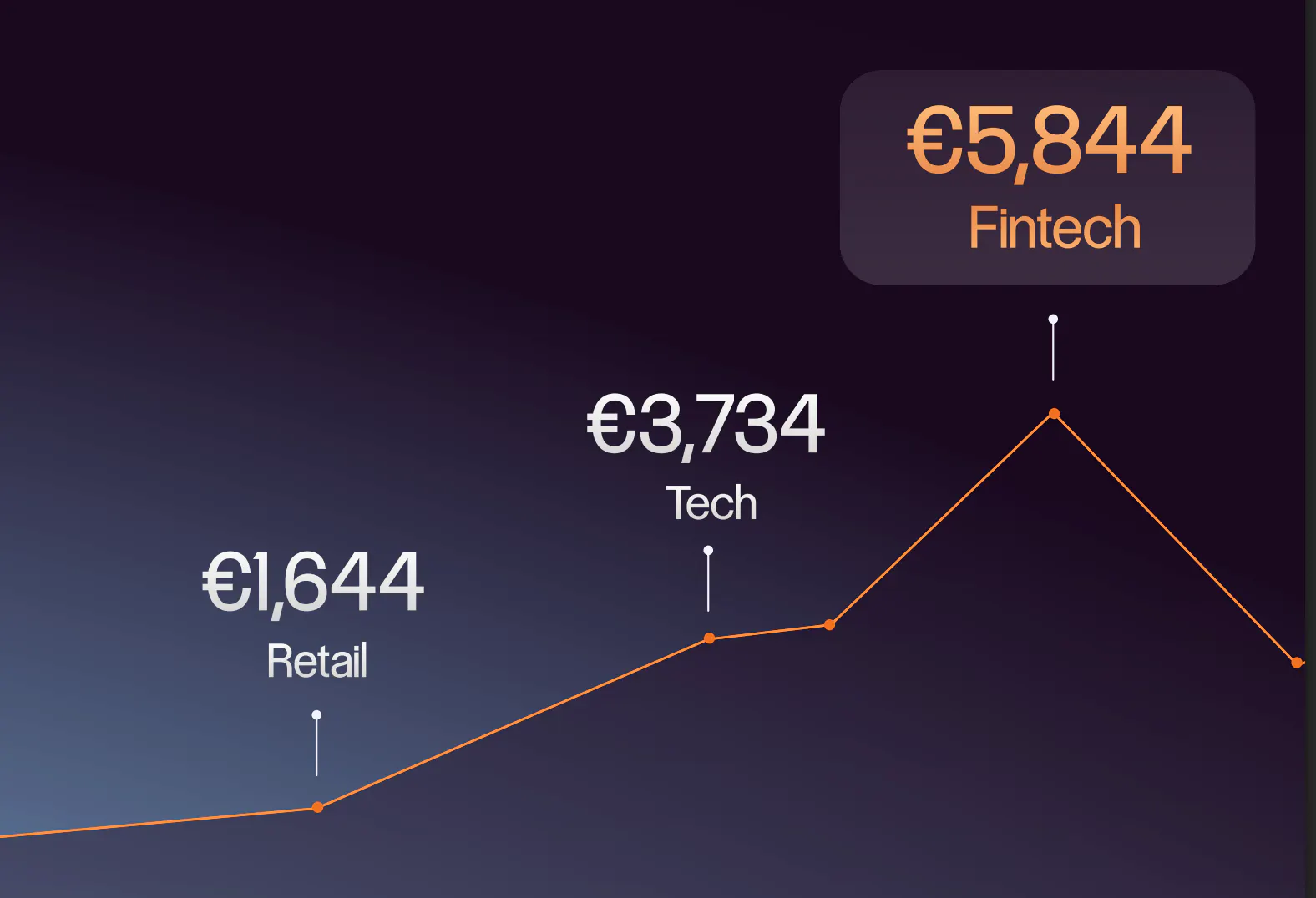
Why is SaaS spend per employee so high in fintech?
Fintech teams are lean, but they carry high operational complexity. Regulatory pressure, compliance and security leave no room for duct-taped workflows or free-tier tools, and even simple processes like project tracking need traceability and auditability.
So in fintech, a high SaaS bill reflects how the business runs. The report reads it as investment in structure, governance and risk mitigation.
The pattern reaches beyond fintech.
“This trend is also emerging among more traditional banks, a dynamic we observe regularly at TOLSON, where we primarily work with large banks and insurance companies.”
Which SaaS tools do fintech companies use?
Atlassian was used by 60% of fintech companies in the dataset, Notion by 58%, Google Workspace by 57% and Calendly by 50%.
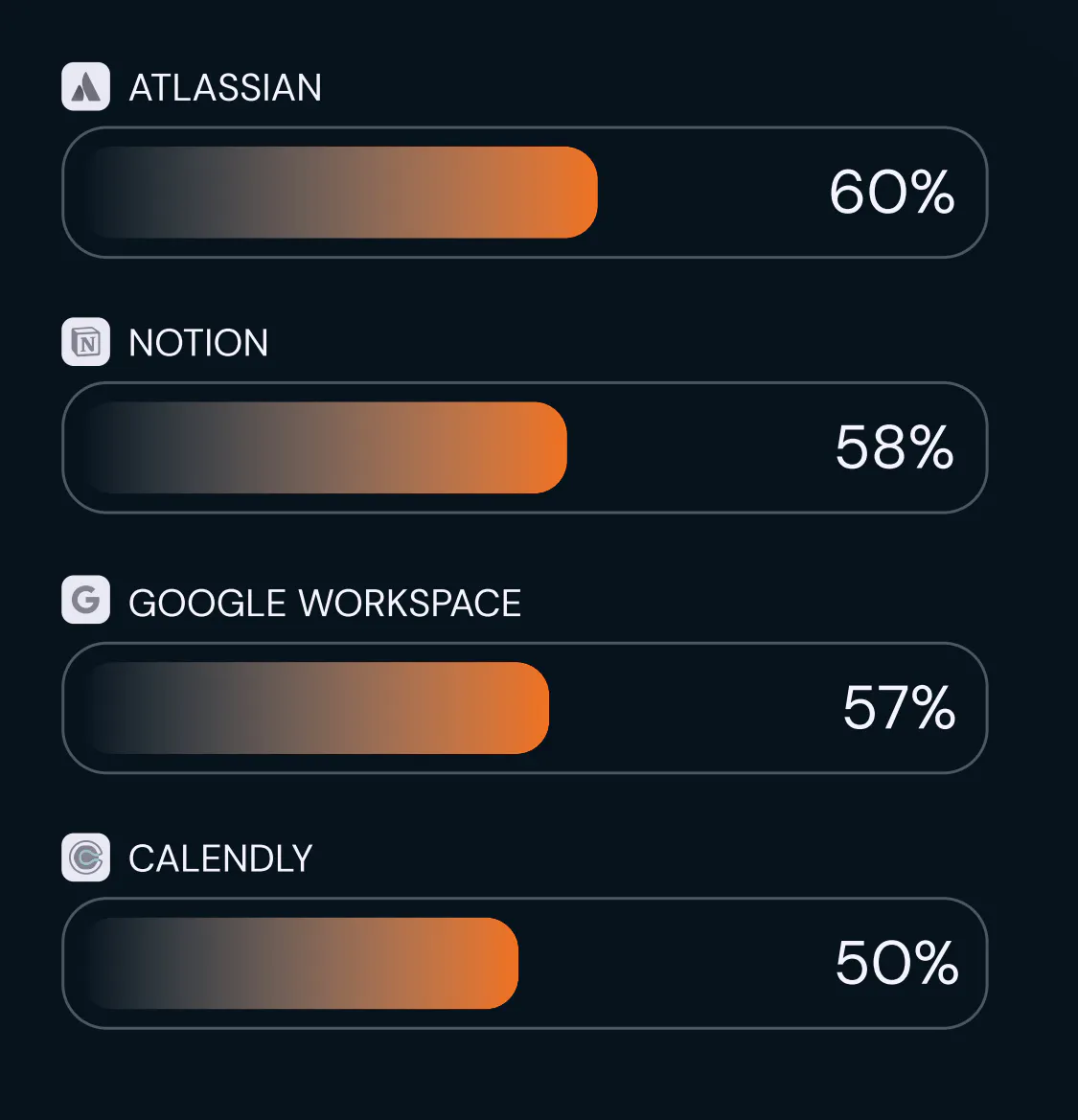
Project management and documentation are key, often for regulatory reasons. Fintech teams rely on a few core tools that do the heavy lifting, and while adoption is measured, a tool tends to stick once it’s in.
How are fintech companies using AI?
79% of fintech companies used AI-enabled tools in 2025. Compliance and security led AI usage at 73%, followed by customer analysis at 59% and document processing at 45%.
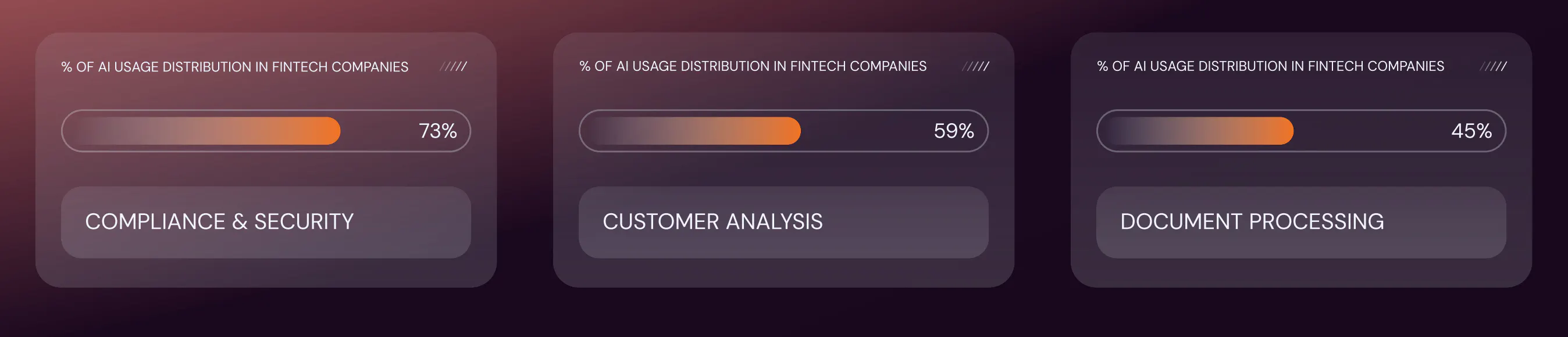
The report describes AI in fintech as working behind the scenes, supporting compliance, improving oversight and helping teams navigate complexity with more confidence. For a sector shaped by trust and regulation, that’s a natural fit.
What should fintech finance teams take from this?
A high SaaS bill on its own doesn’t mean overspending in fintech. The better question is whether each tool supports the structure the business needs.
The report’s planning advice fits fintech closely. Build your stack around a compliance-driven way of working, prioritise the tools behind your highest-value workflows, and consolidate where one tool can serve several needs. Because fintech tools tend to stick once adopted, that discipline matters at the point of purchase.
Najar’s SaaS buyers use pricing benchmarks and market knowledge to check you’re paying the right price for each tool, and take the back-and-forth with vendors off your plate on new purchases and renewals. For company-wide benchmarks, see What is a normal SaaS spend for a company your size?, and for the tools each team relies on, How many SaaS tools does a company use, and which teams use them?.
Get the full 2025 SaaS Trends Report
Frequently asked questions
What is the average SaaS spend per employee for a fintech company?
€5,844 per employee per year, based on Najar’s 2025 data from European fintech companies.
How do fintech companies use AI?
79% of fintech companies used AI-enabled tools in 2025, with compliance and security the leading use at 73%.