
Your IT budget probably isn't going where you think it is.
Between SaaS subscriptions, cloud infrastructure, hardware, AI tools and services, technology spending can quickly become scattered across teams and systems.
IT spend management brings it all into focus, helping you understand what you're paying for, who's responsible for it and whether you're getting enough value in return.
What is IT spend management?
IT spend management is the process of planning, monitoring, controlling and optimising costs related to technology used in your organisation.
That includes cloud infrastructure, hardware, telecommunications, cybersecurity, professional services, software licences, AI tools, and every other technology investment that keeps your business running.
It helps you answer a simple but important question: are you getting the best value from your technology budget?
IT spend management is an ongoing business process that brings together IT, Finance and Procurement to make sure technology investments support business goals while remaining cost-effective, secure and well governed.
Managing technology spend becomes difficult in large organisations where different cloud-based tools or hardware are purchased without following proper procurement processes.
An effective IT spend management strategy is built around four basic objectives.
- Visibility
Create a complete picture of your technology stack so you know what you're paying for, who owns it, and where money is being spent.
- Control
Establish purchasing, approval and renewal processes that reduce unnecessary spending while maintaining compliance and security.
- Optimisation
Identify opportunities to reduce waste, negotiate better contracts and ensure you're getting value from every technology investment.
- Strategic planning
Use reliable spending data to forecast future budgets, support business growth and make informed technology decisions.
IT spend management helps you manage your technology portfolio as a strategic business investment, not a collections of mismatched invoices.
IT spend management vs spend management
Spend management looks at every penny your organisation spends.
It covers procurement, supplier management, accounts payable, employee expenses and purchasing across every department. Its primary objective is to understand where company money is going and ensure spending follows the right processes.
IT spend management takes a narrower but more specialised view.
Instead of looking at all business expenditure, it focuses exclusively on technology investments and whether they're delivering value. It's less concerned with processing payments and more concerned with making sure your technology stack is cost-effective, well governed and aligned with business priorities.
A simple way to think about the difference is this:
“Spend management asks: "Where is the business spending money?" IT spend management asks: "Are we investing in the right technology at the right cost?"”
IT spend management vs SaaS management
SaaS management is one of the most important parts of IT spend management, but it only tells one part of the story.
A SaaS management strategy focuses specifically on cloud-based software and helps you keep track of the applications your organisation is using, who has access to them, how licences are being used and when contracts are due for renewal.
That has become particularly important as AI-powered software becomes part of everyday business operations.
You can quickly adopt AI assistants, writing tools, coding platforms and other AI tools, sometimes without going through central IT or Procurement.
SaaS management can help you identify these tools, understand who is using them and spot cases where different teams are paying for applications with overlapping capabilities. This gives you greater control over AI-related SaaS spending without having to slow down useful innovation.
SaaS management also plays an important role in reducing shadow IT by uncovering applications that have been purchased outside approved procurement processes.
This becomes even more relevant with AI, where other team members can often sign up for new tools independently and introduce another recurring expense without the wider organisation having visibility.
IT spend management goes much further.
While it includes SaaS applications, it also covers every other area of technology spending that contributes to your IT budget, including:
- Cloud infrastructure and hosting
- Hardware and end-user devices
- Telecommunications
- Cybersecurity tools and services
- Professional IT services and consultants
- Software licences beyond SaaS
- Networking and data centre infrastructure
You can think of SaaS management as one piece of a much larger puzzle.
If SaaS management helps you optimise your software subscriptions IT spend management helps you understand whether your entire technology portfolio is delivering value.
What counts as IT spend?
When people think about IT spend, they often picture software subscriptions or new laptops. In reality, those are only part of the equation.
Your IT budget includes every technology investment required to support your employees, operations and long-term business goals.
Looking at IT spend in categories makes it much easier to understand where your budget is going and where opportunities for optimisation may exist.
Infrastructure
Infrastructure forms the foundation of your technology environment. It includes the systems and services that allow your applications and employees to operate reliably every day.
This category typically includes:
- Cloud platforms such as AWS, Microsoft Azure and Google Cloud
- Servers and data centres
- Storage solutions
- Networking equipment and infrastructure
Unlike one-off purchases, many infrastructure costs are usage-based, meaning they can fluctuate from month to month if they aren't actively monitored.
Software
Software is often the largest and fastest-growing area of IT spend.
As organisations continue adopting cloud applications, subscription-based software and AI-powered tools, software budgets can quickly expand across multiple departments.
Software spend can include:
- SaaS applications
- Perpetual and subscription software licences
- Productivity and collaboration tools
- AI subscriptions and enterprise AI platforms
- Industry-specific business applications
AI is also starting to play a more practical role in how organisations manage this growing software estate.
AI can analyse large volumes of software, contract and usage data to identify patterns that may otherwise be difficult to spot. For example, AI can help flag applications that aren’t being used, identify potentially duplicated tools, group similar software and surface unusual spending patterns.
This is particularly useful as AI-powered applications become part of the SaaS landscape themselves.
An organisation might have different teams paying for several AI assistants or tools with overlapping capabilities, without realising how much is being spent collectively. AI can help connect the dots between applications, users, spending and usage, giving you a clearer picture of where software costs are accumulating and where consolidation may make sense.
AI can also support the wider software lifecycle by helping you interpret contract and renewal information, surface relevant insights and prioritise areas that need attention.
Instead of simply showing you a list of software subscriptions, an AI-enabled approach can help turn that information into actionable insights about where your software estate could be optimised.
End-user technology
Every employee relies on technology to do their job, and those devices represent an important part of your IT investment.
Typical end-user technology includes:
- Laptops and desktop computers
- Mobile phones and tablets
- Monitors, docking stations and peripherals
- Printers and other office equipment
While these purchases may seem straightforward, they also involve ongoing costs such as maintenance, replacements and device lifecycle management.
External services
Not every technology capability is managed in-house. Many organisations rely on external providers to support projects, maintain infrastructure or deliver specialist expertise.
Examples include:
- Managed Service Providers (MSPs)
- IT consultants
- Systems integrators
- Implementation partners
- Technical support and maintenance contracts
These services can represent a significant portion of your IT budget, particularly during large digital transformation projects or cloud migrations.
Telecommunications
Communication services are an essential part of modern IT operations, especially for organisations with distributed or hybrid working models.
Telecommunications spending often covers:
- Internet connectivity
- Mobile phone plans
- VoIP and business phone systems
- Network and communication services
Sometimes these costs are managed separately from IT, they're still an important part of your overall technology expenses.
The IT spend management ecosystem
IT spend management doesn't exist in isolation. It's part of a wider ecosystem of financial, procurement and technology disciplines that work together to help your organisation control spending and make better investment decisions.
“Spend Management
│
├── Procurement
├── AP Automation
├── Expense Management
└── IT Spend Management
│
├── SaaS Management
├── Cloud Cost Management
├── Software Asset Management
├── IT Asset Management
└── Vendor Management”
Each discipline plays a different role, but together they create a more complete picture of your technology estate.
Procurement manages how technology is sourced, purchased and contracted, helping ensure vendors are selected through consistent purchasing processes.
Accounts payable (AP) automation handles invoice processing and payments, ensuring suppliers are paid accurately while providing valuable financial data for spend reporting.
Expense management captures employee expenses, including technology purchases made on corporate cards or submitted through expense claims. This is often where shadow IT first appears.
Within IT spend management, several specialised disciplines focus on different parts of the technology lifecycle:
- SaaS management tracks software subscriptions, licences, renewals, utilisation and shadow IT
- Cloud cost management helps monitor and optimise spending across cloud platforms such as AWS, Microsoft Azure and Google Cloud
- Software asset management (SAM) governs software licensing, compliance and software lifecycle management across the organisation
- IT asset management (ITAM) tracks the physical and digital assets your organisation owns, from laptops and servers to mobile devices and networking equipment
- Vendor management oversees supplier relationships, contract performance, renewals and commercial negotiations
These disciplines naturally overlap.
For example, a SaaS application might be discovered through expense management, purchased through procurement, tracked by a SaaS management platform, renewed through vendor management and reported as part of your wider IT spend.
I other words, when you know how they are connected, you can build a complete technology governance strategy.
Where can you lose control of IT Spend?
Technology budgets spiral quietly. Costs creep up over time through dozens of small decisions made across different teams.
Individually they may seem insignificant, but together they can create losses worth thousands (or even millions) of euros.
One of the most common causes is department-led software purchasing.
Employees can subscribe to new applications in minutes using a company card, often without IT or Procurement being involved. While these tools may solve an immediate problem, they also create duplicate applications, unmanaged renewals and increased security risks.
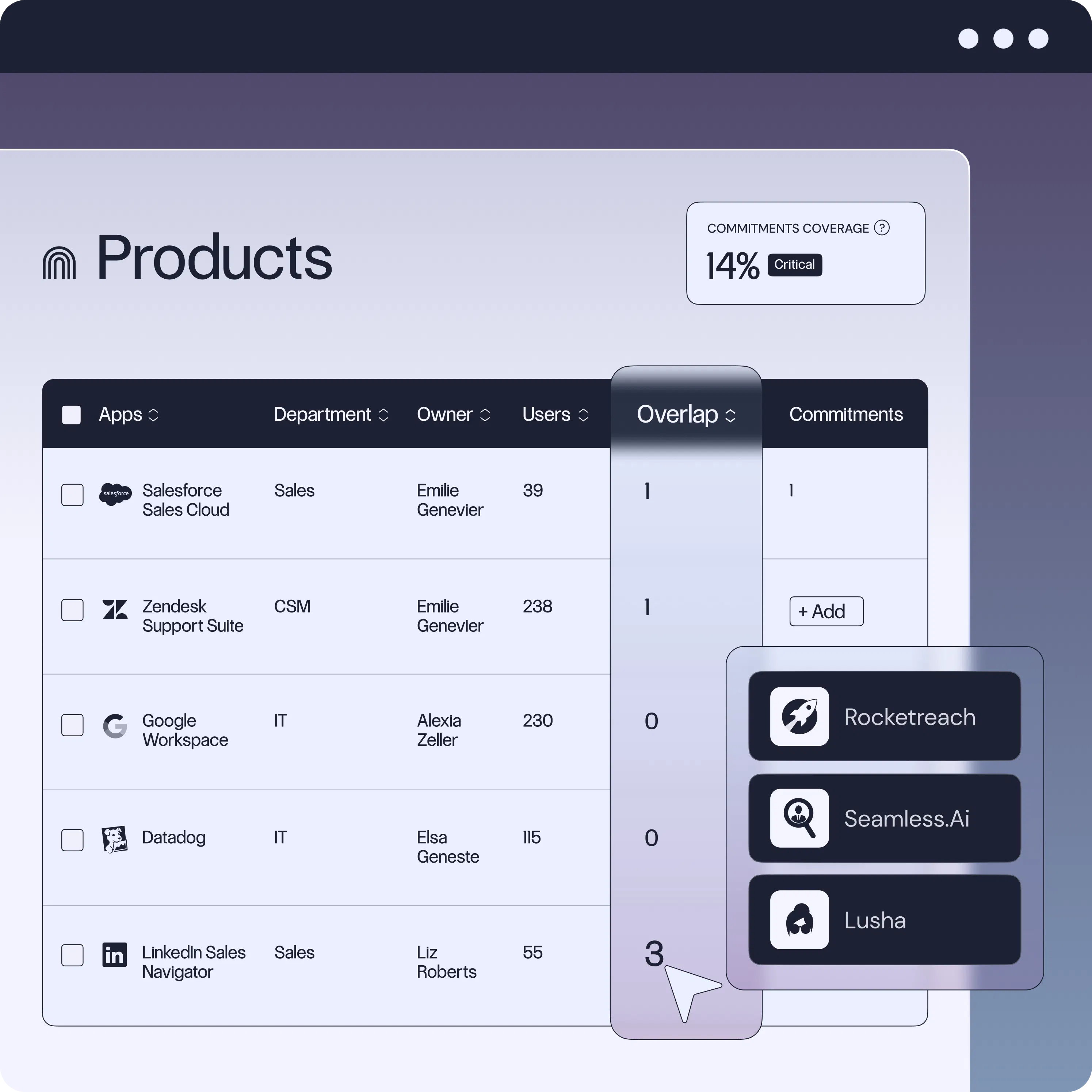
Another frequent source of waste is overlapping technology.
It's not unusual to find multiple tools performing the same function, for example, several project management platforms, file-sharing services or AI assistants being used by different departments.
Without central visibility, these overlaps often go unnoticed.
Unused or underused licences are another hidden cost.
Employees change roles, leave the business or simply stop using certain applications, yet licences continue renewing because no one is monitoring adoption. Enterprise agreements can become particularly expensive when organisations pay for hundreds of seats that are no longer required.
Also, auto-renewal clauses can lock you into another year of software before you've had the chance to review usage, compare alternatives or renegotiate pricing.
Cloud infrastructure presents its own challenges.
Development environments left running overnight, oversized virtual machines, unused storage and forgotten test environments can quietly increase monthly cloud bills without delivering any business value.
Even physical assets can contribute to waste.
Laptops, mobile phones and other equipment aren't always recovered when employees leave, while older devices may continue appearing on maintenance or support contracts long after they've been retired.
None of these issues are unusual. In fact, they're a natural consequence of modern organisations adopting technology quickly and independently.
The goal of IT spend management is to create enough visibility to identify these hidden costs early, make informed decisions and ensure every technology investment delivers measurable value.
How to build an effective IT spend management process
Successful IT spend management is an ongoing process that helps you understand your technology estate, identify opportunities for improvement and make better investment decisions over time.
While every organisation will have its own approach, most effective IT spend management programmes follow the same lifecycle.
Step 1. Discover every technology asset
The first step is understanding what you actually have. That means identifying every technology asset your organisation pays for, whether it's a SaaS application, cloud service, software licence, laptop, mobile phone or managed service contract.
This is often harder than it sounds.
Technology purchases can be spread across different departments, company credit cards and procurement systems, making it easy for applications and vendors to go unnoticed.
Without complete visibility, it's impossible to manage costs effectively.
Step 2. Categorise your IT spend
Once you've identified your technology assets, organise them into meaningful categories.
Separating software, cloud infrastructure, hardware, telecommunications and external services makes it much easier to understand where your budget is going and identify areas with the greatest optimisation potential.
Categorisation also helps Finance and IT speak the same language when discussing budgets, forecasts and investment priorities.
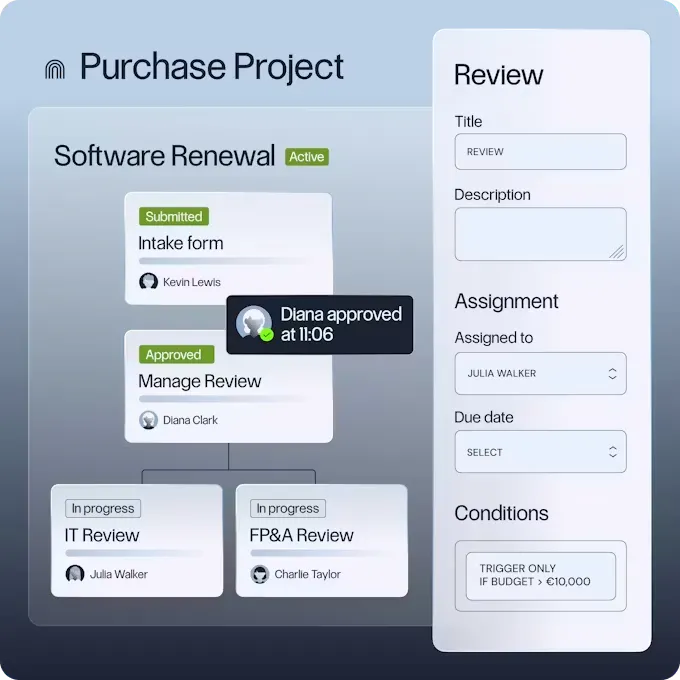
Step 3. Assign ownership
Every technology investment should have a clear owner.
Ownership doesn't necessarily mean the person who approved the purchase. It means someone who is responsible for reviewing usage, managing renewals and ensuring the technology continues to deliver value to the business.
Without clear accountability, applications often remain in place long after they've stopped providing value.
Step 4. Monitor usage and spending
Technology environments are constantly changing. New applications are introduced, teams grow, employees leave and business priorities evolve.
Regularly reviewing software adoption, cloud consumption and spending trends helps you spot underused licences, duplicate tools and unexpected increases before they become expensive problems.
Rather than waiting for annual budget reviews, ongoing monitoring allows you to make smaller, more informed adjustments throughout the year.
Step5. Optimise contracts and renewals
Renewal periods provide one of the best opportunities to reduce unnecessary spending.
Before renewing any contract, review how the technology is being used, whether licence counts still reflect current needs and whether similar tools already exist elsewhere in the organisation.
With accurate usage data and visibility into your technology estate, you're also in a much stronger position to negotiate with vendors.
What does IT spend management software do?
IT spend management software gives you a central place to monitor spending, track vendors and support better decision-making throughout the entire lifecycle.
During the discovery stage, the software helps identify technology assets across your organisation, creating a more complete inventory of applications, vendors, cloud services and contracts. This improves visibility and reduces the risk of hidden or unmanaged technology.
As contracts approach renewal, renewal tracking helps you stay ahead of important dates, reducing the likelihood of unwanted auto-renewals and giving you time to review usage before committing to another contract term.
Many platforms also provide vendor intelligence, allowing you to understand who your suppliers are, what services they provide and how much you're spending with each one. This makes it easier to identify consolidation opportunities and strengthen vendor negotiations.
With cost reporting, you can analyse spending across different categories, departments, vendors or time periods instead of relying on disconnected spreadsheets.
This gives Finance and IT a shared view of technology expenditure and supports more informed budgeting decisions.
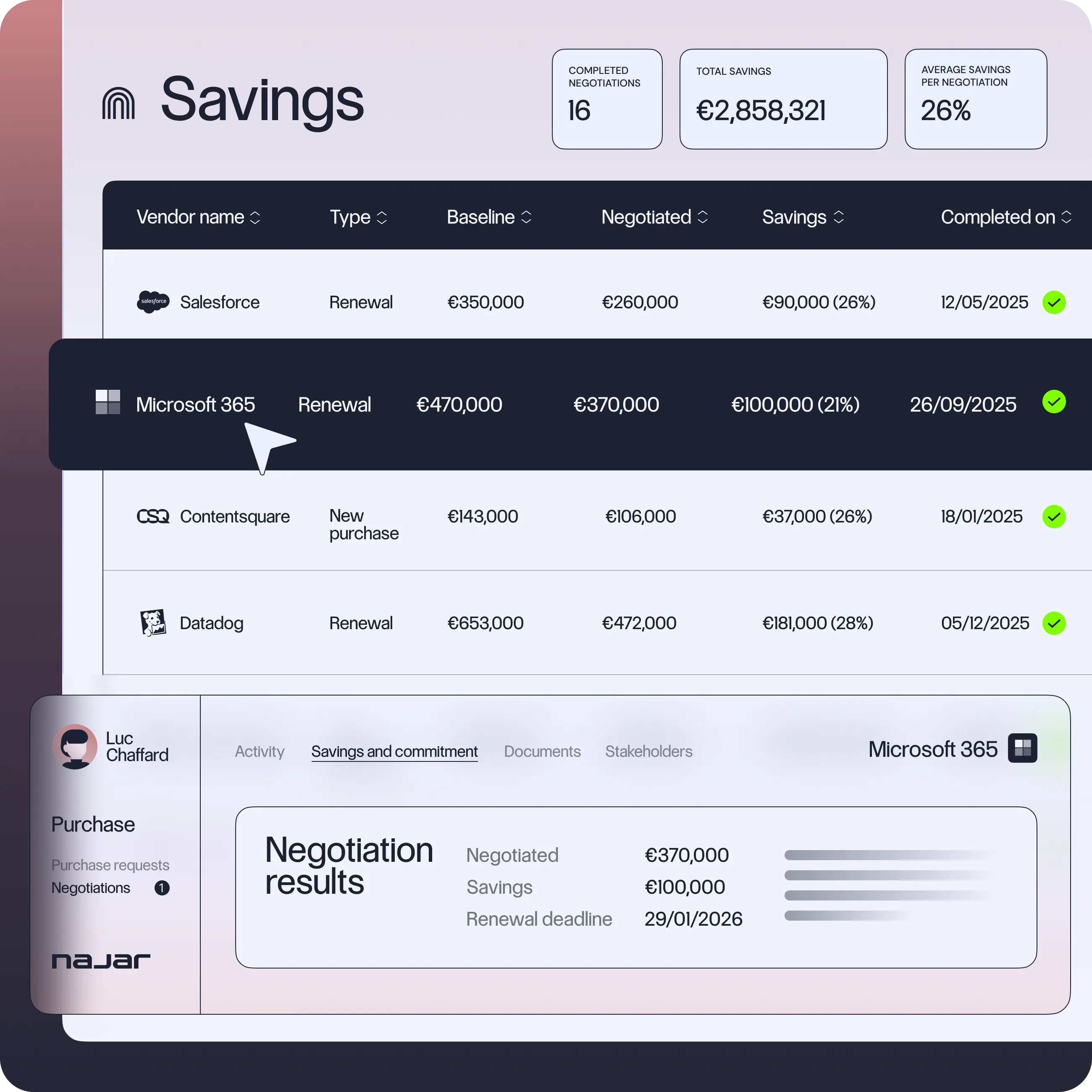
Usage analytics adds another layer of insight by showing whether technology investments are actually being used. Identifying software licences that are not being used to their full potential or are inactive helps you reduce waste without affecting employee productivity.
You can also use spendng data for forecasting, helping anticipate future technology costs, prepare for upcoming renewals and plan budgets with greater confidence.
Finally, automation reduces much of the manual work involved in managing IT spend.
Routine tasks such as renewal reminders, approval workflows, spend reporting and contract monitoring can all be automated, allowing IT and Finance teams to focus on strategic decisions rather than administrative work.
Ultimately, IT spend management software improves visibility and provides reliable data about where your technology budget is going and how to get the greatest value from it.
Bring IT spend management together
IT spend management doesn’t mean cutting your technology budget left and right. It's more about knowing what you're spending, why you're spending it and whether those investments are still delivering value.
That requires a broader view than simply looking at software invoices or reviewing the IT budget once a year. You need visibility across your technology stack, clear ownership of spending, ongoing monitoring and a process for reviewing contracts and investments as your organisation changes.
It also means recognising that different areas of technology spend require different approaches.
Cloud costs need to be monitored differently from hardware, while SaaS requires its own focus on licences, utilisation and renewals. Bringing these areas together gives you a much clearer picture of your overall IT expenditure without treating every technology investment in exactly the same way.
For many organisations, SaaS spend management is a practical place to start.
Najar can help you centralise SaaS spending, monitor contracts and renewals, understand vendor relationships and identify opportunities to optimise your software estate.
Ultimately, effective IT spend management moves you from reactive cost control to proactive technology governance.
When you have the right information at the right time, you can make better decisions about what to keep, what to consolidate and where to invest next.
Frequently asked questions
What is IT spend?
IT spend is the money your organisation invests in technology and technology-related services. It can include SaaS applications and software licences, cloud infrastructure, hardware, telecommunications, cybersecurity, IT consultants, managed service providers and other technology services.
The exact breakdown will vary depending on your organisation, but the important distinction is that IT spend extends well beyond software subscriptions. It encompasses the technology, infrastructure and services required to support your business.
What is IT spend management?
IT spend management is the process of tracking, controlling and optimising your organisation's technology expenditure. It combines financial oversight with procurement, vendor management and IT governance to help you understand where your technology budget is going and whether those investments are delivering value.
An effective approach gives you visibility into your IT estate, helps you control unnecessary expenditure, supports contract and renewal management, and provides the data you need to plan future technology investments.
Who is responsible for IT spend management?
IT spend management is usually a shared responsibility rather than something that sits entirely with one team.
IT typically understands the technology being used and whether it meets business requirements, while Finance provides financial oversight and budgeting expertise. Procurement may manage purchasing and vendor negotiations, and department leaders can be responsible for technology their teams have purchased or rely on.
The exact ownership model depends on the organisation. What matters is that IT, Finance and Procurement have access to the same reliable information and a clear understanding of their respective responsibilities.
What is included in IT spending?
IT spending can include virtually any technology or technology-related service your organisation purchases. Common categories include software and SaaS, cloud infrastructure, hardware, telecommunications, cybersecurity, external IT services and networking.
It can also include newer forms of technology spending, such as AI subscriptions and AI platforms. As the technology landscape continues to change, keeping your definition of IT spend broad enough to capture emerging costs is increasingly important.