
Did you know enhanced analytics and decision-making was the leading reported value driver for generative AI in procurement, ahead of productivity gains?
But using AI effectively is about more than adding a chatbot to your procurement stack.
The real opportunity comes from connecting AI to your procurement data, systems and workflows, while keeping people in control of important commercial decisions.
AI in procurement means automating your processes and gathering scattered data to ensure you make the best possible decision.
What is AI in procurement?
AI in procurement is the use of artificial intelligence and algorithms to automate the process of buying tools and services and the tasks that surround it, while analysing data to help procurement and finance teams make better-informed purchasing decisions.
It can be applied to almost any stage of the procurement process, from analysing spend and evaluating suppliers to reviewing contracts, preparing RFPs and monitoring purchasing activity.
The important point is that AI does not necessarily mean handing procurement decisions over to a machine.
In practice, it's taking on the work that consumes time and doesn’t require human judgment. AI can process large volumes of data, identify patterns, extract information from documents, generate content and flag potential risks far faster than a person working manually.
The procurement team can then use those outputs to make decisions, negotiate with suppliers and decide what action to take.
AI vs procurement automation
AI and automation are often used interchangeably, but they are not quite the same thing.
Traditional procurement automation follows predefined rules.
If a purchase meets certain criteria the system can automatically send it for approval. The workflow is designed in advance, and the software follows those instructions consistently.
AI can work with information that is less structured.
Rather than simply following an if-this-then-that rule, it can analyse data, identify patterns, interpret language and generate recommendations or content based on what it finds. That makes it useful for tasks where there is more variation or where the information needs to be interpreted before an action can be taken.
Generative AI takes this a step further by creating new content.
In procurement, that could mean drafting a supplier email, generating RFP questions, summarising a proposal or suggesting contract language based on the information provided to it.
Agentic AI is focused on taking action.
An AI agent can potentially work through several connected steps to complete a task rather than simply producing an answer.
For example, an agent could identify an upcoming procurement task, gather relevant information, analyse it and prepare the next action for review. The exact level of autonomy depends on the software, integrations and controls in place.
Technology | How it works | Procurement example |
|---|---|---|
Traditional automation | Follows predefined rules and workflows. | Automatically sends a purchase for approval when it meets specific criteria. |
AI | Analyses data, identifies patterns and interprets information to provide recommendations or insights. | Analyses purchasing data to identify unusual spending or potential savings opportunities. |
Generative AI | Creates new content based on the information and instructions it receives. | Drafts supplier emails, RFP questions, proposal summaries or contract language. |
Agentic AI | Can complete multiple connected steps towards a goal, with the level of autonomy depending on the software and controls in place. | Identifies an upcoming procurement task, gathers relevant information, analyses it and prepares the next action for review. |
What is generative AI in procurement?
Generative AI in procurement refers to AI that can create new content or outputs based on the information and instructions it receives.
While traditional AI is often used to classify, predict, detect or extract information, generative AI can produce written content, summaries, recommendations or draft documents.
Generative AI can support a range of practical procurement tasks, including:
- Drafting procurement documents
- Writing supplier emails
- Developing scopes of work
- Generating RFP and RFQ questions
- Summarising supplier responses
- Extracting contract terms
- Drafting negotiation plans
- Suggesting contract clauses
The common thread is that GenAI can reduce the amount of time spent creating, reading and processing procurement information.
However, it does not solve every problem.
Can you use ChatGPT for procurement?
In a nutshell, yes. ChatGPT or Claude could be useful for individual procurement tasks, particularly when you need help creating or working with information.
For example, you could use it to draft supplier emails, create RFP questions, summarise documents they provide, brainstorm negotiation strategies, create procurement templates, rewrite communications, analyse appropriately anonymised data and build checklists.
However, a general-purpose AI tool is not the same as procurement software.
ChatGPT does not automatically have the context of your supplier base, contracts, purchasing history or internal procurement workflows. Using it with confidential commercial information also requires appropriate consideration of data privacy and company policies, and its outputs still need to be checked for accuracy.
Specialist procurement software can provide that additional context by connecting AI to the systems, data, workflows and permissions used by the procurement team.
So the two do not necessarily need to compete.
ChatGPT can complement procurement software for ad-hoc tasks, while AI procurement platforms bring AI into the wider purchasing process.
Types of AI used in procurement
AI in procurement is not a single technology.
Different types of AI can handle different parts of the procurement process, from analysing purchasing data to interpreting contracts and carrying out multi-step tasks.
Machine Learning
Machine learning (ML) allows systems to analyse historical data, identify patterns and use those patterns to make predictions or classifications. In procurement, this is particularly useful when you are working with large amounts of purchasing and supplier data that would be difficult to analyse manually.
For example, an ML model can analyse historical transactions to classify spend into the right categories, identify unusual purchasing activity or predict future demand. It can also use past supplier performance, pricing and other relevant data to help assess supplier risk or forecast prices.
Common applications include:
- Spend classification
- Demand forecasting
- Supplier risk prediction
- Price forecasting
- Anomaly detection
- Supplier performance analysis
The more relevant, consistent data the system has to work with, the more useful these models can become.
Natural Language Processing
Natural language processing (NLP) allows AI systems to work with human language.
It comes in handy when information is found in contracts, supplier proposals, emails, RFPs and other documents rather than neat rows of structured data.
NLP can identify and extract relevant information from these documents, classify them, answer questions about their contents or help procurement teams search across large collections of information.
Common applications include:
- Contract analysis
- Clause extraction
- Supplier response analysis
- Document classification
- AI-powered search
- Information extraction
Deep Learning
Deep learning is a more advanced form of ML that uses multi-layered neural networks to process complex datasets and identify patterns within them.
You are less likely to encounter it as a standalone procurement feature, as it often sits behind more sophisticated AI applications.
In procurement, deep learning can help power advanced language and document-processing capabilities, as well as systems that need to work with large and complex datasets. Many modern AI and generative AI applications rely on deep learning models behind the scenes.
Agentic AI
Agentic AI takes AI beyond analysing information or producing an answer.
An AI agent can potentially plan and execute a series of connected tasks to achieve a particular goal, depending on the software, data available, integrations, permissions and level of human oversight involved.
An AI assistant might answer a question such as, “Which SaaS contracts are due for renewal in the next 90 days?”
An AI agent could potentially take that information and work through the next steps: identify the relevant contracts, gather supplier information, flag potential negotiation opportunities and prepare a recommended action for the procurement team.
In simple terms:
AI assistant: “Here is the information you asked for.”
AI agent: “I found the information, worked through the next steps and prepared an action for you to review.”
Agentic AI is particularly interesting for procurement because many processes involve a sequence of connected tasks rather than one isolated action.
RPA
Robotic process automation (RPA) uses software bots to carry out repetitive, rule-based actions across digital systems.
It is not the same as AI, but the two technologies can work together.
RPA is well suited to tasks where the instructions are predictable.
For example, a bot could take information from one system and enter it into another, trigger a workflow or process a routine transaction according to predefined rules.
AI can add intelligence to that workflow. Instead of simply moving information between systems, AI could interpret a document, classify a transaction or identify an anomaly before RPA carries out the next step.
How does AI in procurement work?
Procurement teams are under increasing pressure to do more with the information already sitting across their organisations.
AI is moving quickly, 80% of CPOs plan to deploy generative AI within the next three years, yet only 36% currently have meaningful implementations.
The question here is if generative AI can actually make a difference in procurement.
Sure, AI can analyse large volumes of spend and supplier data, identify patterns, interpret contracts and documents, generate procurement content and support sourcing and negotiation.
However, only more advanced procurement platforms can connect these capabilities to procurement workflows, helping teams move from a purchasing request to a better-informed decision with less manual work.
Putting AI to work in procurement is not as simple as connecting a few systems to an AI model and letting it take over.
Procurement data is often fragmented, systems need to be integrated, and AI needs the right business context, permissions and workflows to produce useful results. Third-party procurement platforms with AI capabilities can provide that structure, connecting AI to the processes, data and controls procurement teams actually need.
This is an important distinction when comparing specialist procurement software with general-purpose AI tools such as ChatGPT or Claude.
A chatbot can be useful for individual tasks, but it does not automatically have access to your supplier relationships, purchasing history, contracts, approval rules or internal procurement processes. An AI-enabled procurement platform is designed to work within that environment.
Specialized procurement AI works in five steps:
AI connects to procurement data
First, the AI needs access to the information that has to be analysed.
That information can come from multiple sources across the procurement and finance environment, including ERP systems, procurement platforms, procure-to-pay systems, supplier databases, contract repositories and financial records.
It can also extract data from invoices, purchase orders, supplier proposals and contracts.
This is important because procurement information rarely sits in one perfectly organised place.
Pricing might be stored in one system, supplier information in another and contract terms in a document repository. Connecting these sources gives AI the context it needs to analyse procurement activity rather than looking at individual pieces of information in isolation.
AI processes and structures the information
Once the relevant data is available, AI can process it and turn information into a more usable format.
For structured data, this might involve classifying transactions, grouping similar purchases or identifying relationships between suppliers and spend.
For unstructured information, such as contracts or supplier documents, AI can use natural language processing to interpret the content and extract relevant details.
For example, an AI system could read hundreds of contracts and identify renewal dates, payment terms, obligations or specific clauses. Instead of requiring someone to manually locate each piece of information, the system can structure it so that it can be searched, compared and analysed.
AI identifies patterns or generates outputs
With the information processed, AI can then perform the task you need it to do.
It might categorise spend into the appropriate procurement categories, flag unusual transactions, identify potential supplier risks or predict future demand based on historical purchasing patterns.
In procurement, AI could extract contract clauses, summarise supplier proposals or compare information across multiple documents. Generative AI can also use the available context to produce new content, such as an RFP draft, supplier email or negotiation plan.
The important difference is that AI is not simply storing procurement information. It is using that information to identify something useful or produce an output that would otherwise require manual analysis.
AI provides recommendations or takes action
The next step will depend on how far you actually want AI to go.
In some cases it simply provides decision support. The system might flag a potential saving opportunity or identify a supplier risk, leaving the procurement professional to decide what happens next.
An assisted workflow goes a step further. AI might analyse supplier responses, recommend which proposals deserve closer attention and prepare the information needed for the next stage, while a person reviews and approves the action.
With automated or agentic workflows, AI can potentially carry out multiple connected steps itself.
For example, an AI agent could identify contracts approaching renewal, gather the relevant spend and usage information, analyse the supplier relationship and prepare a recommended course of action. With dedicated software, it may also be able to trigger subsequent tasks or workflows.
The team validates and governs the outcome
Even when AI can perform a task independently, procurement teams still need appropriate oversight.
AI can process information and make recommendations, but it does not have the commercial context, accountability or judgement of the people responsible for the procurement decision.
Human review is particularly important when the outcome could affect supplier selection, contract terms, negotiations, budgets or other commercially sensitive decisions.
A procurement professional is in charge of checking whether an AI-generated recommendation is based on the right data, whether a contract summary has missed important context or whether a supplier assessment is fair and appropriate.
Ultimately, the value of AI in procurement comes from combining data, analysis and automation with human judgement.
Use cases of AI in procurement
The best way to understand the value of AI in procurement is to look at what it can actually do.
The level of AI involvement varies by use case. In some situations, it provides analysis or recommendations for a procurement professional to act on. In others, it can automate parts of a workflow or coordinate several steps with the right integrations and controls.
AI for spend analysis
Spend analysis is one of the clearest applications of AI because procurement teams often have to make sense of large volumes of purchasing data from different systems.
AI can classify transactions, identify patterns and connect related purchases that might otherwise be difficult to spot.
For example, it could recognise that several departments are buying similar software under different supplier or product names, helping procurement identify fragmented spend that could potentially be consolidated.
It can also flag maverick spend by identifying purchases made outside approved suppliers or procurement processes.
Other examples include:
- Spend categorisation
- Tail-spend analysis
- Spend visibility
- Opportunity identification
The result is a cleaner spend report that helps procurement teams decide where to look next.
AI for sourcing and RFPs
Sourcing involves a considerable amount of preparation and analysis, particularly when procurement teams are managing multiple suppliers or complex RFPs.
AI can help create an initial sourcing strategy based on the category, previous purchasing information and defined requirements. It can also generate RFP or RFQ questions, turn requirements into a first draft of the sourcing documentation and help identify gaps in supplier responses.
For example, if a procurement team is sourcing a new software platform, AI could use the requirements provided to generate a set of technical, security, pricing and implementation questions.
Once responses are received, it summatises the proposals and highlight differences between suppliers for the team to review.
AI for supplier management
AI moves supplier management from a reactive process to a more continuous one. Rather than waiting for a supplier issue to become apparent, AI can monitor available data and flag changes that may require attention.
For example, an AI system could identify deteriorating supplier performance, changes in risk indicators or unusual activity and alert the procurement team. It could also help segment suppliers based on factors such as spend, performance or risk, making it easier to decide where procurement resources should be focused.
AI for contract management
Contracts contain some of the most important information procurement teams need, but that information is often tricky to track down at a moment’s notice.
AI can analyse contracts and extract the terms that matter to procurement, making it easier to work with contractual information after the agreement has been signed.
For example, instead of manually reviewing every software contract to identify upcoming renewals, an AI-powered system could extract renewal dates and notice periods and flag contracts that require action. It could also identify pricing terms, licence commitments, termination clauses or other provisions that may affect a purchasing decision.
Common applications include:
- Contract summarisation
- Key-term extraction
- Clause identification
- Renewal monitoring
- Obligation tracking
- Risk identification
- Contract comparison
For organisations with significant software or SaaS spend, this can make contract information much more actionable.
AI for procurement negotiation
AI can also help procurement teams prepare for negotiations by bringing together information that would otherwise need to be gathered and analysed manually.
For example, before entering a supplier negotiation, AI analyses historical pricing, previous contracts, spend levels and supplier performance to highlight useful context. It might identify that pricing has increased over successive renewals, that spend has grown significantly or that similar services are being purchased elsewhere at a different rate.
Other examples include:
- Analysing historical supplier pricing
- Reviewing previous contract terms
- Identifying changes in spend
- Analysing supplier performance
- Highlighting potential negotiation opportunities
- Preparing negotiation plans
- Generating questions or talking points
- Supporting scenario analysis
AI can make negotiation preparation faster and more data-driven, but the commercial judgement remains with the procurement professional.
AI for purchase orders and procurement operations
Some of the most practical applications of AI are found in the everyday administrative work that surrounds procurement.
AI can help interpret purchase requests, identify the information needed to process them and route them through the appropriate workflow. Combined with automation, it can also help create purchase orders, process invoices or trigger approval steps.
For example, if an employee sumits a request to purchase a new software tool in natural language, AI could identify the supplier, category, expected spend and relevant information from the request, then use company rules to determine what approvals or procurement steps are required.
AI can be used in:
- Procurement intake
- Purchase-order creation
- Approval routing
- Invoice processing
- Administrative work
AI for forecasting and budgeting
Procurement teams also need to anticipate future purchasing requirements rather than simply manage what has already been bought.
AI can analyse historical purchasing data alongside current information to identify patterns and support forecasts.
For example, it could identify recurring increases in software usage, seasonal purchasing patterns or changes in demand that may affect future budgets.
This can help procurement and finance teams estimate future spend, identify potential budget pressures and make purchasing decisions earlier.
What are the benefits of AI in procurement?
The value of AI in procurement goes beyond completing tasks faster. When it is connected to the right data and embedded into procurement workflows, AI can help teams make better use of information, identify opportunities earlier and spend more time on decisions that require human judgement.
The most useful benefits are closely connected.
- Greater procurement efficiency
Procurement involves a considerable amount of repetitive information work: searching through documents, classifying transactions, comparing supplier responses, summarising contracts and preparing communications.
AI can take on much of this work.
For example, it can classify large volumes of spend, extract key terms from contracts or produce an initial summary of several supplier proposals.
- Better spend visibility
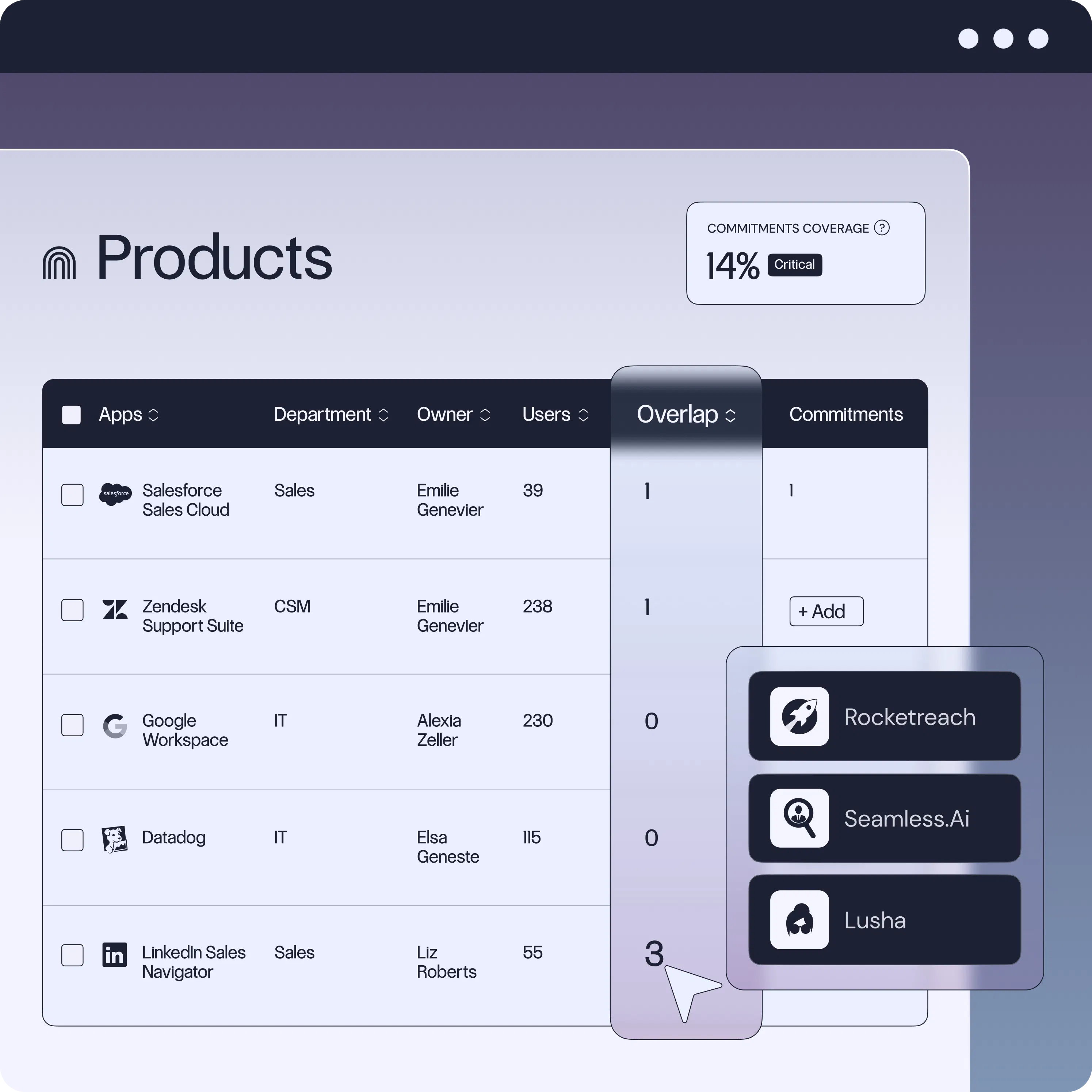
AI can turn fragmented purchasing data into a clearer picture of where money is actually going.
It can identify patterns across transactions, classify spend into relevant categories and connect purchases that may appear unrelated in the raw data.
For example, AI could identify that several departments are purchasing similar software from different suppliers, or flag spending that falls outside an approved contract.
- Cost optimisation
AI does not create savings simply by being added to a procurement process. Its contribution comes from helping teams identify and act on opportunities that may otherwise be missed.
Better spend analysis can reveal consolidation opportunities.
Supplier analysis can highlight pricing differences or changes in performance. Forecasting can help teams anticipate future requirements, while AI-assisted negotiation preparation can bring together historical pricing, contract terms and supplier information before a negotiation begins.
- Better risk management
Procurement teams need to monitor risks across suppliers, contracts and purchasing activity, but manually tracking every change can become tiresome.
AI analyses available information continuously and flags patterns or changes that warrant attention.
The benefit is earlier visibility. Instead of discovering a problem when a contract is already approaching renewal or a supplier issue has already affected the business, procurement can have more time to investigate and respond.
- More consistent procurement processes
AI can also help procurement teams apply processes more consistently.
For example, an AI-supported procurement intake workflow can interpret purchasing requests and identify the information or approvals required. AI can help classify requests, while automation can route them according to predefined procurement rules.
The same principle can apply to sourcing, contract management and supplier monitoring.
Repetitive processes are standardised, reducing the variation that comes from different people handling the same task in different ways.
- Better decision-making
Ultimately, one of the biggest opportunities for AI in procurement is not making decisions instead of procurement professionals, but giving them better information on which to base those decisions.
AI brings together large amounts of spend, supplier, contract and purchasing data, identify relevant patterns and turn them into recommendations or insights.
This gives procurement teams more context when deciding which suppliers to approach, where to focus savings efforts, whether a contract should be renewed or where a potential risk needs further investigation.
Best software for AI in procurement
AI procurement software incorporates artificial intelligence into procurement workflows, data analysis and decision support.
These platforms connect to the information and workflows your team already relies on.
A tool that can summarise a document is useful, but it becomes considerably more valuable when it can work with your supplier, contract and spend information and feed its output directly into a procurement workflow.
Procurement software will usually include features such as:
- Spend analysis
- Supplier intelligence
- Contract intelligence
- Procurement intake
- Sourcing
- RFP creation
- Document analysis
- Workflow automation
- AI assistants
- Risk monitoring
Najar for AI-powered procurement
Najar brings AI into the procurement process rather than treating it as a standalone assistant.
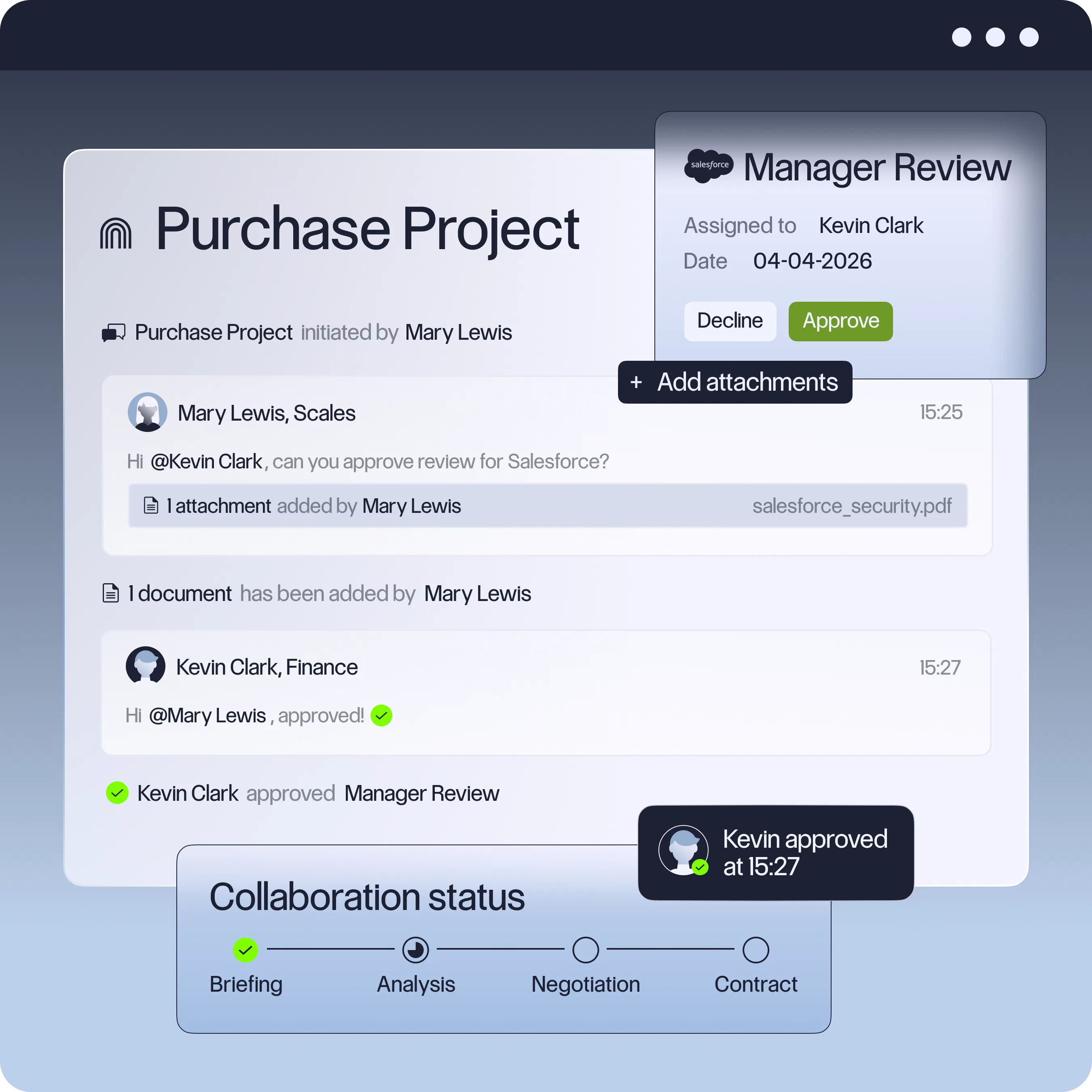
The platform connects procurement activities across purchase requests, approvals, sourcing, supplier management and contracts, giving AI the context needed to support decisions throughout the purchasing process.
For example, Najar’s AI can work with the information surrounding a procurement request to help different teams assess what is being purchased, identify relevant suppliers, support the sourcing process and prepare the information needed to move forward.
The same principle applies to supplier and contract management.
Procurement teams can work with supplier and contract information alongside purchasing and spend data, giving them a more complete view when deciding whether to renew a contract, renegotiate terms or take another course of action.
This makes Najar particularly suited to organisations that want to use AI within procurement workflows, instead of adding another disconnected AI tool that doesn’t quite get the whole picture to the technology stack.
The goal is to use AI where it can remove manual information work, surface relevant insights and help procurement professionals move from a purchasing request to a better-informed decision more efficiently.
How to implement AI in procurement
You do not need to build an AI system from scratch to start using AI in procurement.
For most procurement teams, the more practical approach is to choose procurement software with AI capabilities built into the workflows you already use.
The implementation process is less about “adding AI” and more about getting your procurement data, processes and people into a position where the technology can actually be useful.
Step 1. Identify where AI can improve your procurement process
Start with the procurement problems you want to solve, rather than choosing an AI tool and working backwards.
Look at where your team spends the most time on manual work, where information is difficult to find and where decisions could benefit from better analysis.
This might be employees submitting incomplete purchase requests, procurement teams manually comparing suppliers or contracts being stored in different places without clear visibility of renewal dates.
You can then identify which parts of the process are suitable for AI.
Starting with practical problems gives you a clearer idea of what your procurement software needs to do.
For example:
- Employees could use a procurement intake workflow rather than sending ad-hoc purchasing requests by email.
- AI could analyse spend to identify potential savings opportunities.
- Supplier information could be brought together to support sourcing decisions.
- Contract data could be extracted automatically and used to flag upcoming renewals.
Step 2. Choose procurement software with AI built into the workflow
Once you know what you want to improve, look for procurement software that can support those processes.
The software should give AI access to the context it needs, while keeping the resulting actions within a controlled procurement workflow.
For example, if you want to use AI to improve software purchasing, the platform should ideally connect the initial purchase request with approvals, supplier sourcing, contract information and the resulting spend. That gives AI more useful context than a standalone chatbot working from a single prompt.
This is where a platform such as Najar can be useful.
Najar brings purchase requests, approvals, sourcing, supplier management and contracts into the same procurement process, allowing AI capabilities to work with the information and workflow around each purchase.
Step 3. Connect your procurement data
Depending on your organisation and the use cases you have chosen, this could include information from your ERP, finance systems, P2P platform, contract repository, supplier database and other procurement tools.
You do not necessarily need to connect everything on day one. Start with the data relevant to the workflows you want to improve.
For example, if your first priority is managing SaaS procurement, you might begin with purchase requests, supplier information, contracts and software spend. Once that workflow is working well, you can expand the data available to the platform and introduce additional AI use cases.
Step 4. Configure your procurement workflows
AI works best when it is part of a clearly defined process.
Configure your procurement software so that requests, approvals, sourcing, contracts and other activities follow the workflows appropriate to your organisation.
For example, a software purchase might follow a process such as:
Employee request → AI-assisted intake → approval → supplier sourcing → evaluation → negotiation → contract → purchase
You can also define where human approval is required.
Step 5. Set permissions and AI governance
Before allowing AI to analyse or act on procurement information, establish clear rules around what it can access and what it is allowed to do.
This should include:
- Determine which procurement, supplier and financial information the AI can access
- Define which actions AI can recommend, initiate or complete
- Make sure sensitive commercial and supplier information is appropriately protected
- Establish where a person must review or approve an AI-generated recommendation or action
The more autonomy an AI system has, the more important these controls become. An AI tool that summarises a contract presents a different governance requirement from an AI agent that can initiate a procurement workflow or communicate with a supplier.
Work with Najar for smarter procurement
AI can make procurement faster, more informed and easier to manage, but the technology itself is only part of the equation.
The strongest results come from applying it to the right processes, giving it access to useful data and keeping the right controls around how it is used.
As you introduce AI into procurement, keep these principles in mind:
- Start with the problem, not the technology
- Choose high-value, manageable use cases
- Improve data quality continuously
- Keep humans involved in important decisions
- Build cross-functional governance across all teams involved
- Integrate AI with existing systems
Najar brings these principles together in a connected procurement platform.
By bringing purchase requests, approvals, sourcing, supplier management and contracts into one workflow, Najar gives procurement teams the context they need to use AI more effectively while maintaining control over the purchasing process.
Ready to put AI to work across your procurement process?